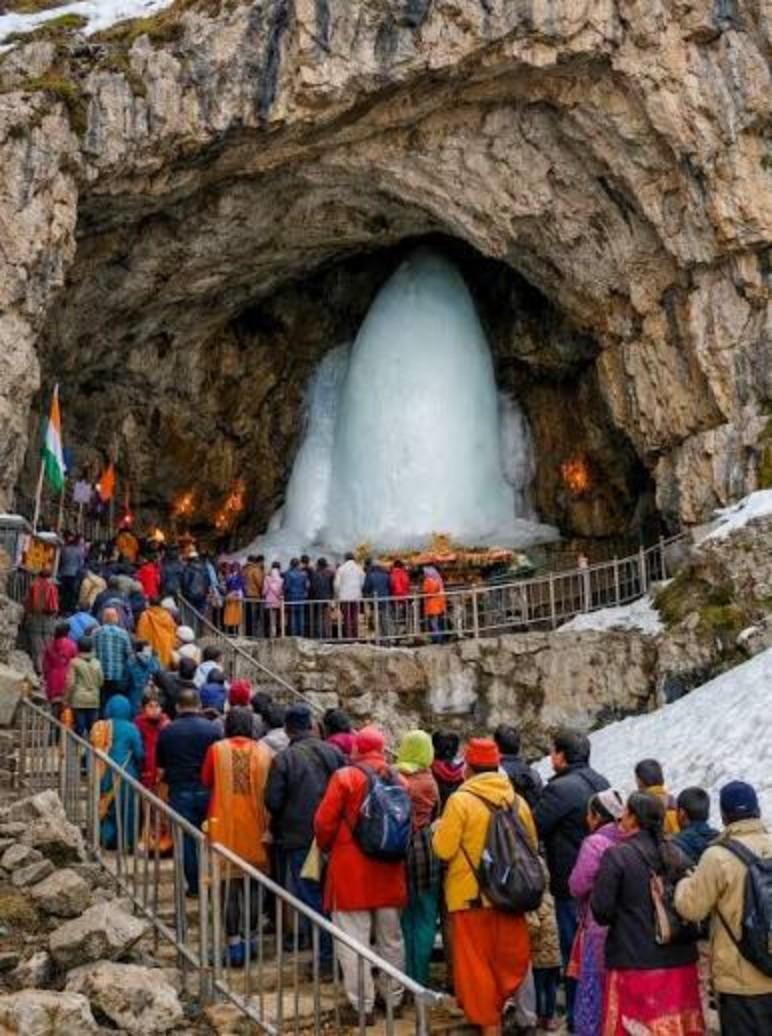
As the commencement date draws near for the annual Amarnath Yatra, preparations and arrangements are getting big, focus on a multi-layered security grid which has added several new dimesions this year. From no fly zones on both the routes to unprecedented monitoring of vehicular movement, it is the QR based identity cards service which becomes central point of the safety measures.
J&K Police Director General Nalin Prabhat has given directions to the department to keep a strict vigil and monitor the Social media so that no misinformation is given with regard to forthcoming yatra. “There is no room for complacency or errors in the security grid,” the DGP said, calling for the highest standards of vigilance, professionalism and preparedness in the meeting held on Tuesday.
The DGP directed officers to maintain strict vigilance over social media platforms and ensure prompt intervention to counter misinformation and fake narratives. He also instructed that legal action be taken against individuals involved in spreading rumours or creating panic through false information.
Even as the security agencies claim there are no specific intelligence inputs about threats to pilgrims, yet the authorities are leaving chance for complacency and are working overnight to give what many see as unprecedented security setup in place.Both the Centre and the Jammu and Kashmir government are preparing an unprecedented security and management plan for the Amarnath Yatra 2026, with over 670 companies of Central Armed Police Forces (CAPFs) set to be deployed for the annual pilgrimage, as per the officials.
The deployment, approved by the Union Home Ministry, is expected to be the largest paramilitary presence in the history of the Amarnath Yatra.The 57-day pilgrimage to the 3,880-metre-high cave shrine will commence from the twin tracks -- the traditional 48-km Nunwan-Pahalgam route in Anantnag and the 14-km shorter but steep Baltal route in Ganderbal -- on July 3. It will conclude on the occasion of Raksha Bandhan on August 28.
Security agencies are strengthening arrangements across the entire pilgrimage network — from entry points and highways to base camps, transit centres and the cave shrine — amid continued concerns over threats in the region.
The additional forces are expected to be deployed before Thursday to ensure that the security grid is fully operational before the arrival of pilgrims.This year, authorities are focusing not only on route security but also on improving facilities related to registration, accommodation, health screening and transportation.
Security agencies have prepared a multi-layered security structure covering the entire route from Lakhanpur, the gateway to Jammu and Kashmir, to the Amarnath cave shrine.The security cover will include key locations such as the Baltal base camp, Nunwan (Pahalgam) base camp, Bhagwati Nagar Yatri Niwas, Jammu-Srinagar National Highway, Pathankot-Jammu Highway, railway stations, transit camps and other sensitive locations.A major focus will be on strengthening the role of Road Opening Parties (ROP), which inspect routes before pilgrim movement begins each day.

 Follow us