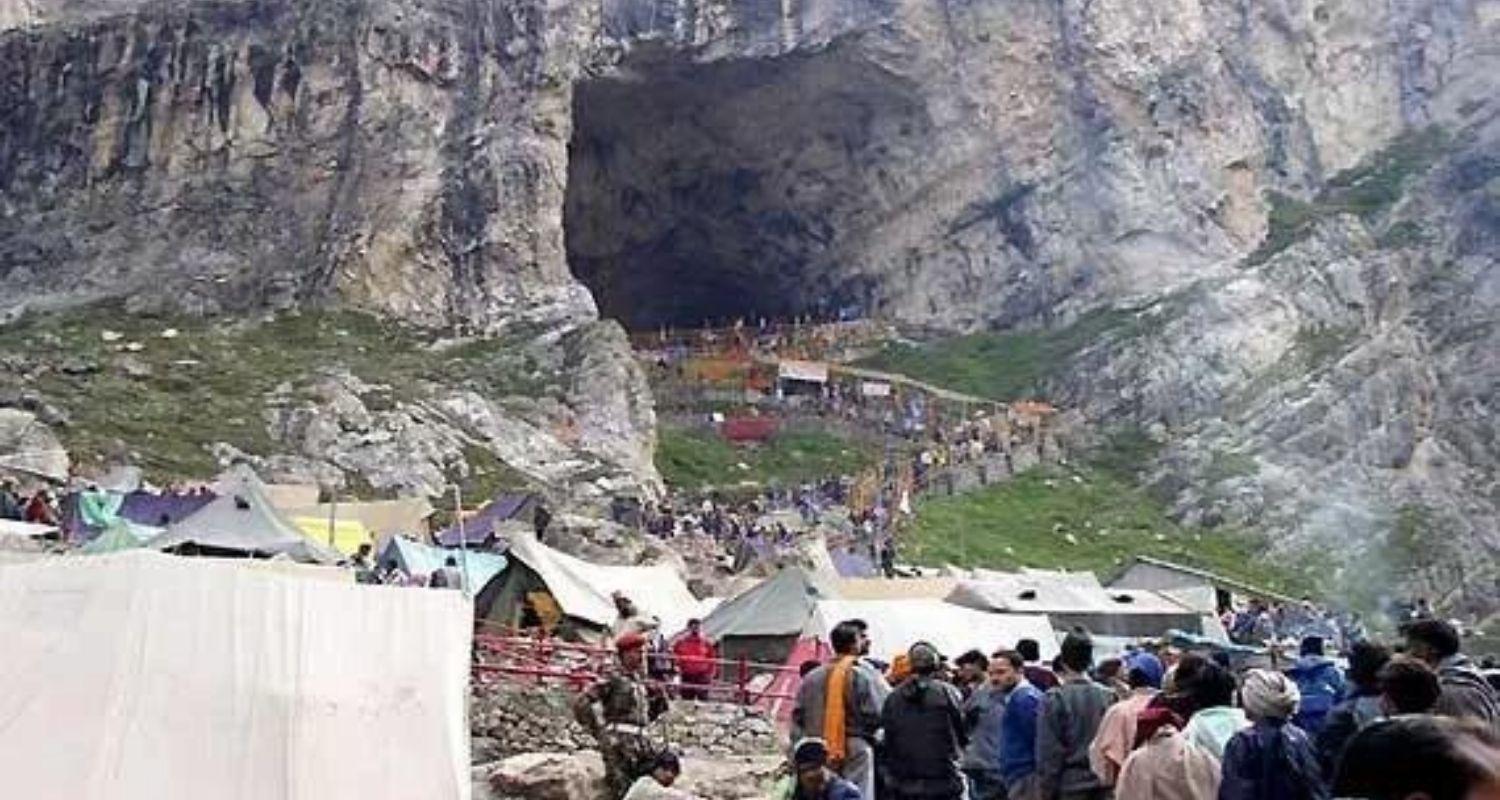
The Jammu and Kashmir administration has decided to continue the temporary suspension of all major yatras across the Union Territory due to incessant rainfall and forecasts of further downpours until July 23.
As many as 23 people have lost their lives, while seven others remain missing in rain-related incidents in Poonch and Rajouri districts since Sunday morning.
The suspended yatras include the Amarnath Yatra, Vaishno Devi pilgrimage, Shiv Khori Yatra and Machail Mata Yatra. The suspension continued for the third consecutive day on Tuesday.
District administrations have said round-the-clock monitoring of the flood situation was being carried out with the assistance of police and other agencies. Pilgrims have been advised to stay at designated shelters until weather improves and advisories are lifted.
Rescue teams, including personnel from the SDRF and police, have continued their search for the missing despite continuous rainfall.
Cloudbursts have caused extensive damage in the twin districts of Rajouri and Poonch due to heavy rain, while the Meteorological Department predicted a fresh spell of rainfall in the coming days.
According to the Meteorological Department, the holy town of Katra, the base camp for the Mata Vaishno Devi pilgrimage, recorded the highest rainfall of 107.1 mm during the 24-hour period ending at 8.30 am on Tuesday.
Poonch district recorded 61.5 mm of rainfall, followed by Reasi at 54.5 mm, Rajouri at 49 mm and Jammu at 35 mm during the same period.
Heavy rainfall has damaged roads and highways connecting multiple districts, while falling stones have struck several vehicles, killing multiple people. Disruptions to surface traffic are expected to continue despite best efforts by authorities to clear the roads and restore smooth movement.
Besides, an advisory has also been issued, urging residents to avoid travelling through landslide-prone areas and restrict movement in hilly terrain, as cloudbursts pose a risk to lives and infrastructure in densely forested areas.
Experts and several studies have indicated that urbanisation, encroachment into forests, deforestation, agricultural activities, large infrastructure projects, along with rapidly growing tourism, are posing serious threats to the ecological balance of Jammu and Kashmir.
Earlier this month, the Chief Minister also noted that Jammu and Kashmir's ecology cannot sustain the growing number of tourists. He said instead of focusing on numbers, the Union Territory needs to promote value-based tourism.
Also read: Eight shops damaged after land subsidence in Udhampur

 Follow us