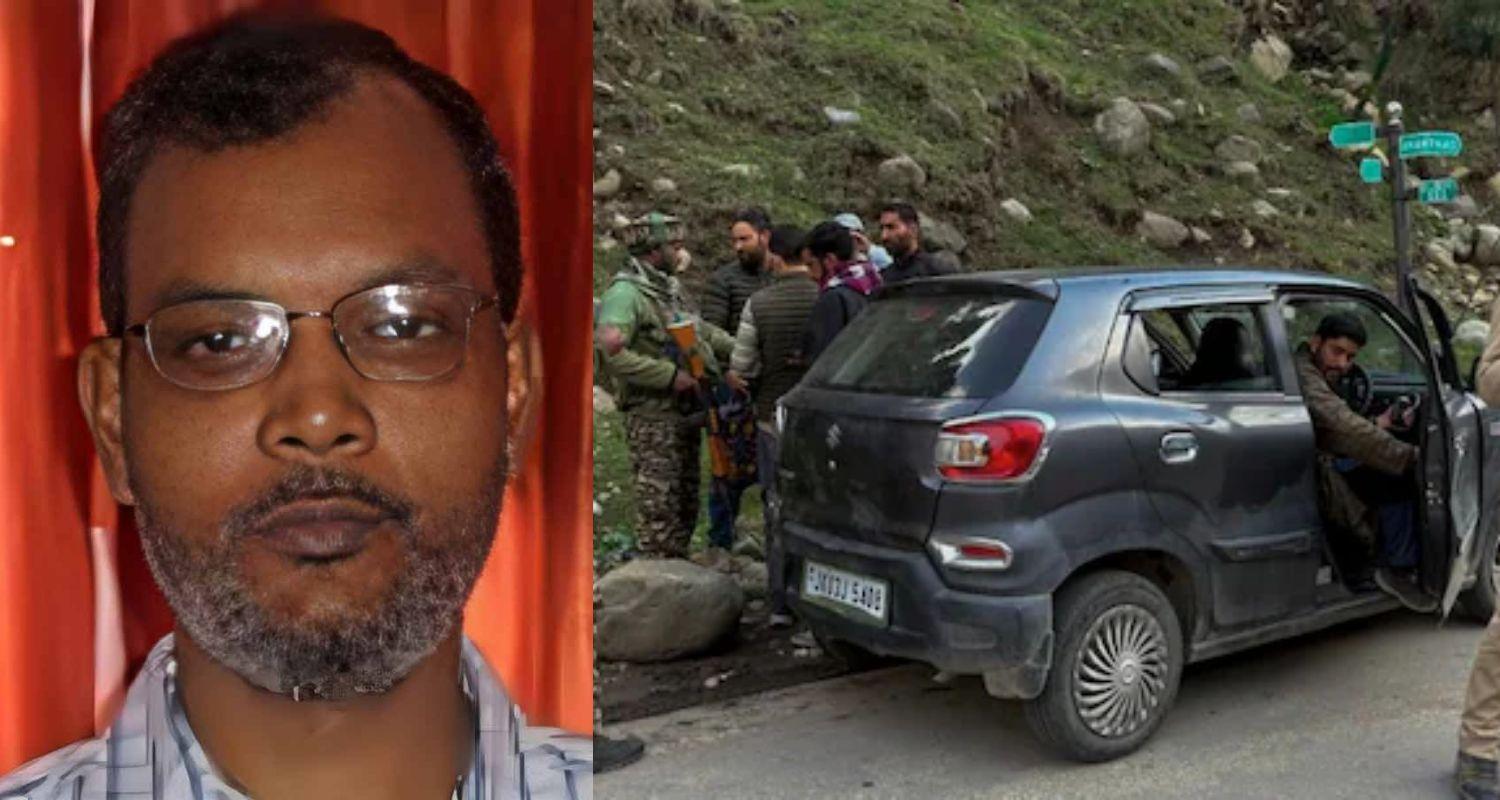
As bullets flew and chaos unfolded in Pahalgam, Assam University professor Debashis Bhattacharya found himself face-to-face with death. A gun-wielding militant charged towards him. Moments earlier, he had watched a fellow tourist, standing right beside him, fall to the ground, shot in the head. Debashis didn’t think he would make it out alive.
What saved him, he believes, was a moment of instinct. As fear gripped the crowd, Debashis, frozen but alert, noticed a group of local people under a nearby tree quietly reciting the Kalma— the Islamic declaration of faith. Without thinking, he joined in.
“I don’t know what came over me,” he said in a trembling voice, adding,”I started reciting the Kalma too—quietly at first. Then louder, as the militant came closer.”
What happened next felt like a miracle.
“He looked directly at me and asked, ‘What are you doing?’ I kept reciting the Kalma louder and louder. Then... he just turned around and left,” Debashis recalled, his voice breaking. He believes that moment of spiritual reflex saved his life.
As soon as the militants moved away, Debashis grabbed his family and fled in the opposite direction—scrambling up a hillside, following the faint trail of a horse’s footprints.
For two hours, they walked in silence, fear gripping their every step, before finally reaching a safer spot. Eventually, they managed to return to their hotel on horseback. “Even now, it feels surreal,” he said. “I can’t believe I’m alive.”
The attack in Pahalgam claimed the lives of 26 people. Survivors allege that the militants selectively targeted victims based on religious identity, sparing only those perceived to belong to a particular faith.
The Assam government has condemned the attack and assured full support to affected families. Debashis and his family are expected to return home soon, but the scars of that day will likely linger forever.
“Faith or fate, I don’t know,” he said. “All I know is— something, somewhere, saved me that day.”

 Follow us