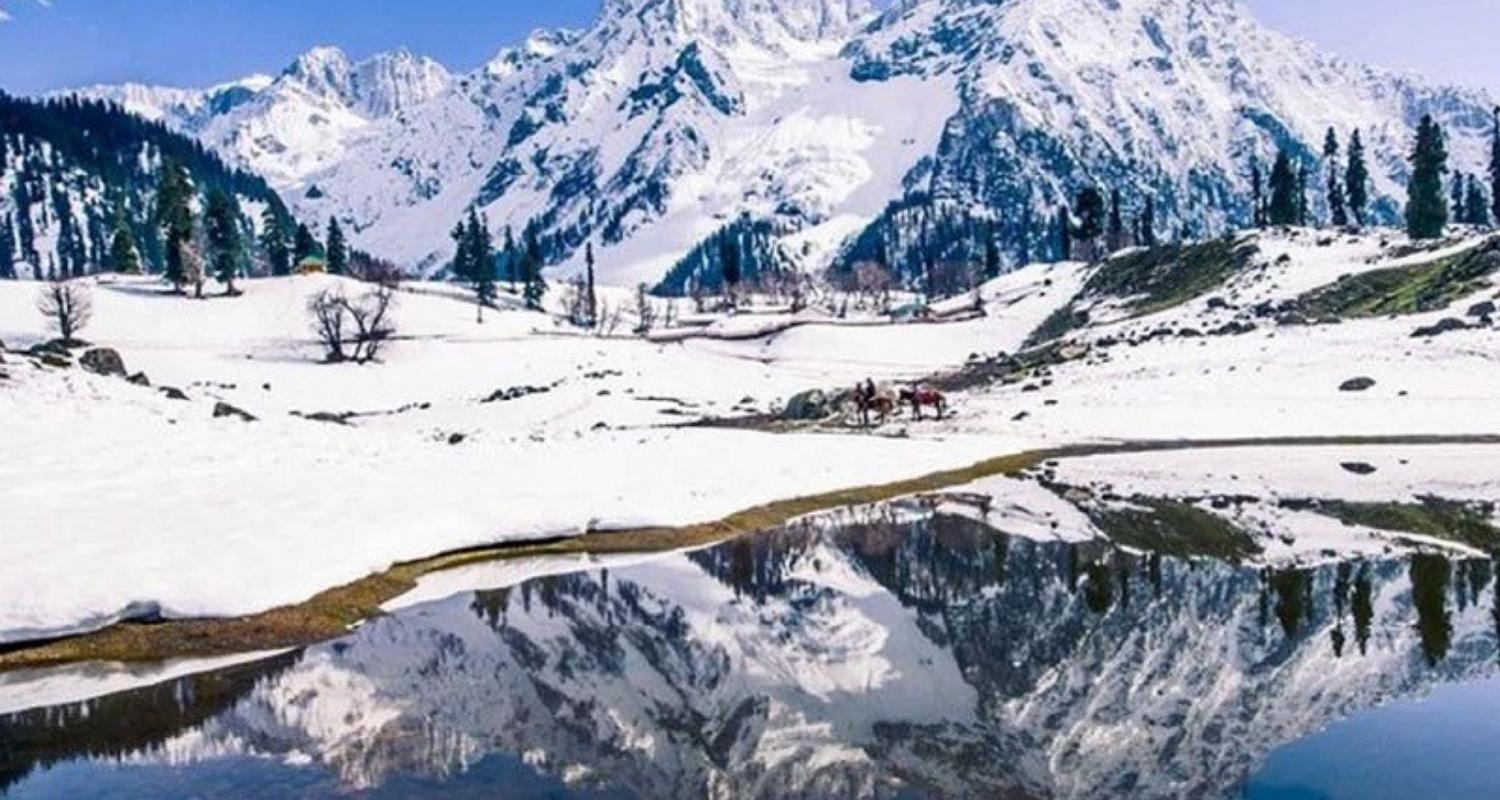
The Thajiwas Glacier in Sonamarg has lost nearly 95 per cent of its original size since the last Ice Age, a new study jointly conducted by the University of Kashmir (KU) and the Inter-University Accelerator Centre (IUAC), New Delhi, has revealed.
The study, titled “Paleo-glacial Reconstruction of the Thajiwas Glacier in the Kashmir Himalaya,” found that the glacier, which covered around 54 square kilometres during the Last Glacial Maximum (LGM) approximately 20,770 years ago, has now shrunk to about 2.76 square kilometres.
According to Professor Ghulam Jeelani, Head of the Department of Earth Sciences at KU, “The Thajiwas has now become a relict. What we are seeing today are merely remnants of a much larger glacier.”
Using latest cosmogenic radionuclide Beryllium-10 exposure dating and geomorphological mapping, researchers reconstructed the glacier’s evolution over the last 20,000 years. The study identified four major glacial stages associated with the Last Glacial Maximum, the Younger Dryas cold phase, the Early Holocene, and the Neoglaciation period.
As per the study, the glacier’s ice volume declined from about 2.73 cubic kilometres during the Ice Age to only 0.09 cubic km at present.
It is pertinent to mention that Jammu and Kashmir is among the most environmentally sensitive zones in the country and has witnessed several weather-related disasters over the past two decades.
Besides, the region has also witnessed serious climatic changes, including harsh but dry winters and hotter summer days. Experts have warned that the rate at which deforestation, urbanisation, and exploration of untouched zones for offbeat tourism are occurring is accelerating climate change in the region.
Also read: J&K announces DA hike for govt staff, pensioners

 Follow us