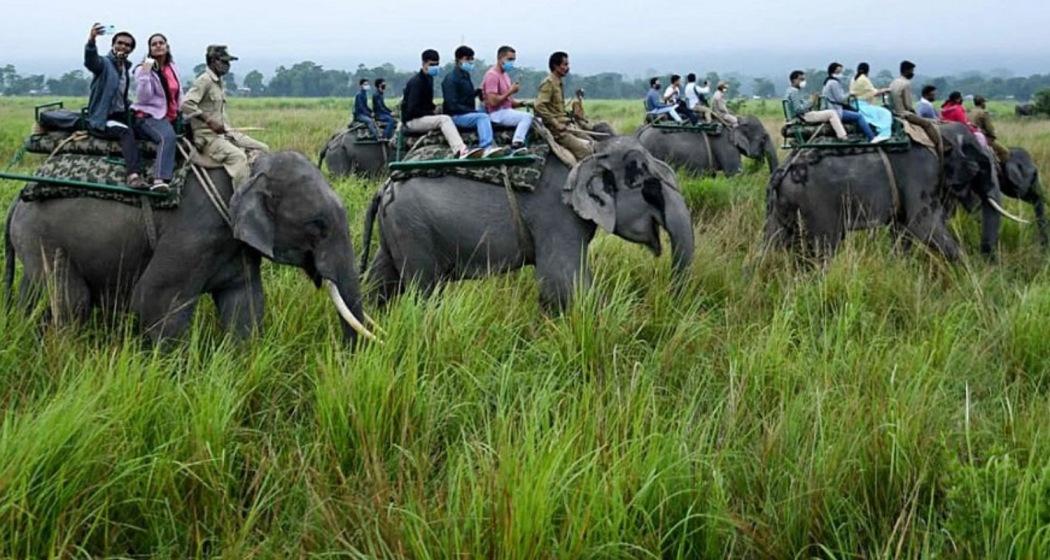
Kaziranga National Park and Tiger Reserve recorded its highest-ever tourist footfall in 2025-26, with 4,68,147 visitors, underscoring its growing appeal among domestic and international travellers.
Official data showed a sharp increase from 4,06,564 visitors in 2024-25 and 3,27,493 in 2023-24, marking a steady upward trajectory in tourist inflow.
Of the total visitors this year, 4,37,673 were Indian tourists, while 30,474 were foreign nationals, accounting for around 4.5 per cent of the overall footfall.
The growth is particularly striking when compared with a decade ago, when the park recorded just over 1.55 lakh visitors in 2016-17. Both domestic and international tourist numbers have consistently risen, with foreign footfall nearly doubling in recent years.
The trend has continued into the current season as well. In April 2026 alone, the park received 49,322 visitors, including 2,116 foreign tourists.
Kaziranga’s rising global profile has been reflected in a series of high-profile visits. Bhutan’s King Jigme Khesar Namgyel Wangchuck visited the park, while Prime Minister Narendra Modi made a historic trip on March 9, 2024, becoming the first Prime Minister to visit the park since it was declared a national park in 1974.
Also read: Kaziranga prepares to translocate 50 buffaloes
Union External Affairs Minister S. Jaishankar also visited the site along with Heads of Mission from multiple countries during the Advantage Assam 2.0 initiative in February 2025. Other prominent visitors included Union Minister Shivraj Singh Chouhan, Madhya Pradesh Chief Minister Mohan Yadav, and French Ambassador Thierry Mathou.
Officials attributed the sustained rise in tourism to improved infrastructure, enhanced global visibility, and new visitor experiences across the park’s divisions.
KNPTR Director Sonali Ghosh said, “We have seen a remarkable boost in tourism over the past year. Initiatives like the bird safari in Panbari, cycling in Kohora, jeep and boat safaris in Biswanath, and trekking at Hemtap Hill have created new interest among visitors.”
She added, “We have also focused on promoting local culture and community participation. The eco-shops run by our staff welfare society are helping visitors take back curated souvenirs, which adds to their overall experience.”
The surge in tourist inflow has also boosted the local economy, with hotels, eateries, and small businesses witnessing increased activity and new opportunities in tourism-linked sectors.

 Follow us