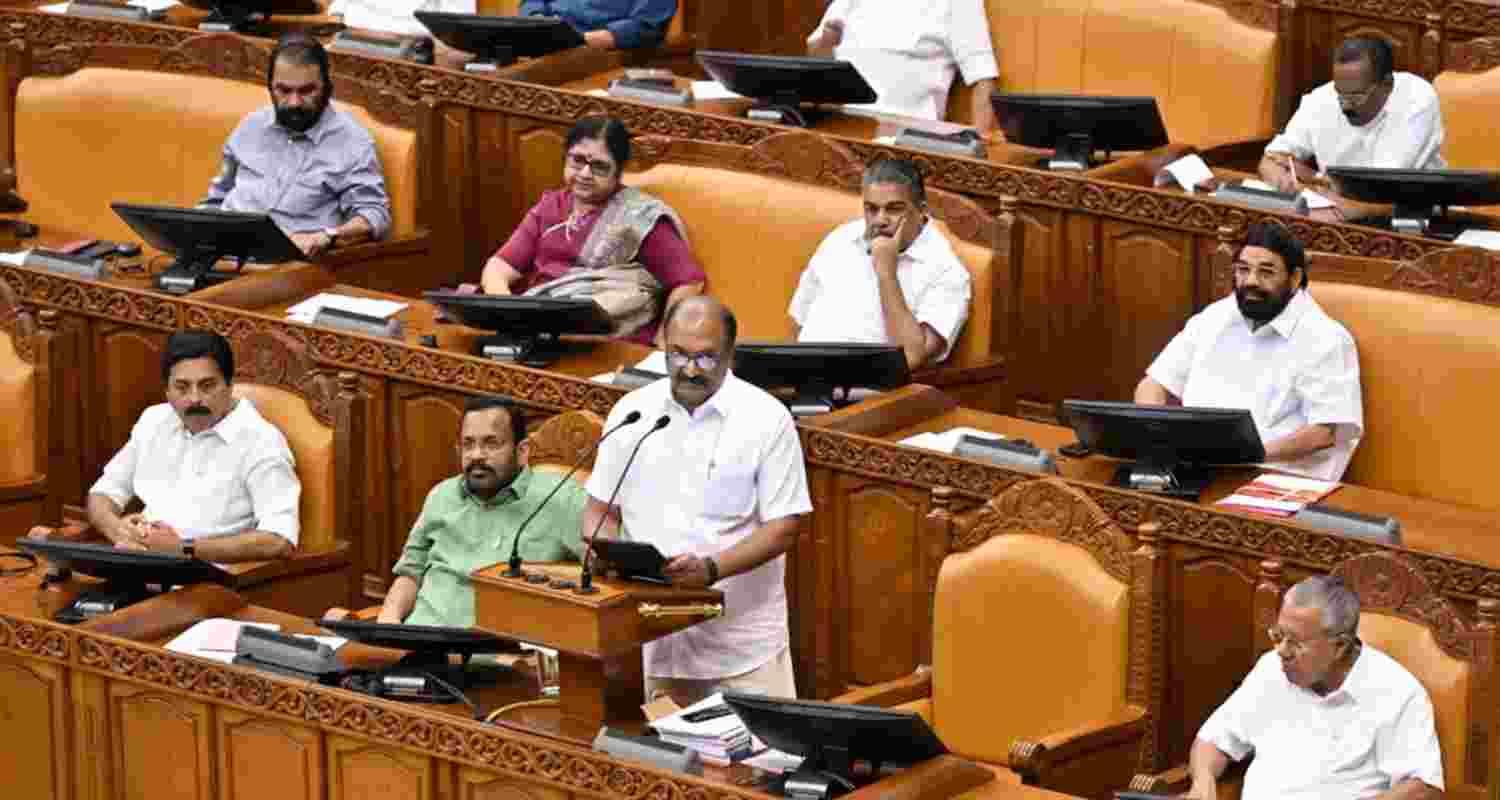
The Kerala government’s 2026–27 Budget has placed strong emphasis on expanding social welfare and long-term human development, reinforcing the state’s governance model centred on direct citizen support even amid financial constraints.
Presenting the Budget in the Assembly, Finance Minister K N Balagopal said the government’s priority remains protecting vulnerable sections of society while continuing investment in infrastructure, healthcare, and education. He described the proposals as an attempt to balance extensive social security spending with development expenditure, safeguarding Kerala’s social indicators and inclusive growth trajectory.
Balagopal said the government has already distributed Rs 48,383.83 crore as social security pensions during the current term. By the end of the tenure, pension expenditure is expected to touch Rs 54,000 crore. Across both terms of the Pinarayi Vijayan government, nearly Rs 90,000 crore would have been disbursed through pensions, making it one of the largest state-funded welfare initiatives in the country. Currently, 62 lakh beneficiaries receive a monthly pension of Rs 2,000 with no arrears. Combined with schemes such as the Chief Minister’s Women’s Security Scheme and the ‘Connect to Work’ scholarship, nearly 30 per cent of Kerala’s population is covered under direct social security support.
In a major boost to education access, undergraduate studies in all government arts and science colleges will now be completely free. The government said the move is aimed at reducing dropouts and easing the financial burden on students from economically weaker backgrounds.
The Budget also announced the ‘Life Saver’ scheme, a trauma-response initiative providing free, cashless treatment for road accident victims during the first five days. With an initial allocation of Rs 15 crore, the scheme focuses on strengthening emergency care during the critical “golden hour”.
Reflecting Kerala’s demographic shift, the state became the first in the country to present a dedicated ‘Elderly Budget’. With senior citizens accounting for 18.7 per cent of the population, Rs 30 crore has been earmarked for high-tech retirement homes offering community kitchens and specialised healthcare. A special commission for the elderly will be constituted, and Rs 20 crore allocated to the VS Achuthanandan Centre in Thiruvananthapuram.
ASHA workers will receive a Rs 1,000 hike in their monthly honorarium, raising it to Rs 8,000. The decision will benefit over 26,000 workers at an annual cost of Rs 250 crore. In addition, the special pension for patients suffering from cancer, TB, leprosy, and HIV/AIDS has been doubled to Rs 2,000 per month.
The government also announced the introduction of ‘Nativity Cards’ through legislation to prevent welfare exclusion, backed by a Rs 20 crore fund. Rehabilitation of Wayanad landslide survivors remains a priority, with 289 houses in a new township set to be handed over by the third week of February. The state will also take over Rs 18.75 crore in bank debts of affected families.
On infrastructure, the Budget allocated Rs 5,317 crore for the development of MC Road, Rs 100 crore for the first phase of the Regional Rapid Transit System, and Rs 1,000 crore for Vizhinjam Port development. An additional Rs 1,000 crore has been set aside to support MGNREGS, ensuring continuity of rural employment.
The government reported spending over Rs 4,236 crore under the Karunya Health Security Scheme, reinforcing a multi-layered public health framework combining insurance coverage, emergency care and community health services.

 Follow us