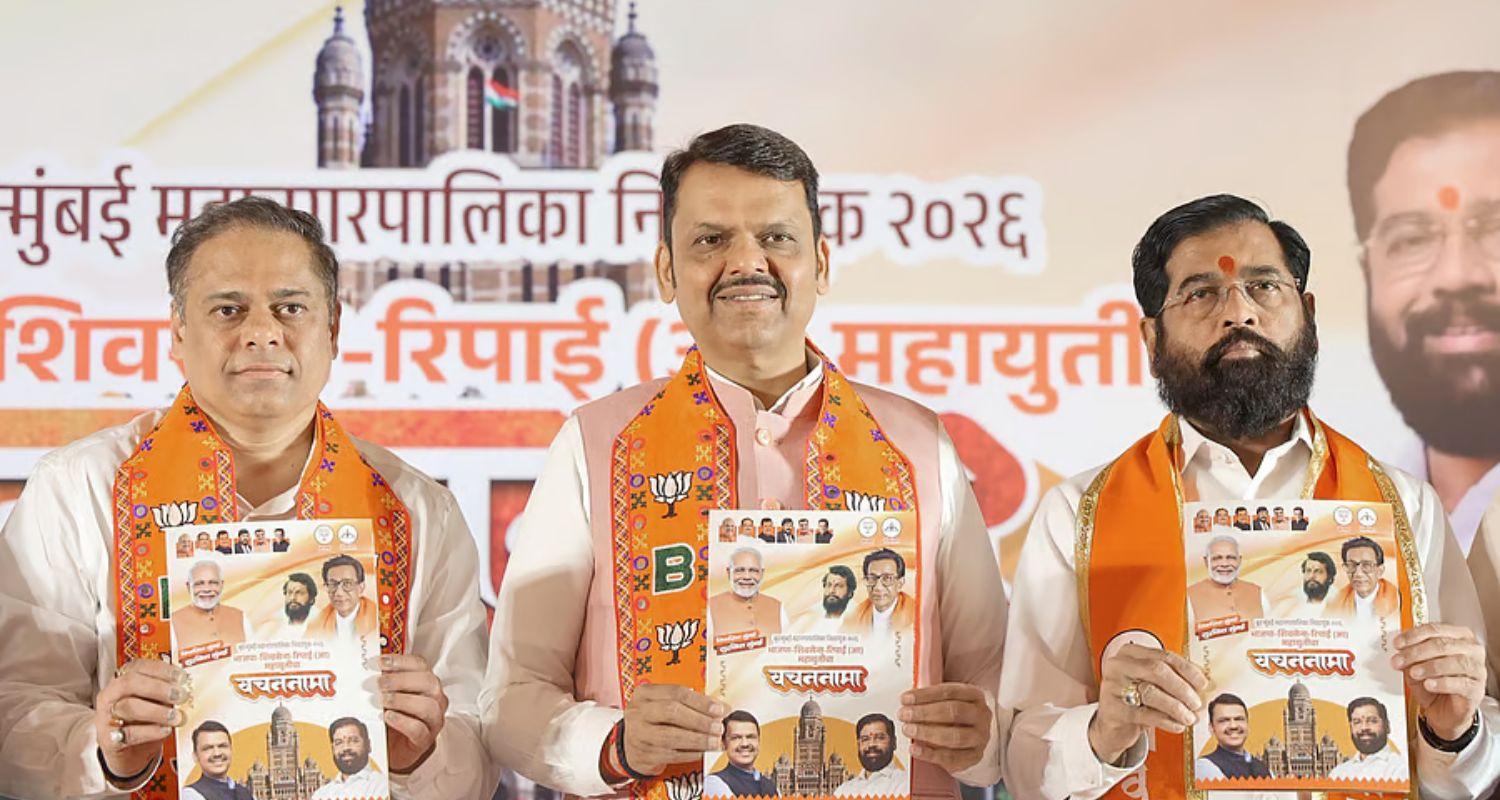
The Mahayuti alliance has laid out an ambitious roadmap for Mumbai’s future, launching a manifesto on Sunday that blends high-tech urban planning with hardline rhetoric ahead of the city's civic elections. Unveiling the document, Chief Minister Devendra Fadnavis promised to transform the city into a "global powerhouse," leaning heavily on "Japanese technology" and artificial intelligence to overhaul everything from traffic to corruption.
The essence of the plan is centered on the need for "Municipality on your Mobile," an all-digital strategy for bypassing the red tape that has long hampered the BMC. Fadnavis did not shy away in describing his perceptions of the previous government, speaking of the need for a "corruption-free corporation," which would be achieved with the use of AI in building approvals and other services. Even the city's municipal schools are slated for an upgrade, with plans to install AI labs in every classroom.
The manifesto also takes a sharp turn into sensitive political territory. Fadnavis pledged to "free" Mumbai of illegal Bangladeshi and Rohingya migrants, even going as far as suggesting that the alliance would work with IIT experts to develop AI tools specifically to identify them.
On the transport and social welfare front, there are significant sweeteners for commuters. The alliance intends to double the BEST bus fleet to 10,000 vehicles, focusing on electric power and introducing a 50 per cent fare discount for women. Fadnavis said it would handle the city's floods during the monsoon, promising a "flood-free Mumbai" in five years with the help of underground storage tanks and topographic studies by IIT researchers.
The Dharavi Redevelopment Project graced the manifesto, too, with an assurance to safeguard micro-businesses and house even those who are "ineligible" as per the scheme today. Among other sundry promises were the upgrading of civic hospitals to AIIMS standards and a "Pagadimukt Mumbai" scheme to finally put to rest the long-standing disputes over tenancies affecting lakhs of residents.
Deputy Chief Minister Eknath Shinde rounded off the launch by focusing on the city’s Marathi identity. He announced plans for a dedicated cultural department within the BMC to promote local heritage, alongside the creation of Marathi libraries and a special medical university named after Balasaheb Thackeray. However, Shinde has also committed to a redevelopment plan for Mumbai’s first “koliwadas” and “gaothans” so that the Koli community is able to afford and hold on to its ancestral land during the redevelopment of Mumbai.
Also read: Maharashtra civic polls: BJP-Mahayuti sweep 68 seats unopposed

 Follow us