
Trending:
Manali Strays: A lifeline for stray animals in distress
Manali Strays was founded in 2019 by Kamlesh, an Indian animal welfare worker, and Becky, a British national who frequently visited Manali and shared a deep empathy for animals. Their shared vision was simple but urgent, to build a system where injured and abandoned animals could receive timely care and dignity. Follow us
News Arena Network - Shimla - UPDATED: May 22, 2026, 03:34 PM - 2 min read
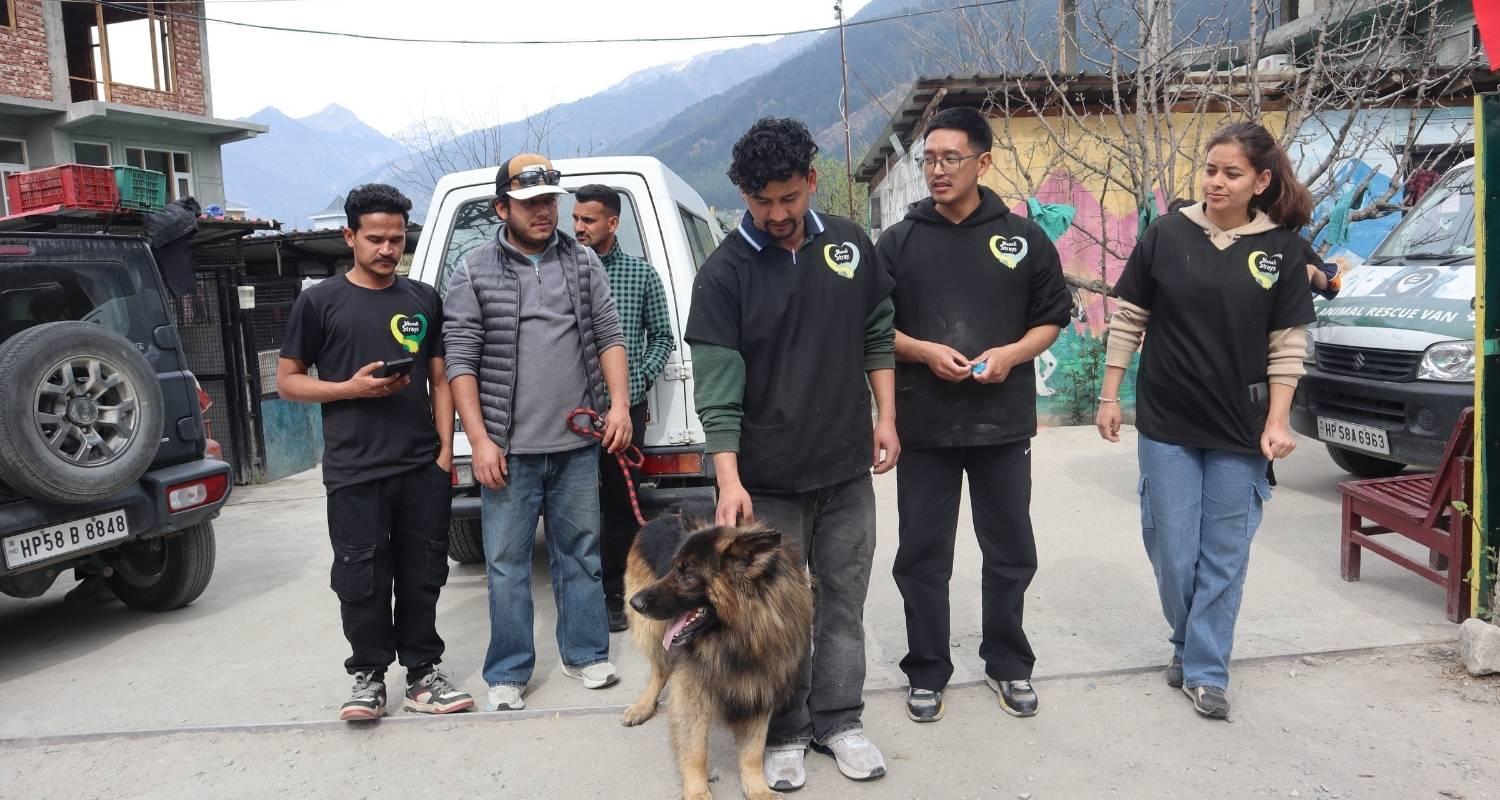
Team Manali Strays
Nestled in the lap of the Himalayas, the riverside town of Manali in Himachal Pradesh is often portrayed as a picture-perfect destination. Every year, lakhs of visitors arrive to experience its natural beauty and adventure offerings.
But beyond this scenic charm, a small grassroots initiative, Manali Strays, is working quietly to address a reality that rarely finds space in travel brochures: the struggle of stray animals trying to survive on the streets.
For hundreds of stray dogs and other animals in Manali, life is shaped by uncertainty. Food is inconsistent, injuries often go untreated, and access to veterinary care remains limited, particularly in remote mountain areas. In this fragile ecosystem, survival is not guaranteed, it depends largely on chance and, occasionally, on human compassion.
This is where Manali Strays has emerged as a crucial force for change. The organisation has been working tirelessly to rescue, treat, and protect stray animals across the region. What began as a modest effort has today grown into a lifeline for thousands.
Manali Strays was founded in 2019 by Kamlesh, an Indian animal welfare worker, and Becky, a British national who frequently visited Manali and shared a deep empathy for animals. Their shared vision was simple but urgent, to build a system where injured and abandoned animals could receive timely care and dignity.
The work began in Haripur village, located just outside Manali, surrounded by apple orchards and traditional farming communities. The setting was serene, but the need was immense. Stray animals in the region often suffered in silence, with few systems in place to support them.
Kamlesh’s journey into animal welfare was rooted in both training and lived experience. After earning a diploma in veterinary sciences, he chose to dedicate himself entirely to animal care. Before starting Manali Strays, he worked with an established animal welfare organisation, where he handled rescue and treatment cases from across India. Many distress calls came from Manali and nearby areas, where injured animals had little to no access to structured veterinary services.
These experiences left a lasting impression. He saw firsthand how animals were left untreated due to logistical challenges, lack of awareness, and limited infrastructure. The need for a localised, responsive rescue system in the region became increasingly clear. Eventually, he decided to act.
Becky, who has been visiting Manali regularly and has developed a strong connection with the place, joined hands with Kamlesh. Sharing the same compassion and urgency, she became a co-founder of the initiative. In its early days, the effort was also supported by Buddhi Ram, a local resident who helped them establish their initial operations.
The early phase of Manali Strays was defined by resilience and improvisation. “There was no shelter, no clinic, and very limited funding,” said Kamlesh. He often travelled long distances on his motorcycle, carrying basic medicines, bandages, and first-aid kits. Whenever someone reported an injured animal, he would rush to the location — whether it was a roadside, a remote village, or a construction site — and provide immediate care.
Recognising the need for better coordination, Kamlesh and Becky expanded the team and set up a helpline number for residents and tourists to report cases. In the beginning, the phone rang only a few times a day. But as the word spread and trust grew, the volume of calls increased significantly. Today, Manali Strays receives nearly 50 to 60 calls daily, which reflects both the scale of the problem and the reliability the organisation has built over time.
Each call represents a story — an injured dog hit by a vehicle, a puppy abandoned in harsh weather, or an animal — monkey or even cat — suffering from infection or malnutrition. The team responds to these calls with urgency, often navigating difficult terrain and unpredictable weather conditions.
Just as the organisation was gaining momentum, the COVID-19 pandemic struck, bringing an unprecedented challenge. Tourism in Manali came to a sudden halt. Hotels shut down, restaurants closed, and the steady flow of visitors disappeared overnight.
For stray dogs, this disruption had immediate consequences. Many depended on leftover food from eateries and tourist areas. With those sources gone, hundreds of animals were left without access to food. Within weeks, signs of hunger and weakness became visible across the town.
Manali Strays quickly shifted its focus to emergency response. The team began organising large-scale feeding drives, covering multiple locations across Manali. Volunteers joined in, and local residents contributed resources wherever possible. Despite movement restrictions and logistical hurdles, food was distributed daily to ensure that animals do not starve.
At the same time, rescue operations continued. Injured and sick animals were still being reported, and the team remained active on the ground, balancing feeding efforts with medical care.
The pandemic also highlighted a critical gap — the absence of a dedicated treatment and recovery facility. Treating animals on the roadside was not always sufficient, especially in serious cases requiring extended care. Recognising this need, the organisation worked towards establishing a permanent space.
Eventually, they leased land in Haripur village and set up a rescue and treatment centre. The facility became a turning point. For the first time, animals could be brought to a safe environment where they could receive proper medical attention, vaccinations, and post-treatment care. It also allowed the team to handle more complex cases and improve recovery outcomes.
Over the years, the organisation has expanded steadily. From a two-person initiative, it has grown into a team of around 15 dedicated members. Each member plays a crucial role in rescue operations, medical care, feeding drives, and community outreach.
However, scaling up has not reduced the challenges. Operating in a mountainous region comes with logistical and financial constraints. Financial sustainability remains a constant concern. Manali Strays relies heavily on corporate social responsibility (CSR) partnerships, individual donations, and support from animal lovers. These funds are essential for covering daily operational costs, which include medicines, equipment, food supplies, and staff expenses. Despite these constraints, the organisation has continued to grow, driven by commitment rather than resources alone.
Natural disasters have further tested this commitment. Himachal Pradesh witnessed severe flooding in 2023 and again in 2025, causing widespread damage to infrastructure and communities. For stray animals, these events were particularly devastating — many were displaced, injured, or left stranded.
Even in such conditions, the team at Manali Strays remained active. Rescue operations were carried out in affected areas, and efforts were made to ensure that animals received food and medical attention. Their work during these crises underscored the importance of having a localised, responsive rescue system in place.
Beyond rescue and treatment, the organisation has also contributed to building awareness on animal welfare. Through its work, it has encouraged more people — residents as well as tourists — to become sensitive to the needs of stray animals. The growing number of calls to their helpline reflects this shift in public engagement.
In many ways, Manali Strays represents more than just an animal rescue organisation. It is an example of how small, community-driven efforts can create meaningful impact, even in challenging environments. It highlights the role of empathy in addressing issues that often remain invisible.
Nikita, who came to Manali Strays to get her pet dog Oreo treated, shared her heartfelt experience. “It was a huge relief to have all the necessary facilities under one roof,” she expressed. Nikita now regularly brings Oreo here for his care.
Harinder, who hails from Mandi, has been working with the organisation for nearly six years now. “Every day, calls keep coming. Sometimes it’s a rescue mission. Sometimes we rush to bring an injured animal to the centre. But the moment that phone rings, we are on our feet, ready to go,” he said. What touches him most is the trust they’ve earned. “Now, everyone around knows us. They call us without any hesitation. That feeling — that people count on you — keeps us going.”
Manali Strays has 40 kennels dedicated to housing rescued animals, including dogs of multiple breeds, cats, and monkeys. Kamlesh, the co-founder of the organisation, explained that severely injured, disabled, or incurably ill stray animals find a safe haven within the centre’s kennels. “We take care of their every need — from food to comfort,” he added.
Manali Strays is also a place for veterinary students to get hands-on training as part of their college internship. In fact, it is a place where textbook knowledge meets real-life compassion.
Also read: HC allows consecutive jail for maintenance defaults
