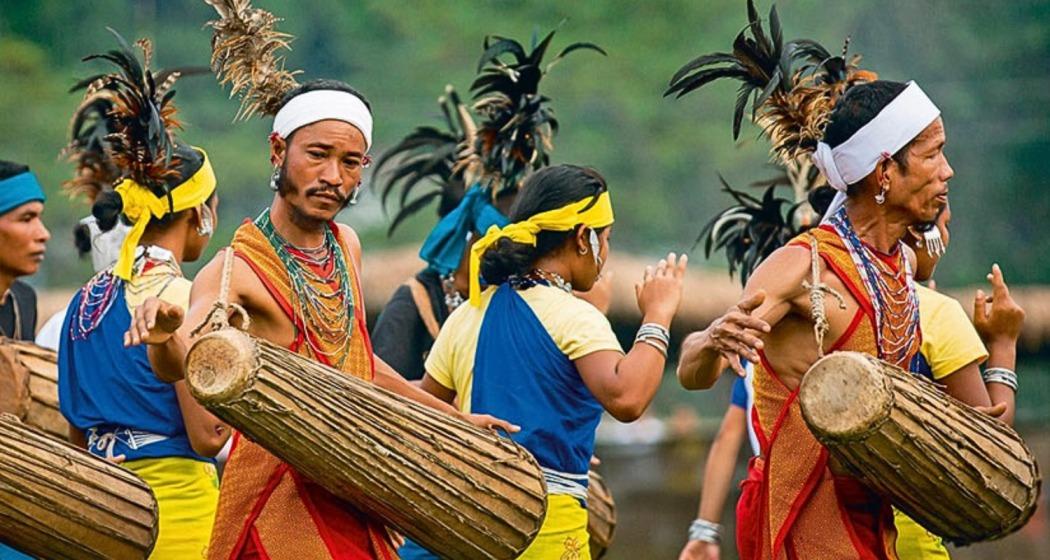
The Meghalaya government is set to launch an ambitious research initiative combining DNA analysis, linguistic study and cultural documentation to trace the origins of indigenous communities, including the Khasi, Jaintia and Garo tribes, Chief Minister Conrad K Sangma announced.
The project, expected to be formally rolled out in May, is being positioned as one of the most comprehensive efforts yet to build an evidence-based account of tribal history in the state. Officials said the study will run for 18 to 24 months, with findings to be released in phases.
Two expert committees have been constituted to carry out the research, one focusing on the Khasi-Jaintia communities and another dedicated to the Garo tribe, allowing for specialised and in-depth analysis of each group’s origins and evolution.
The study will involve DNA mapping to examine genetic linkages, alongside a detailed analysis of linguistic structures and cultural traditions. The aim is to integrate scientific methods with historical and anthropological research to generate a more comprehensive understanding of the communities’ past.
Officials said the initiative will also involve collaboration with national and international institutions, reflecting the scale and complexity of the exercise.
Sangma, after chairing meetings at the Tara Ghar State Guest House in Shillong, said the purpose of the project is to strengthen documentation and uncover additional historical evidence. He emphasised the need for “more facts” and systematic recording of tribal histories that have largely been preserved through oral traditions.
Meghalaya is home to three major indigenous groups, the Khasi, Jaintia and Garo, each with distinct cultural practices, languages and social systems. Notably, these communities follow matrilineal traditions, where lineage and inheritance are traced through women, making them unique within India’s socio-cultural landscape.
Also read: Meghalaya govt to fund UPSC aspirants clearing prelims
Despite rich traditions, much of their early history remains under-documented in written form. Scholars have long relied on oral narratives, folklore and limited historical records to reconstruct their origins.
The new initiative is expected to bridge this gap by combining genetic data with linguistic and cultural analysis, potentially offering fresh insights into migration patterns, inter-community linkages and historical evolution.
Preliminary work on the project has already begun, with research teams initiating early-stage activities in February. Officials said this preparatory phase includes data collection, identification of research partners and groundwork for field studies.
The full-scale study, once launched, will involve extensive fieldwork, documentation and laboratory analysis. Interim findings are expected to be shared periodically as the research progresses.
The initiative comes at a time when there is growing emphasis on documenting indigenous knowledge systems and cultural heritage using modern scientific tools. Experts say such studies can contribute to a better understanding of demographic history and cultural identity, while also informing policy and preservation efforts.
By combining DNA research with linguistic and cultural studies, the Meghalaya government aims to create a more robust and verifiable account of tribal origins, one that goes beyond oral tradition and aligns with global academic standards.
Officials indicated that the findings could also contribute to broader discussions on identity, heritage conservation and the historical roots of indigenous populations in Northeast India.

 Follow us