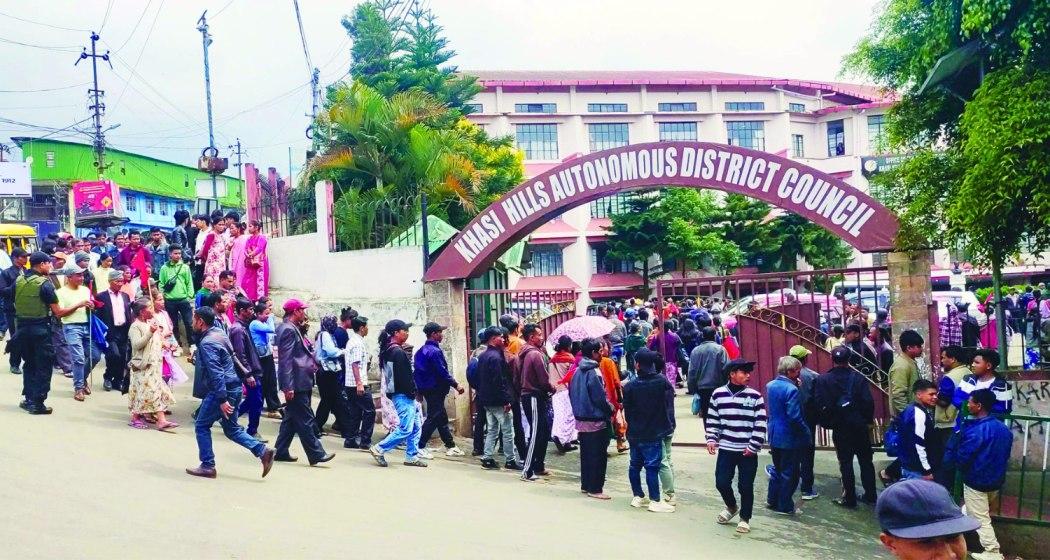
Blinkit's plans to expand operations in Meghalaya have hit a major hurdle after the Khasi Hills Autonomous District Council (KHADC) refused to grant the quick-commerce company the mandatory trading licence required to operate in the state.
The council said it was concerned that Blinkit's business model could adversely affect the livelihoods of more than 4,000 local grocery shops under its jurisdiction.
KHADC Chief Executive Member Winston Tony Lyngdoh defended the decision, saying the council would not approve any platform whose operations threatened indigenous traders and small businesses.
“The executive committee would not issue a trading licence to any platform whose business model threatens indigenous traders and small businesses,” Lyngdoh said.
According to him, Blinkit had reportedly obtained a no-objection certificate from the Dorbar Shnong and Rangbah Shnong of Nongrim Hills, but its application had not yet reached his office for consideration.
Also read: Telangana Assembly passes Bill for gig workers’ welfare
Lyngdoh said app-based delivery platforms offering deep discounts and doorstep services could significantly impact neighbourhood retailers, many of whom depend on traditional grocery trade for their livelihoods.
“More than 4,000 grocery shops under the council's jurisdiction stand to be affected,” he said.
The council maintained that protecting the interests of indigenous traders remains a priority and reiterated that all businesses seeking to operate within its jurisdiction must comply with KHADC licensing regulations.
Officials noted that the council had previously denied licences to similar quick-commerce ventures, including Instamart, citing concerns over the impact on local retailers.
Blinkit had reportedly begun operations in Shillong and engaged hundreds of delivery partners before halting services after failing to secure the required licences.
Efforts to obtain a response from Blinkit were unsuccessful.
The development underscores the challenges faced by quick-commerce companies seeking to expand into regions where local authorities are concerned about the impact of digital retail platforms on traditional businesses and indigenous economic interests.

 Follow us