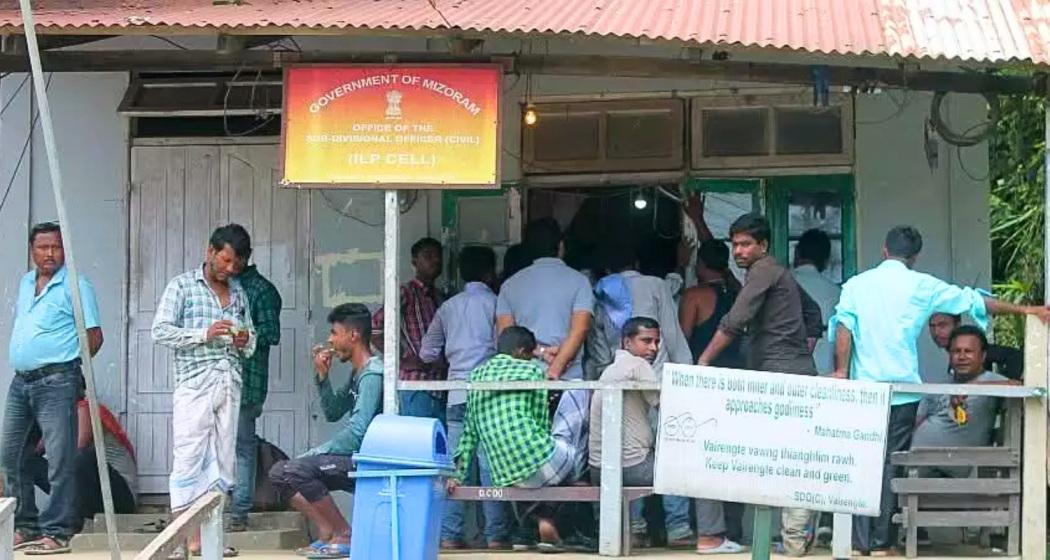
At least 1,177 non-tribal individuals were sent back from Mizoram over the past two years for violating Inner Line Permit (ILP) regulations, Home Minister K Sapdanga informed the Assembly on Friday.
Responding in writing to a query from Congress MLA C Ngunlianchunga, Sapdanga said more than 3.39 lakh ILPs were issued in 2024 and 2025. Of these, 3,17,807 were temporary permits, while 22,185 were regular ILPs.
The data showed a rise in permit issuance, from 1,59,608 in 2024 to 1,80,384 in 2025. Kolasib district recorded the highest number of permits at 1,90,528, followed by Aizawl district with 1,23,063.
Of the permits issued in Aizawl, 46,482 were granted at the Lengpui Airport counter.
The state government generated Rs 15.12 crore in revenue through ILP issuance during the two-year period, the minister said.
Also read: Mizoram completes 93% biometric enrolment of Myanmar refugees
The disclosure comes amid renewed debate over ILP enforcement in the state.
The Mizo Zirlai Pawl (MZP), the state’s apex student body, has demanded a comprehensive overhaul of the regulatory framework, citing concerns over increasing influx and alleged circumvention of entry norms.
At a recent press conference in Aizawl, MZP leaders claimed that an increasing number of non-locals were entering Mizoram through “self-sponsorship” or sponsorship by other non-local entities. They alleged this practice bypasses the traditional requirement of endorsement by indigenous permanent residents.
The organisation has urged the government to plug regulatory gaps and withdraw two notifications issued in 2016 and 2017. These provisions permit non-tribal trade licence holders to act as self-sponsors and to sponsor up to five subordinate managers or labourers.
According to the MZP, such relaxations weaken the integrity of the ILP regime and pose risks to the demographic stability of the Mizo community.
The ILP system, applicable in Mizoram and certain other northeastern states, regulates the entry and stay of non-residents as a protective measure for indigenous populations.

 Follow us