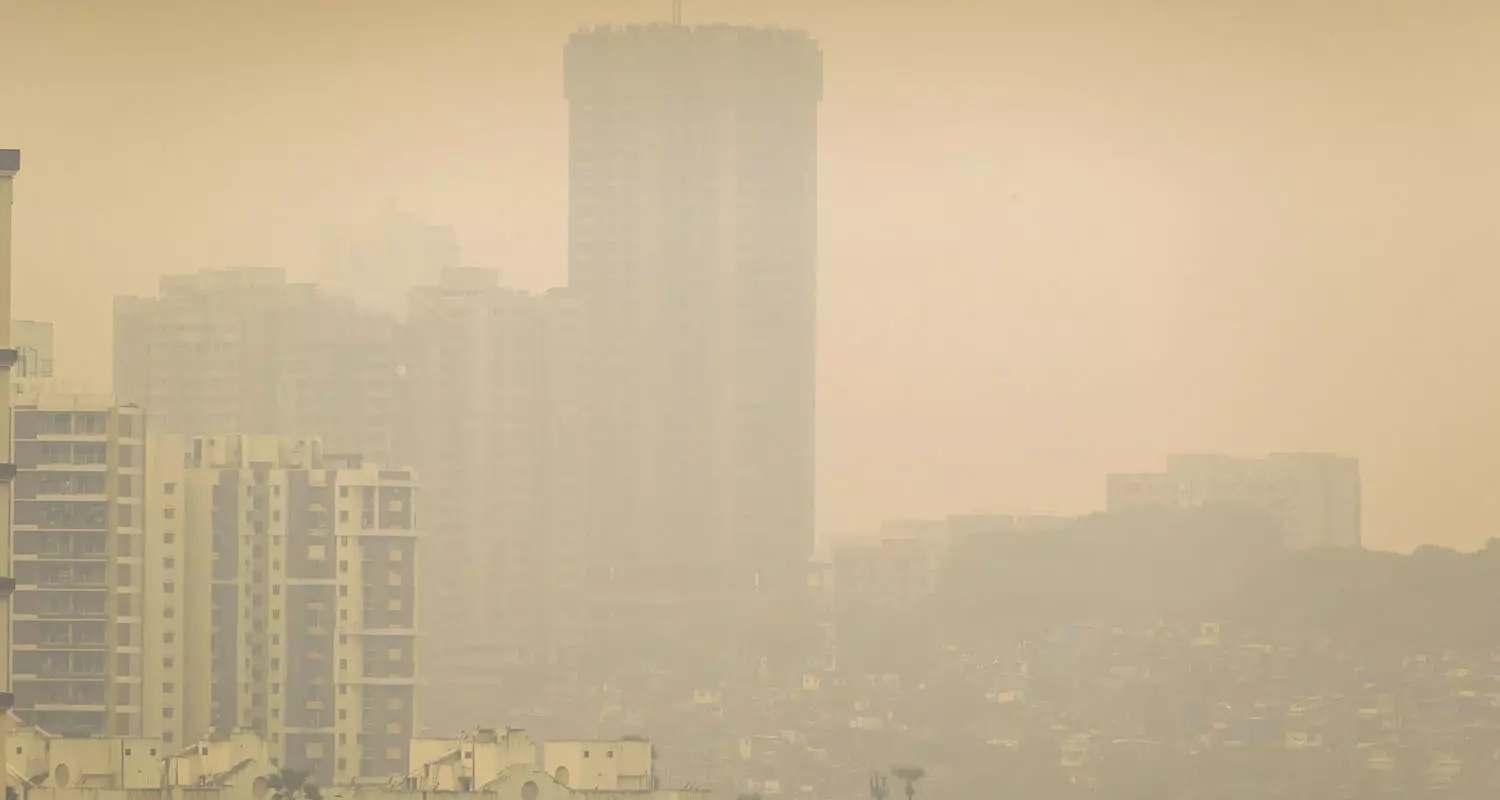
For the first time, stringent restrictions under Stage 4 of the Graded Response Action Plan (GRAP-4) have been imposed in several parts of Mumbai as air pollution in India’s financial capital spirals to dangerous levels. The city, long considered to have relatively better air than its northern counterparts, has now officially joined Delhi on the list of Indian metropolises battling toxic air and enforcing emergency anti-pollution curbs.
The Brihanmumbai Municipal Corporation (BMC) began implementing GRAP-4 measures after the Air Quality Index (AQI) in multiple areas consistently crossed the “very poor” (301-400) and “severe” (401-500) thresholds. The worst-affected zones include Mazgaon, Deonar, Malad, Borivali East, Chakala-Andheri East, Navy Nagar-Colaba, Powai, and Mulund.
Under the GRAP-4 directives, all construction and demolition activities that generate dust have been completely halted in these pockets. The BMC has issued stop-work and shutdown notices to more than 50 construction sites, with dozens of others placed under strict surveillance. Small-scale industries such as bakeries, marble-cutting units, and other polluting units have been directed to immediately switch to cleaner fuels and processes or face closure and penalties.
To ensure compliance, the civic body has deployed dedicated flying squads in every municipal ward. Each squad consists of BMC engineers, local police personnel, and GPS-enabled vehicles tasked with round-the-clock patrolling, identifying polluting activities, and monitoring emissions on the ground.
In the past fortnight, large parts of Mumbai have recorded AQI levels in the “very poor” and “severe” categories. Residents across the city have reported burning eyes, difficulty breathing, and persistent sore throats—symptoms eerily similar to those experienced by Delhiites during the winter smog season.
Prominent voices from the entertainment industry have taken to social media to highlight the crisis. Stand-up comedian and actor Vir Das posted a video on Instagram in which he sarcastically sang, “AQI, AQI, let me die.” Veteran actor and filmmaker Soni Razdan urged immediate action, writing, “Let us not be guilty of allowing apathy to kill us. Because that’s what will happen.” Lyricist and filmmaker Varun Grover pointed out the insidious nature of the threat, stating that air pollution “is not as big an issue as it deserves to be because its killing effects take a decade or two – it might even cut down your lifespan by 15 years.”
In response to the deteriorating situation, the Mumbai unit of the Congress party has released a comprehensive “Mumbai Clean Air Action Plan.”
Also Read: Delhi air quality turns 'severe' at 409 despite GRAP 4 curbs
The proposed roadmap includes recognising clean air as a fundamental right, establishing 24×7 monitoring of all polluting activities, planting one million trees across the city, and enforcing significantly stricter emission norms for vehicles, construction sites, and industrial units.
Mumbai’s descent into the league of India’s most polluted cities serves as a stark wake-up call for authorities nationwide. Unabated year-round construction, unchecked vehicular emissions, and open waste burning are slowly poisoning the air in urban centres across the country. Despite various policy interventions over the years, the root causes remain largely unaddressed, allowing the crisis to spread beyond the National Capital Region.
Just last week, during a high-level BMC meeting called to review the sudden AQI spike, Municipal Commissioner Dr Bhushan Gagrani had warned that GRAP-4 restrictions would be triggered if the AQI remained above 200 for three consecutive days—a threshold that has now been decisively breached.
Also Read: GRAP 4: Govt directs pvt offices to work with 50% staff strength



 Follow us