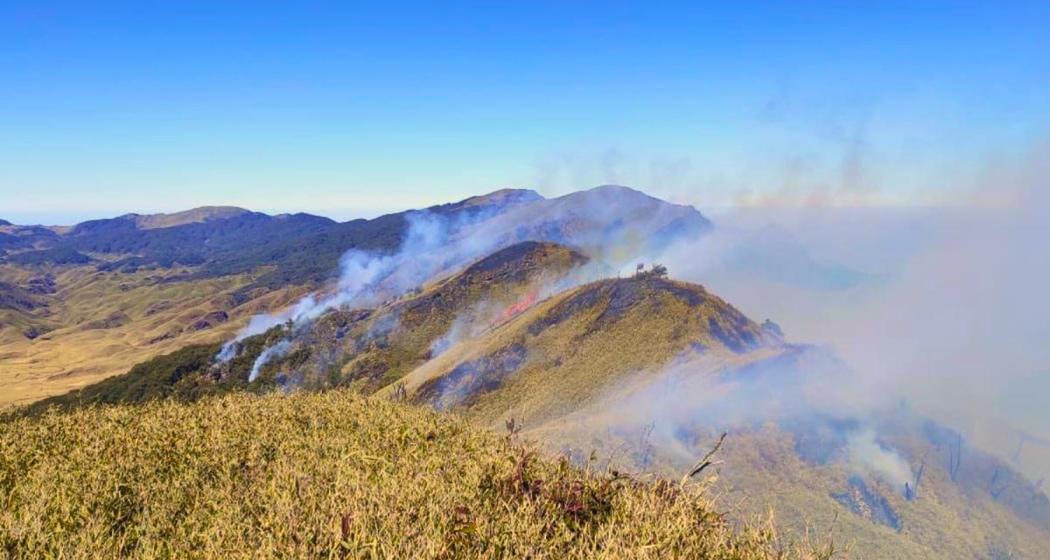
A wildfire that broke out in Dzukou Valley on January 26 has entered its third day, spreading rapidly across forested slopes in Nagaland and advancing dangerously close to Mount Esii, the highest peak in neighbouring Manipur. More than 30 trekkers were evacuated, while the National Disaster Response Force (NDRF) and State Disaster Response Force (SDRF) have been deployed, and Indian Air Force helicopters are assisting with aerial water drops.
The blaze, driven by dry winter conditions and strong winds, has spread across rugged and inaccessible terrain, making containment extremely difficult. Local volunteers and youth organisations have been battling the flames, but the scale of the fire has overwhelmed ground efforts.
“The fire’s scale makes it nearly impossible to control without professional assistance,” said a volunteer involved in the containment operation.
The remote and steep terrain, with many areas accessible only on foot, has complicated firefighting efforts. Environmentalists warn that continued spread could result in substantial forest loss, damage to wildlife habitats, and long-term ecological imbalance. The valley is famed for its seasonal wildflowers and the rare Dzukou Lily, which could be at risk.
Also read: Nagaland: Southern Dzukou Valley hit by wildfire, rescue launched
Authorities are preparing aerial support, including helicopters with Bambi buckets, to assist in water drops, while drones are being used to monitor the blaze. Officials have not yet released an estimate of the area affected or the total ecological damage.
The exact cause of the wildfire remains under investigation. While many fires in the valley historically start near trekking bases, some locals suspect arson, as this blaze appears to have originated on a slope rather than near well-trodden areas.
This fire follows another major wildfire in December 2025, which required multi-agency intervention. Local authorities have recently implemented a ban on burning forests during the dry season to prevent recurrent fires.
Environmental groups and local leaders have urged a rapid and coordinated response to safeguard the valley’s fragile ecosystem and protect its unique flora and fauna.

 Follow us