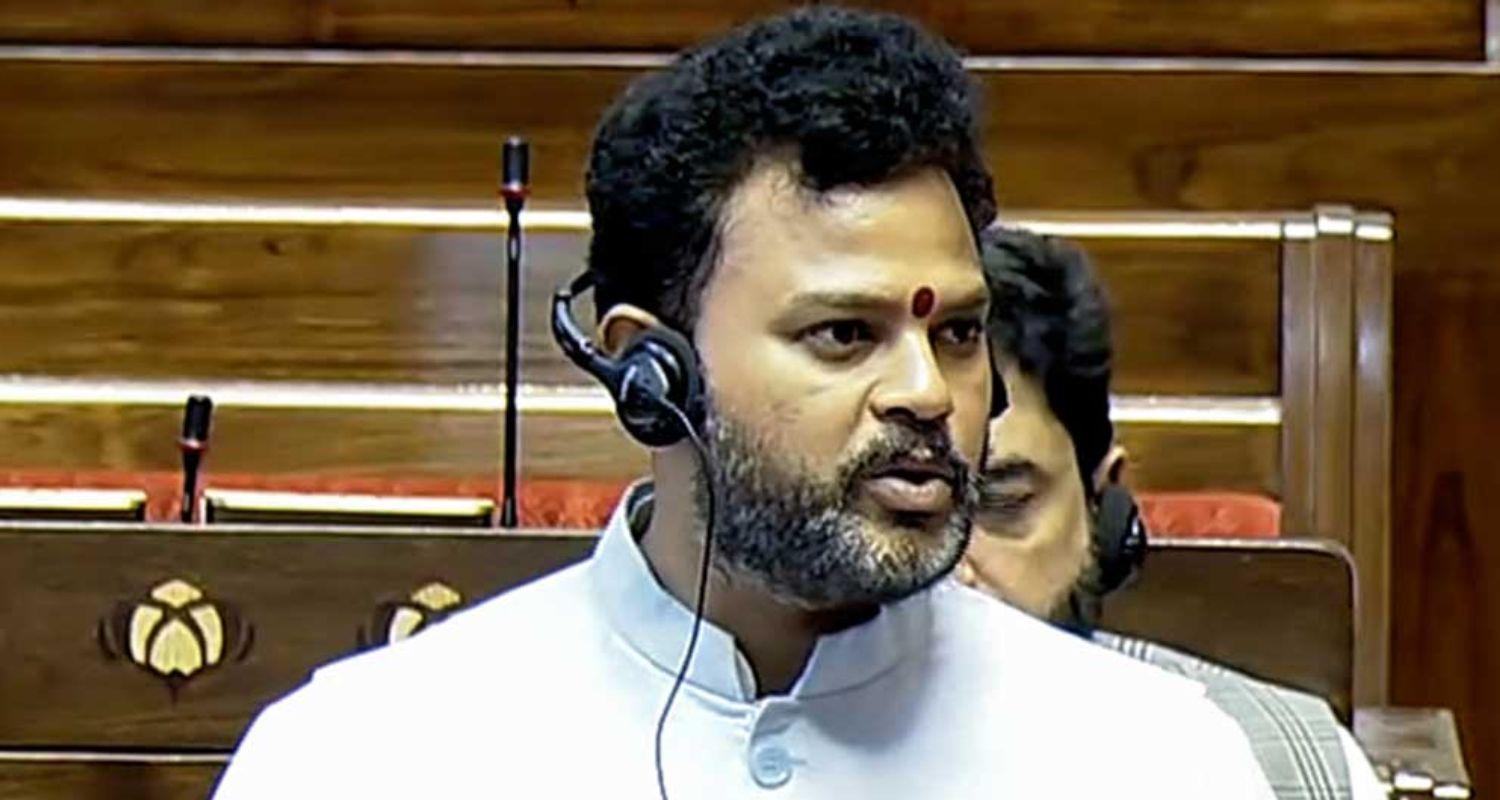
Union Minister for Civil Aviation Kinjarapu Rammohan Naidu on Wednesday announced that the Government of India is working to enable Beyond Visual Line of Sight (BVLOS) certification by the end of 2026, while also preparing a new financial incentive scheme to boost domestic manufacturing of drones and critical components.
Addressing the AP Drone Industry CEO's Round Table at Orvakal Drone City, jointly hosted by the Drone Federation India (DFI) and the Government of Andhra Pradesh, Naidu said India's regulatory framework must keep pace with the rapid expansion of the drone industry. He stressed that future reforms should facilitate innovation while ensuring stringent standards of safety and security.
The CEO roundtable brought together more than 150 companies from the drone, counter-drone and component ecosystem, along with senior officials from the Centre and Andhra Pradesh governments, the Directorate General of Civil Aviation (DGCA), academia and research institutions. According to a government release, Naidu said the country would have a refined certification framework by the end of the year, including provisions for BVLOS certification.
"By the end of this year, we will have a refined certification framework with enablement of BVLOS certification. As the industry moves into its next phase of growth, the regulatory framework must evolve with it, enabling innovation while maintaining the highest standards of safety and security," the Minister said.
Naidu also highlighted the Ministry's efforts to introduce a new financial incentive scheme aimed at strengthening India's domestic drone manufacturing capabilities. The proposed initiative is expected to support manufacturers in scaling production while encouraging the development of critical components within the country.
The discussions at the roundtable focused on the next stage of reforms required to take India's drone ecosystem beyond its foundational phase and towards large-scale deployment and global competitiveness. Key issues included BVLOS operations, certification, testing and sandboxing, UAS Traffic Management (UTM), airspace access, government adoption and the development of a robust domestic component ecosystem.
Drone Federation India President Smit Shah said substantial progress had been made in building India's drone industry over the past few years, with both the Central and state governments playing an important role.
"A lot of good work has been done over the last few years. The Government of India and State Governments have played a great role in establishing an industry that barely existed a decade ago. We now have the foundations of a strong Indian drone ecosystem. The next push has to be about scale," Shah said.
He added that the next phase of reforms should allow Indian companies to expand manufacturing, undertake advanced BVLOS operations, access high-quality testing infrastructure and develop critical components domestically while competing in international markets.
A major focus of the discussions was the expansion of BVLOS operations, which could facilitate large-scale drone applications in sectors such as logistics, healthcare, agriculture and infrastructure. Industry representatives called for a predictable and risk-based certification framework, dedicated flight-testing environments and clear operational protocols to enable drones to move from experimental deployments to commercially scalable networks.
Participants also stressed the need to strengthen India's testing and certification infrastructure by establishing dedicated testing sites and flight-testing corridors, developing common laboratory facilities and making greater use of infrastructure available with government agencies, technical institutions and research organisations.
The roundtable also highlighted the importance of specialised testing capabilities for both civil and defence applications. Participants called for stronger UTM and live-tracking systems, along with more efficient mechanisms for operating drones in restricted and red-zone areas.
Government-led adoption emerged as another key priority. Industry representatives said wider deployment of drone-based solutions by government departments could help create demand and accelerate the sector's commercial growth.
The discussions also emphasised the need to develop a stronger domestic component ecosystem covering critical technologies through closer collaboration between industry, academia, research institutions and government agencies.
Also read: No one can pressurise Kerala government: Satheesan
Participants further discussed measures to establish India as a global hub for drone manufacturing and technology, including improving ease of doing business, simplifying regulatory procedures and strengthening export and trade promotion mechanisms.
The discussions hold particular significance for Orvakal Drone City, a 600-acre purpose-built ecosystem being developed to bring together drone manufacturing, research and development, testing, logistics and related infrastructure.
The initiative is envisioned as an integrated ecosystem where companies can develop, test and scale next-generation drone technologies. The event also featured an exhibition showcasing technologies and solutions from key industry stakeholders, including companies that have expressed interest in investing and establishing operations at Orvakal Drone City.
The CEO roundtable highlighted a shared government-industry vision for the next phase of India's drone sector: moving beyond ecosystem building towards large-scale deployment, advanced operations, stronger domestic manufacturing, world-class testing infrastructure, greater government adoption and globally competitive Indian drone companies.

 Follow us