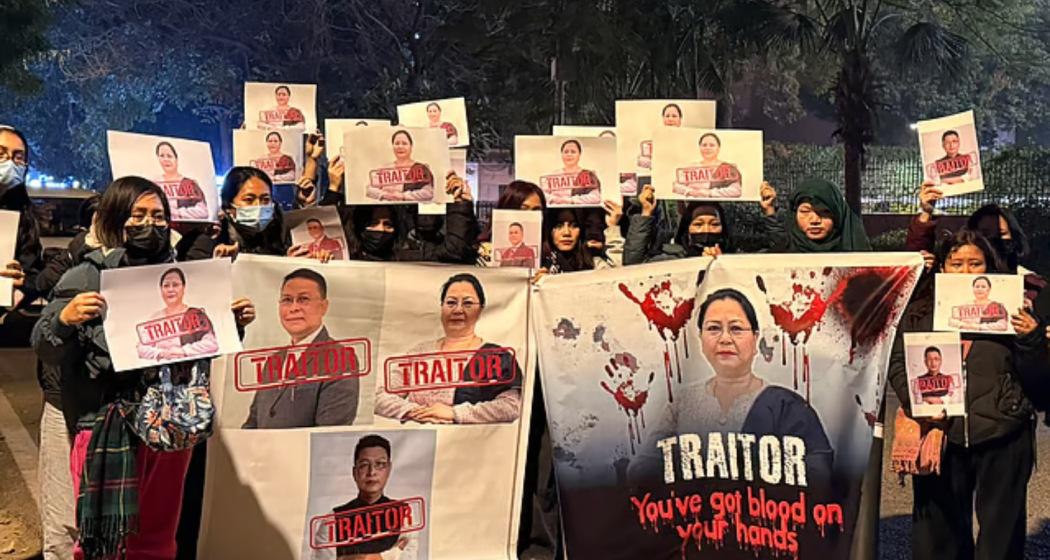
Just days after assuming office, Manipur Chief Minister Yumnam Khemchand Singh has declared the rehabilitation of internally displaced persons (IDPs) as the top priority of his newly formed government, even as protests and a total shutdown erupted in Kuki-Zo dominated districts over the inclusion of tribal MLAs in the administration.
Speaking to medispersons on February 5, a day after taking oath as Chief Minister on February 4, Singh emphasised the urgent need to address the plight of thousands displaced by ongoing ethnic violence in both hill and valley areas.
“Our first priority will be to look after the problems of IDPs (internally displaced persons) in both hills and the valley. The biggest issue is that they are not able to return to their homes. The government will formulate a roadmap very soon,” he said.
The statement comes amid prolonged ethnic tensions that have left many residents in relief camps, unable to return due to insecurity, damaged homes, and mutual distrust between communities. Singh's assurance signals an early focus on humanitarian relief, safe resettlement, and restoring normalcy in the strife-hit state.
However, the new government's formation, led by a Meitei Chief Minister with Kuki-Zo and Naga representation, including Deputy Chief Minister Nemcha Kipgen from the Kuki-Zo community, has triggered sharp backlash from sections of the Kuki-Zo population.
Kuki-Zo tribal groups, including the Kuki-Zo Council (KZC), have accused participating Kuki-Zo MLAs (such as Nemcha Kipgen, N. Sanate, and L.M. Khaute) of “betrayal” for joining what they describe as a Meitei-dominated government amid unresolved ethnic strife. The groups declared a social boycott of these legislators, vowing non-cooperation until they withdraw from the administration.
The discontent escalated on February 6 with a total shutdown enforced across Kuki-Zo areas, particularly in Churachandpur district. The Churachandpur unit of the Kuki Students' Organisation (KSO) called a 24-hour shutdown starting midnight, while the Joint Forum of Seven (JF7) imposed a dawn-to-dusk bandh (6 a.m. to 6 p.m.) in Kuki-Zo zones.
Also read: New Manipur government faces Kuki opposition
Normal life was severely disrupted: markets stayed shut, vehicles stayed off roads, educational institutions and government offices saw poor attendance, and bandh supporters stopped vehicles in parts of the district headquarters.
Tensions boiled over in the Tuibong area, where clashes between protesters and security forces continued late into the night of February 5 and into early February 6. Protesters pelted stones, prompting security personnel to use baton charges and tear gas shells. Sources reported two people injured and around five detained during the violence.
The Kuki Women Organisation for Human Rights (KWOHR) also announced a mass public rally on February 6 afternoon to voice opposition to Kuki-Zo MLAs' participation in the government, describing it as unacceptable under the prevailing circumstances.
Meanwhile, some tribal voices, such as the Indigenous Tribes Advocacy Committee (in Pherzawl and Jiribam districts), have defended participating MLAs and warned against intimidation or harm toward them, emphasizing unity among Hmar, Kuki, and Zomi tribes.
The developments highlight the fragile political and security situation in Manipur following the end of President's Rule and the formation of a new BJP-led government. While the administration stresses reconciliation and resettlement as key goals, protests in hill districts underscore deep-seated divisions that continue to challenge efforts toward peace and normalcy.
The government passed a floor test comfortably on February 6, but the ongoing unrest in Churachandpur and calls for boycott indicate that restoring trust across communities remains a critical hurdle ahead.

 Follow us