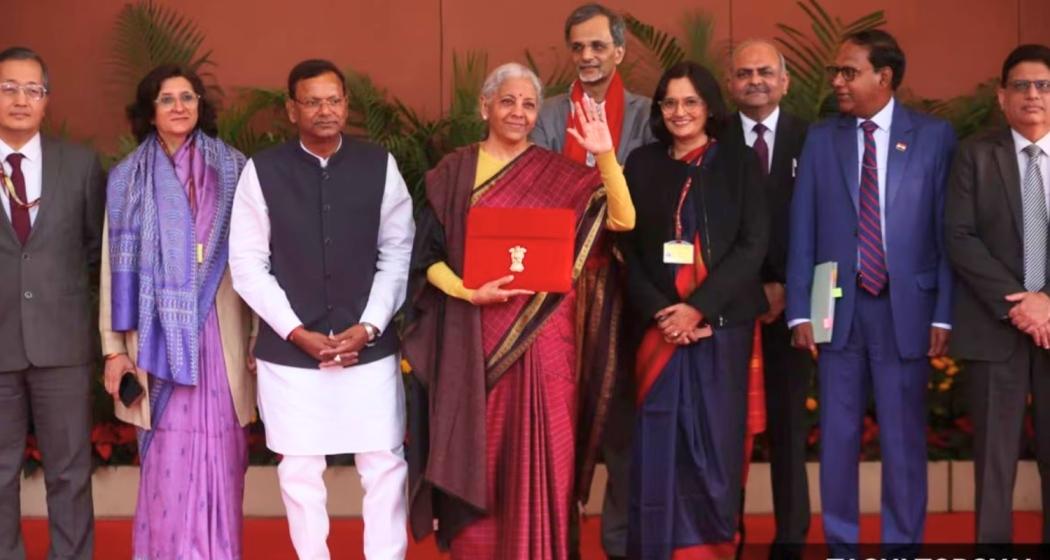
The Union Budget 2026-27, presented by Finance Minister Nirmala Sitharaman on February 1, 2026, has received largely positive reactions from Northeast political leaders and industry figures, who welcomed its emphasis on tourism development, education reforms, infrastructure connectivity, and the Purvodaya initiative for eastern India, backed by sustained public capital expenditure of ₹12.2 lakh crore.
The Budget's key provisions for the region include the launch of a new scheme to develop Buddhist circuits across Arunachal Pradesh, Assam, Manipur, Mizoram, Sikkim, and Tripura, focusing on temple preservation, pilgrim facilities, and connectivity to boost spiritual and cultural tourism. Other highlights are the upgradation of the National Council for Hotel Management into a National Institute of Hospitality, training of 10,000 certified guides, eco-sensitive tourism promotion, and alignment of education with employment through initiatives like University Townships and a High-Powered ‘Education to Employment and Enterprise’ Standing Committee.
Nagaland’s Higher Education and Tourism Minister Temjen Imna Along said the Budget positions education and tourism at the centre of the next growth phase, with direct relevance for culturally rich Northeast states. He highlighted the University Townships proposal, the Education-to-Employment Standing Committee, and hospitality upgrades as timely interventions to bridge education-employability gaps and professionalise tourism for local livelihoods.
Mizoram Tourism Minister Lalnghinglova Hmar welcomed the shift towards value-based, eco-sensitive tourism, noting that the National Destination Digital Knowledge Grid would help document and showcase lesser-known destinations, benefiting local youth, researchers, and creative professionals. He added that continued focus on last-mile connectivity and MSME support would ensure inclusive, community-rooted tourism growth.
Arunachal Pradesh Tourism and Education Minister Pasang Dorjee Sona described the Budget as a shift from pure welfare to long-term capacity-building. He pointed to enhanced fiscal devolution under the 16th Finance Commission, rural and border infrastructure investments, girls’ hostels in every district, support for high-value agriculture such as agarwood, expansion of SHE Marts under the Lakhpati Didi framework, and the Buddhist Circuit as reinforcing the state’s role as a civilisational and cultural bridge.
Assam Chief Minister Himanta Biswa Sarma hailed the reform-oriented Budget as balancing India’s global aspirations with grassroots development, stating that Assam and the eastern region would benefit meaningfully. He praised targeted support for fisheries, commercial farming, Amrit Sarovars, new tourism circuits in the Northeast, infrastructure in Tier-3 and Tier-4 towns, skilling initiatives aligned with healthcare and AI sectors, and the upgrade of the National Mental Health Institute at Tezpur. He also noted the ₹6,812 crore allocation for Northeast development and emphasis on fiscal discipline.
Tripura Chief Minister Manik Saha called the Budget people-centric and one of the best, with a major push for the Northeast built on last-mile delivery, inclusive progress, and infrastructure. He specifically welcomed the Buddhist Circuit covering the region and described the document as a visionary roadmap transforming dreams into reality for youth, women, and farmers.
Also read: Poll-bound states see Budget bias, Assam calls it opportunity
Meghalaya Chief Minister Conrad K. Sangma praised the Budget as visionary and holistic, reflecting the Centre’s resolve to position the Northeast as a major growth engine of eastern India. He highlighted the special thrust on inclusive development, the East Coast Industrial Corridor, electric buses for public transport, five new tourism destinations in Purvodaya states, and the Buddhist Circuit to boost cultural tourism and employment.
Industry leaders echoed the optimism. Vikas Agarwal, Managing Director and CEO of SM Developers, said the Budget signals that the next investment cycle will be anchored in services, tourism infrastructure, and sustained capex while maintaining fiscal discipline. He noted that Swadesh Darshan 2.0, Buddhist circuits in the Northeast, and seaplane incentives could improve last-mile connectivity and hospitality viability in gateway cities like Guwahati.
Vineet Kumar Mishra, General Manager of Novotel Guwahati GS Road, said the Budget treats tourism and hospitality as structured contributors to employment and regional development. He described the National Institute of Hospitality and guide certification programme as crucial for service quality, with higher capex and connectivity supporting business travel, MICE tourism, and leisure demand in Tier-II cities.
Bajrang Lohia, President of the Federation of Industry and Commerce of North Eastern Region (FINER) said the budget was “balanced and fiscal-disciplined” and highlighted that the thrust on MSMEs would particularly benefit the Northeast’s largely medium and small enterprise base. He welcomed the development of Buddhist circuits as a boost to tourism and the economy.
Ranjit Barthakur, Chairman of the FICCI Northeast Advisory Council, said the Budget reflects confidence in India’s economic fundamentals and lauded its emphasis on public capital expenditure, infrastructure, MSME support, healthcare and education. “Strengthening healthcare and education ecosystems will be critical for regions such as the North-East to fully participate in India’s growth journey,” he added.
Assam Opposition Figures including CPI(M) state secretary Suprakash Talukdar and Raijor Dal general secretary Rasel Hussain accused the Budget of favouring corporate interests over common citizens and failing to include specific developmental measures for Assam and the Northeast.
The North East India Regional Council of the Indian Chamber of Commerce welcomed the Budget as adopting an “Ashtalakshmi development model” for the Northeast, positioning it as a multi-dimensional growth engine through investments in connectivity, tourism, infrastructure, agriculture, healthcare, and industrial development.
While some analyses noted only modest increases in DoNER allocation (to ₹6,812.30 crore) and the region’s marginal share in total spending, leaders and industry voices broadly viewed the Budget as accelerating the Northeast’s integration into national services-led, tourism, and infrastructure-driven growth.

 Follow us