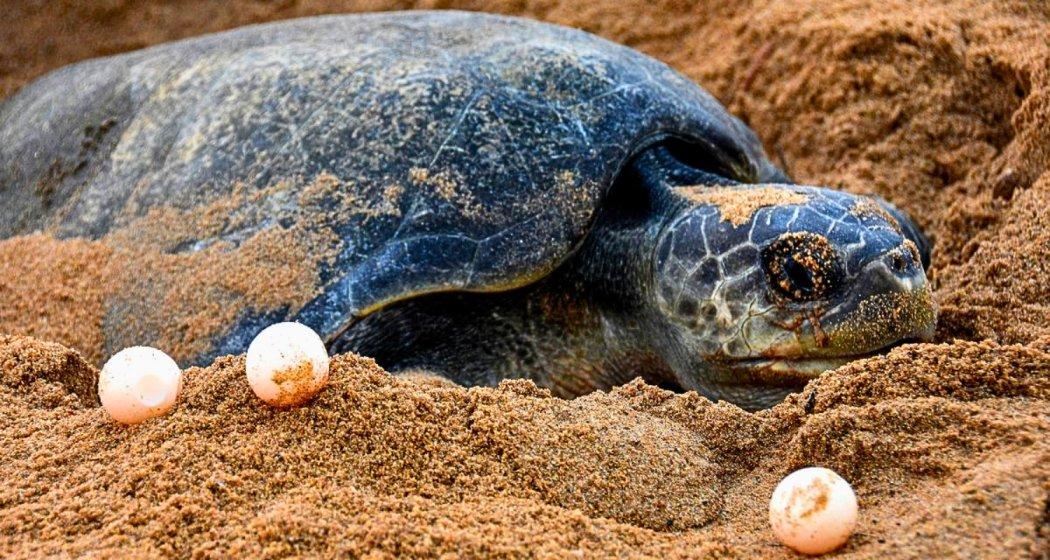
Wildlife experts and nature lovers in Odisha have expressed concern over the absence of endangered Olive Ridley turtle from the Gahirmatha coast in Kendrapara district during the peak nesting season this year.
The Gahirmatha beach, located near Bhitarkanika National Park, is recognised as the world’s largest known rookery for Olive Ridley turtles, where millions typically congregate annually for mass nesting.
According to Varadaraj Gaonkar, Divisional Forest Officer of the Mangrove Forest Division (Wildlife) in Rajnagar, the turtles usually arrive in large numbers between January and March for egg-laying along the Gahirmatha coastline.
“There have been instances in the past when turtles appeared towards the end of March, but the delay has never extended beyond that,” the officer said.
While turtles have already arrived at the Rushikulya river mouth in Ganjam district, another major rookery, they are yet to turn up at Gahirmatha, raising concerns among conservationists.
Officials said there remains a possibility that the turtles may skip mass nesting this year, as seen in 2014, although favourable weather conditions and beach profiles at Agarnasi continue to offer suitable conditions for nesting.
Also read: 48 tagged Olive Ridley turtles return to Odisha for nesting
The phenomenon, known as Arribada, refers to the synchronous arrival of thousands of female turtles at nesting sites to lay eggs, a rare natural spectacle observed at only a few locations worldwide.
Experts, however, point to possible disruptions, including unchecked trawl fishing and increased human interference, as factors that may have affected the turtles’ nesting behaviour.
“It is difficult to pinpoint a single cause for their absence. Studies on their behaviour are ongoing, and multiple factors may be at play,” an official said.
Historical data indicates that Olive Ridleys have skipped nesting at Gahirmatha in several years, including 2014, 2008, 2002, 1998, 1997, 1988 and 1982.
In contrast, last year saw a significant turnout, with over 6.06 lakh turtles emerging over five days from March 5 for nesting.
Only female turtles come ashore, typically at night, to dig pits and lay eggs before returning to the sea. The hatchlings emerge after 45 to 60 days, completing a life cycle that unfolds without parental care.
The continued absence of turtles this season has left experts wary, with calls for closer monitoring and conservation measures to ensure the survival of the species and preservation of their unique nesting habitats.

 Follow us