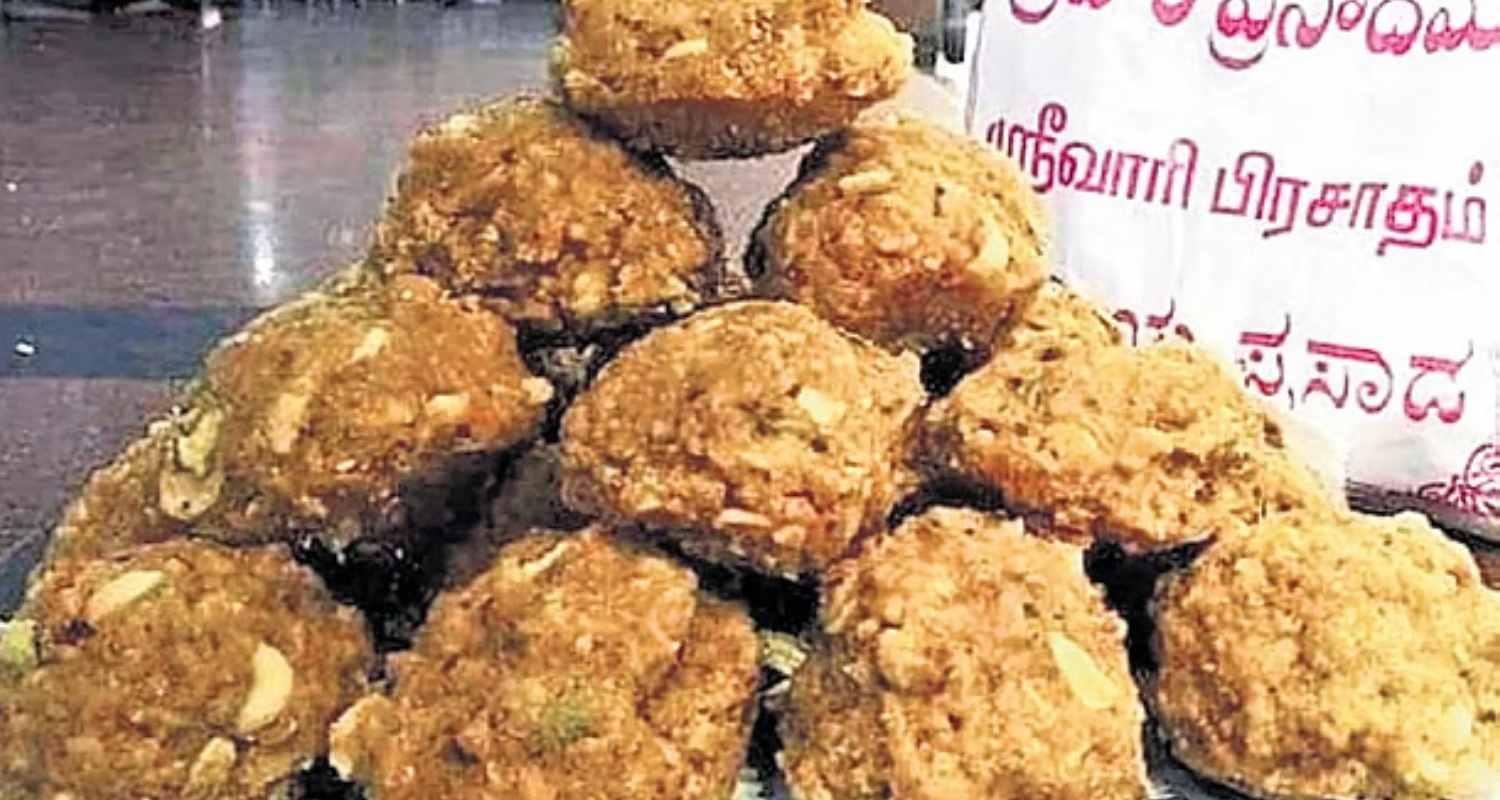
A one-man committee headed by retired IAS officer Dinesh Kumar has officially begun inquiry into administrative lapses in the Tirumala Tirupati Devasthanams (TTD), which allegedly led to the adulteration of ghee used in the preparation of the sacred Tirupati 'laddu prasadam'.
Kumar commenced the investigation on Tuesday after offering prayers at the Tirumala Venkateswara Temple. The Andhra Pradesh government appointed him to lead the inquiry into alleged administrative lapses during the previous YSR Congress Party (YSRCP) government. The state government constituted the committee on February 20 through Government Order (GO Rt No. 458), directing it to submit a report within 45 days.
A 1983-batch IAS officer, Kumar has been tasked with examining the Self-Contained Note (SCN) submitted by the Special Investigation Team (SIT), which probed the criminal aspects of the case under the supervision of the CBI following directions from the Supreme Court of India.
Kumar met officials of the TTD and gathered information from various departmental heads regarding the supply of adulterated ghee. He reportedly sought details on the tender finalisation process during the YSRCP regime, possible relaxation of rules, and lapses in quality checks during the procurement process.
The inquiry will also examine specific issues related to the procurement and quality testing of ghee supplied to the temple administration. Kumar has set up his office at Padmavathi Guest House in Tirumala, from where he will conduct the investigation.
According to the terms of reference outlined in the government order, the panel will probe the 'administrative and governance aspects' of the case. Its primary objective is to assess lapses, omissions, or failures in the relaxation and enforcement of tender conditions related to the supply of ghee.
The committee will scrutinise whether procurement decisions were taken with due diligence and in compliance with established procedures. It is empowered to determine the administrative responsibility of officers, purchase committee members, and other TTD officials, and recommend disciplinary action against those found responsible.
The formation of the committee follows the SIT filing a chargesheet in court on January 23. While the criminal investigation is ongoing, the SIT’s self-contained note flagged serious irregularities in administrative processes and recommended action against erring officials.
The committee has been authorised to call for official records and seek written clarifications from concerned officers to determine who altered tender conditions and why.
The issue has sparked intense political debate in the Andhra Pradesh Legislative Assembly and the Andhra Pradesh Legislative Council.
Chief Minister N. Chandrababu Naidu recently alleged during a special discussion in the Assembly that a 'syndicate' operating during the previous YSRCP regime was responsible for the adulteration. He claimed that between 2019 and 2024, nearly 60 lakh kg of adulterated ghee was used to prepare over 20 crore laddus, causing losses of more than Rs 234 crore to TTD.
“There was a conspiracy angle. They became a syndicate,” Naidu said in the Assembly, adding that forensic evidence had confirmed the adulteration.
However, the Opposition YSRCP has strongly criticised the inquiry. Senior YSRCP leader and former TTD chairman B. Karunakar Reddy described the one-man committee as an 'insult to the Supreme Court and the judicial process'.
He alleged that the state government was staging a 'political drama' because the CBI-supervised SIT investigation had not found evidence against YSRCP leaders. “The new committee is aimed at framing Y. S. Jagan Mohan Reddy and other YSRCP leaders in the ghee issue after attempts through the SIT process failed,” Karunakar Reddy claimed.
The controversy surrounding the probe had earlier reached the Supreme Court. On February 23, a bench headed by the Chief Justice dismissed a petition challenging the committee, allowing the inquiry to proceed.
The court observed that an administrative inquiry does not overlap with criminal proceedings and noted that while the SIT had already filed its chargesheet, a separate administrative probe was necessary to determine the lapses within the TTD administration and identify those responsible.

 Follow us