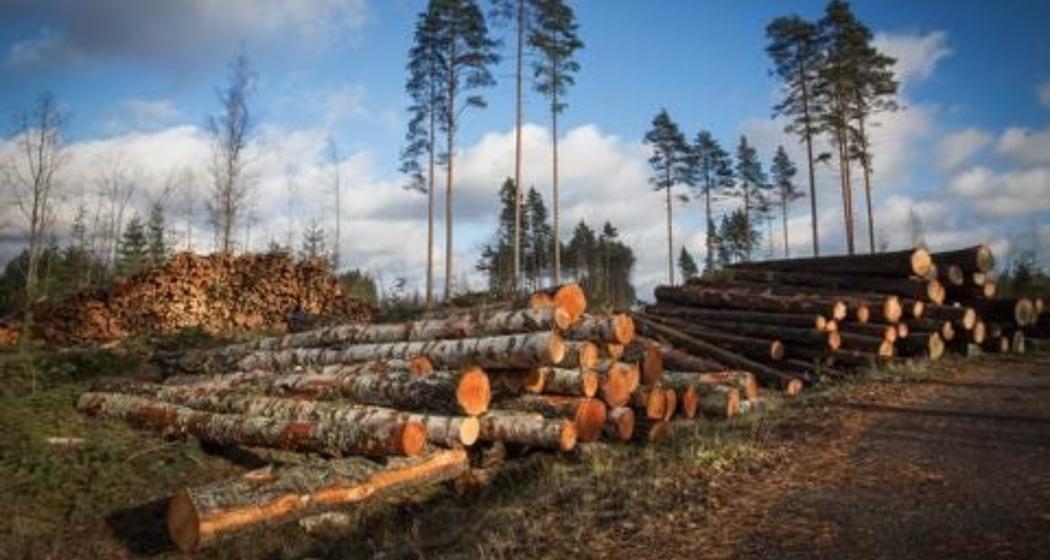
More than one lakh mature trees have been felled across Assam since May 2016 for various development projects, according to information obtained through the Right to Information (RTI) Act, prompting environmental experts to raise concerns about the absence of ecological impact studies.
Data received from 15 forest divisions in response to RTI queries submitted to the office of the Principal Chief Conservator of Forests revealed that 1,06,896 full-grown trees were cut during the period. The queries had been forwarded to 43 wildlife and territorial forest divisions across the state, though several divisions did not provide complete information.
The figures indicate that development activities linked to infrastructure expansion and industrial operations accounted for the majority of tree felling.
Responding to the findings, Assam Environment, Forest and Climate Change Minister Chandra Mohan Patowary said the trees were removed out of “dire necessity” for projects considered vital for the state’s development.
He cited the four-laning of National Highway-17 between Guwahati and Goalpara and the construction of the Darrang Medical College and Hospital as examples where large numbers of trees had to be cleared. Tree felling was also undertaken for crude oil exploration projects by companies such as Oil and Natural Gas Corporation and Oil India Limited, he said.
Also read: Over 52% of Manipur’s hill springs dry up
The RTI data further showed that more than 26,000 trees were felled in notified forest areas, while the remaining were removed from non-forest locations.
Nearly 84,000 trees were cut for government projects including roads, bridges, flyovers, factories and public infrastructure such as medical colleges and police battalions. More than 10,000 trees were removed for private development works.
The minister said the government had attempted to offset the loss of green cover through plantation drives under initiatives such as the Amrit Briksha Andolan. Under the campaign, one crore saplings were planted in a single day.
According to the state government, more than 3.5 crore saplings have been planted over the past two years, with forest divisions reporting survival rates of over 70 per cent after proper maintenance.
Environmental experts, however, cautioned against equating the loss of mature trees with the planting of new saplings.
Environmental researcher Narayan Sharma said a fully grown tree represents decades of ecological value and cannot be replaced quickly. Even when saplings survive, he noted, plantations may take several decades before they begin to provide comparable ecosystem services.
Experts also expressed concern over the absence of systematic ecological impact assessments in cases involving large-scale tree felling.
Environmental scientist Minakshi Bora said the lack of such studies is scientifically worrying, warning that cumulative damage to biodiversity, microclimates and ecosystem services may remain unnoticed until the consequences become severe and difficult to reverse.

 Follow us