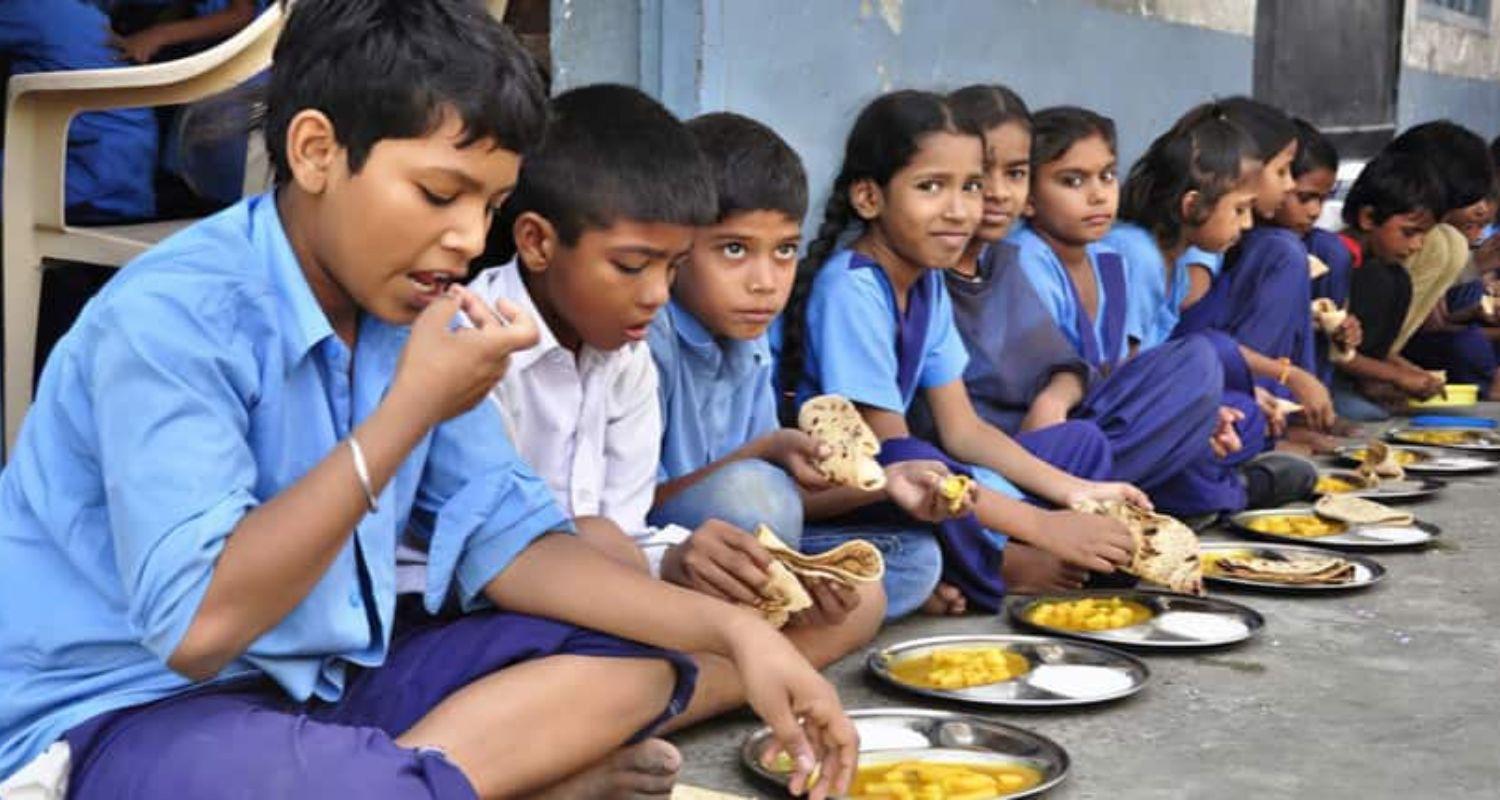
Six years after its nationwide launch, the ‘Pradhan Mantri Poshan Shakti Nirman’ (PM Poshan) scheme has now been fully implemented across all government and government-aided schools in West Bengal, following recent directives from the state government.
The scheme aims to enhance the nutritional standards of students from pre-primary to Class VIII, improve school attendance, and provide free, freshly cooked mid-day meals. While a mid-day meal programme already existed in the state, the PM Poshan initiative introduces structural changes, particularly in monitoring and community involvement.
One of the key features of the scheme is the inclusion of parents in its implementation. In line with government guidelines, schools are required to form a five-member PM Poshan committee comprising the head of the institution, a nodal teacher, two parents, and a representative from a self-help group. These committees are tasked with supervising food quality, deciding daily menus, and overseeing the meal distribution process.
In Malda district, several schools have already initiated meetings between teachers and guardians to discuss the scheme. Deepashree Majumdar, Headmistress of Barlow Girls’ High School, said that the committee was formed immediately after receiving instructions from the Circle Inspector of Schools.
“We have included parent representatives in this committee and encouraged them to visit the school during meal breaks to inspect the food and offer suggestions. After all, it is their daughters — and ours — who are consuming these meals,” she said. “Although funds are limited, we are committed to maintaining quality. Earlier, the mid-day meal programme was managed by the municipality, but handling it at the school level offers several advantages.”
Majumdar added that teachers have also formed an internal committee and that efforts are being made to ensure all students partake in the meals. “We have tasted the food ourselves, and the quality is good. While the menu is pre-determined, we are exploring the possibility of adding extra items,” she noted.
Echoing similar views, Moumita Pramanik, teacher-in-charge of Malda CC Girls’ High School, said that schools now have greater control over the implementation process.
“We are happy to take full responsibility for the PM Poshan scheme. Teachers and guardians will jointly manage the initiative, which we believe will significantly improve food quality. Earlier, we only supervised the mid-day meal programme while the municipality handled operations. Now, we can directly ensure better standards and even introduce variety beyond the prescribed menu,” she said.
Officials believe that increased community participation and decentralised management will strengthen the effectiveness of the scheme and ensure better nutritional outcomes for students.
The rollout of PM Poshan marks a significant shift in the state’s approach to school nutrition programmes, with a renewed focus on quality, accountability, and stakeholder involvement.
Also read: TMC rift deepens; Itahar MLA quits minority cell post

 Follow us