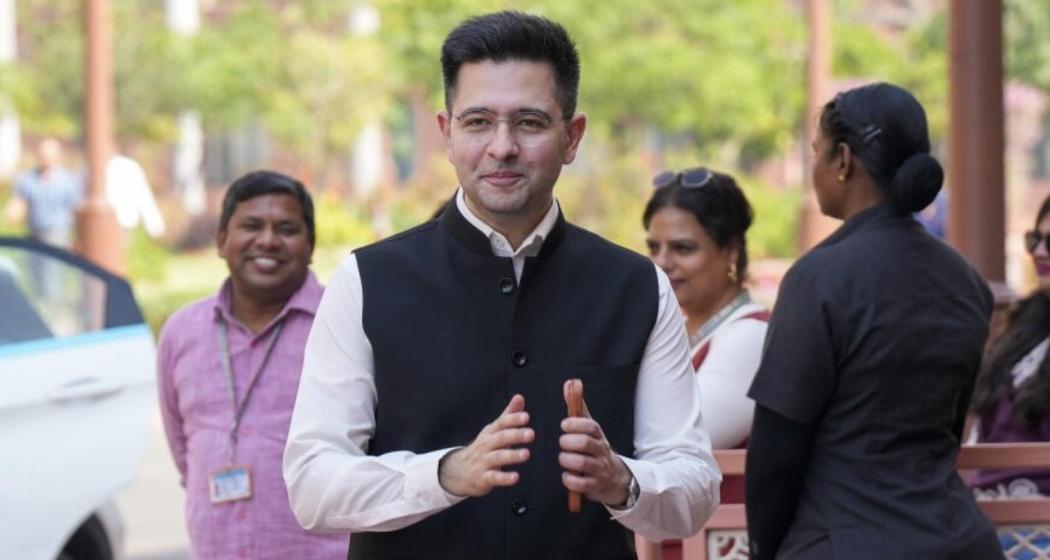
Speculation over the political future of Rajya Sabha MP, Raghav Chadha has intensified amid his rift with the Aam Aadmi Party, with buzz growing around the possibility of him launching a new “Gen-Z” political outfit.
The conjecture gained traction after Raghav Chadha shared an Instagram reel suggesting that he could consider forming a youth-centric party. While he neither confirmed nor denied the possibility, he described the idea as an “interesting thought”.
The reel, posted by a social media user, argued that Chadha could capitalise on his current popularity to launch his own party instead of joining another political formation. It suggested that such a move could attract significant support from younger voters.
The development comes in the backdrop of growing tensions between Raghav Chadha and the Aam Aadmi Party leadership. He was recently removed as the party’s deputy leader in the Rajya Sabha, fuelling speculation about an internal rift.
Party leaders have also accused him of going “soft” on the Bharatiya Janata Party, while another flashpoint has been his reported refusal to sign an impeachment motion against Chief Election Commissioner Gyanesh Kumar.
Also read: Raghav Chadha highlights Punjab issues in a video
Senior AAP leaders, including Saurabh Bhardwaj and Atishi, publicly questioned his stance, alleging that he was reluctant to take on Prime Minister Narendra Modi and the BJP.
The BJP, meanwhile, weighed in on the controversy, criticising AAP’s decision to bar Chadha from speaking in Parliament. Delhi BJP president Virendra Sachdeva termed the move “highly objectionable” and remarked that any decision by Chadha to join the party would be his own.
The political churn has triggered multiple possibilities, including Chadha joining the BJP or carving out an independent political path. However, no formal announcement has been made by the Rajya Sabha MP.
Despite the uncertainty, Raghav Chadha is set to continue in the Upper House until 2028, when his current term ends.
For now, his comments have kept speculation alive, with observers closely watching whether the emerging narrative of a “Gen-Z party” evolves into a concrete political move or remains a passing idea amid intra-party tensions.

 Follow us