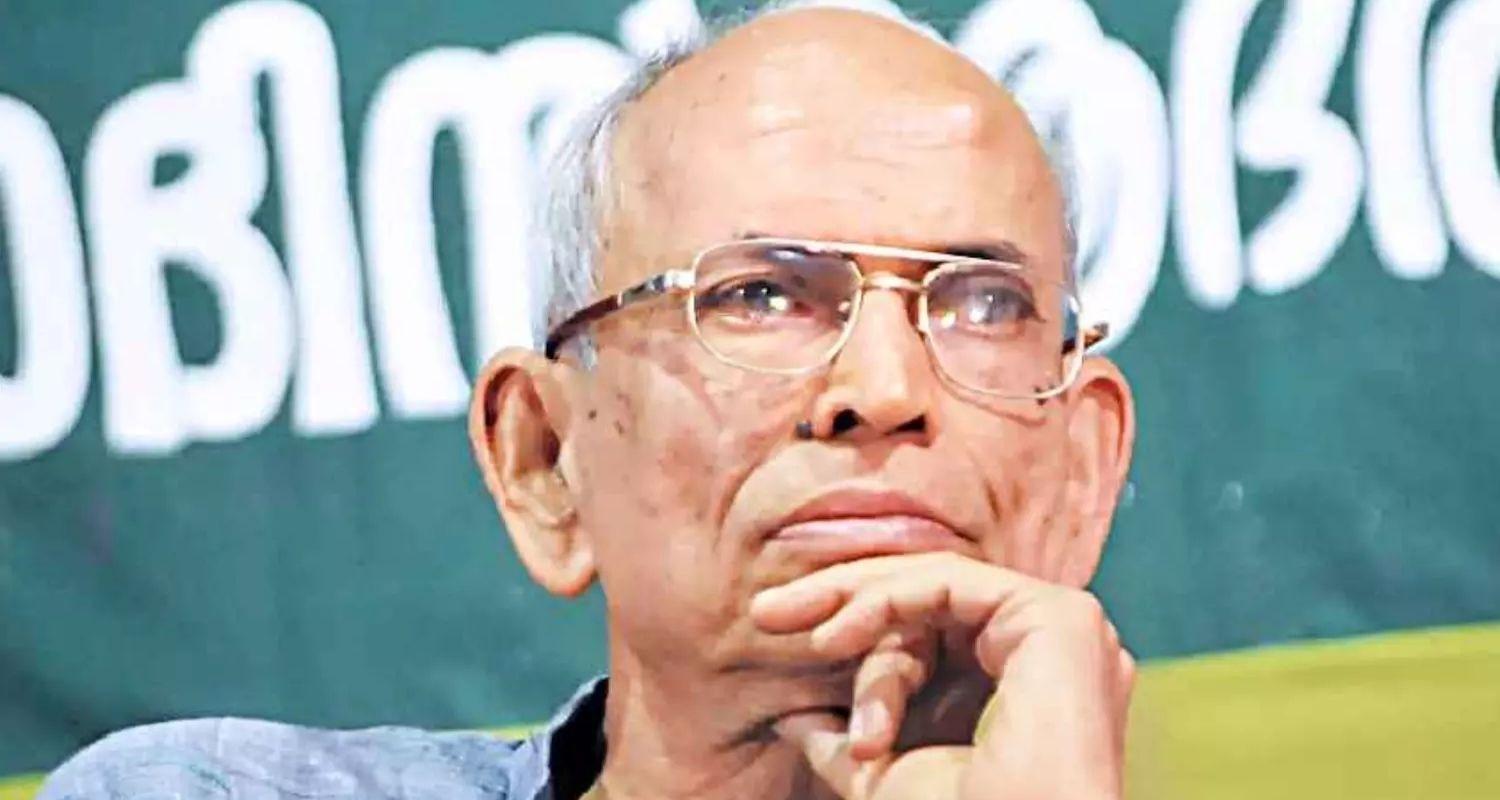
Noted ecologist Madhav Gadgil passed away in Pune late Wednesday night, his family said. He was 83.
He had been admitted to a hospital in the city after a brief illness, his family sources said on Thursday.
Recognising him for his work on the Western Ghats, a global biodiversity hotspot, the United Nations had presented Gadgil with the annual Champions of the Earth award – the body’s highest environmental honour – in 2024.
Gadgil had also chaired the government-constituted Western Ghats Ecology Expert Panel, constituted by the Ministry of Environment and Forests in 2010, to study the impact of population pressure, climate change, and development activities on the ecologically fragile region in India. The panel’s report in 2011, popularly known as the ‘Gadgil Report’, identified the Western Ghats as an ecologically-sensitive area.
The report recommended stringent controls on quarrying, mining, large dams and polluting industries so as to protect the fragile mountain ecosystem. However, it was set aside for a more diluted Kasturirangan Committee recommendations.
Also Read: Western Ghats gets 'ecologically sensitive' tag
A staunch advocate of environment protection, which he insisted ought to be undertaken with the local communities playing a central role, Gadgil founded the Centre for Ecological Sciences at the Indian Institute of Science (IISc), Bengaluru, in 1983.
Unlike traditional conservation activists, Gadgil emphasised on peaceful co-existence instead of viewing humans as an obstruction to sustainable living. His “bottom-up” model of environmental governance echoed in India’s Biological Diversity Act, 2002, which established a legal framework for biodiversity conservation and equitable benefit-sharing.
His concept of People’s Biodiversity Registers empowered local self-governing bodies like Gram Panchayats to document and safeguard traditional ecological knowledge and biological resources.

 Follow us