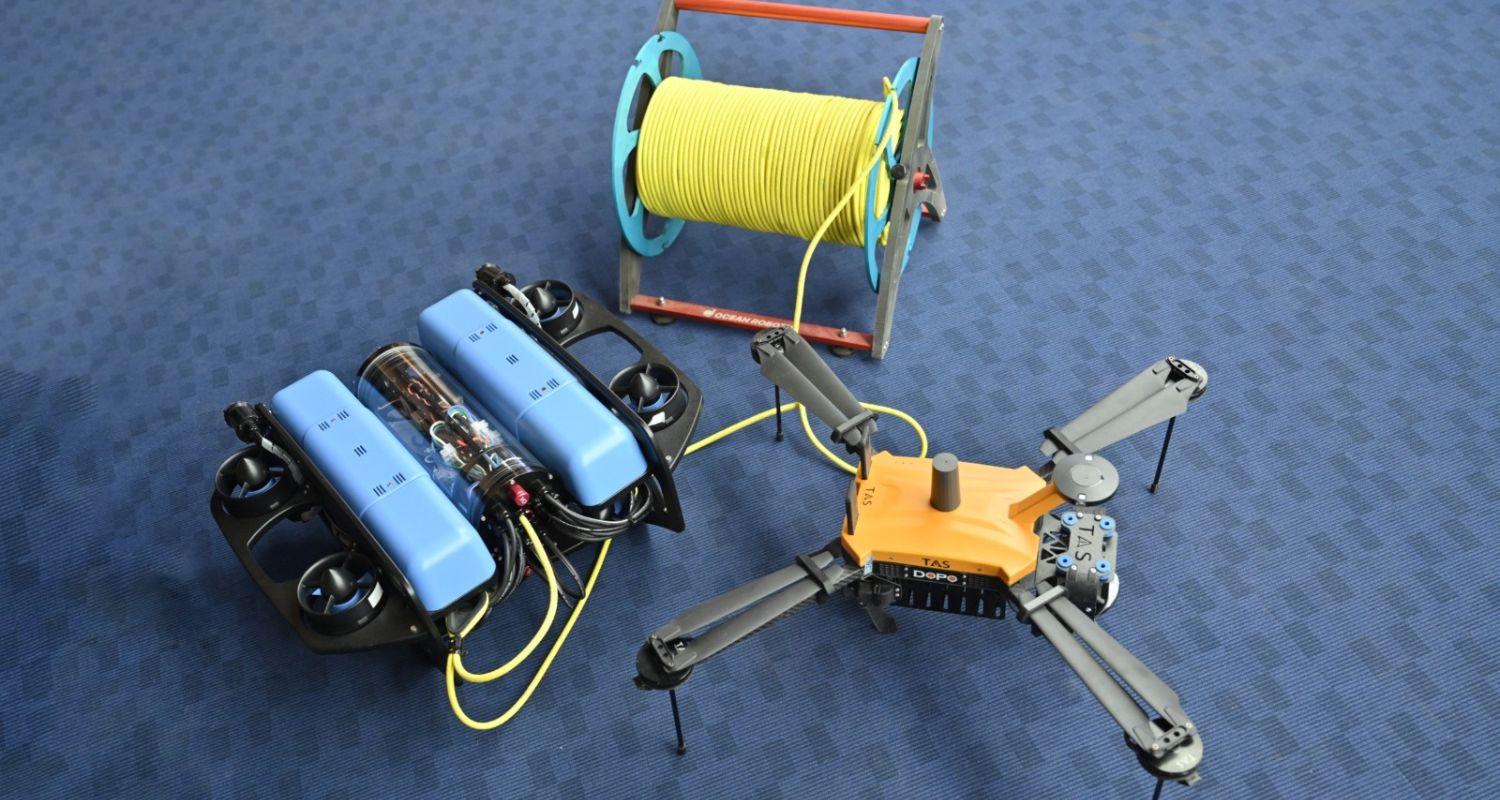
In a technological upgrade to railway safety, the Northeast Frontier Railway (NFR) has begun using underwater robot drones to inspect the submerged portions of bridges — areas that traditional inspections often fail to cover. The initiative is said to be a significant shift in how Indian Railways monitors the structural condition of bridges spanning rivers across the region.
Bridges form the backbone of railway movement across countless rivers in India. While engineers routinely inspect and maintain the portions above water, the submerged sections have long posed challenges, especially in rivers where water depth remains high throughout the year.
“Parts of the bridge that cannot be observed through regular external inspections are now being examined using underwater robots,” said Devendra Singh, DRM of the Alipurduar Division. “These robots capture detailed images of the underwater structure, which are then analysed to determine if any repairs or preventive measures are required.”
The NFR oversees railway operations across parts of Northeast India and North Bengal, covering major rivers including the Teesta and the Brahmaputra. The zone has around 34 key bridges, 18 of which fall under the Alipurduar Division. Among them is the iconic Saraighat Bridge over the Brahmaputra in Assam. In total, nearly 4,200 km of railway lines depend on these bridges.
Typically, bridge inspections are carried out regularly by engineers. Shallow rivers allow some visibility of submerged structures, but deeper rivers make underwater monitoring extremely difficult. The NFR has introduced robot-assisted inspections to eliminate these blind spots.
According to officials, each bridge is now examined through the underwater drone, which collects data using thermal imaging, ground-penetrating radar, and ultrasonic pulse velocity technologies.
“So far, no structural faults have been detected but consistent surveillance is essential. These inspections will be conducted at regular intervals using the underwater robot drones, ensuring continuous monitoring and early detection of any potential structural vulnerabilities,” said an NFR official.
Also read: Kolkata police recover ₹43.29 lakh lost in online fraud

 Follow us