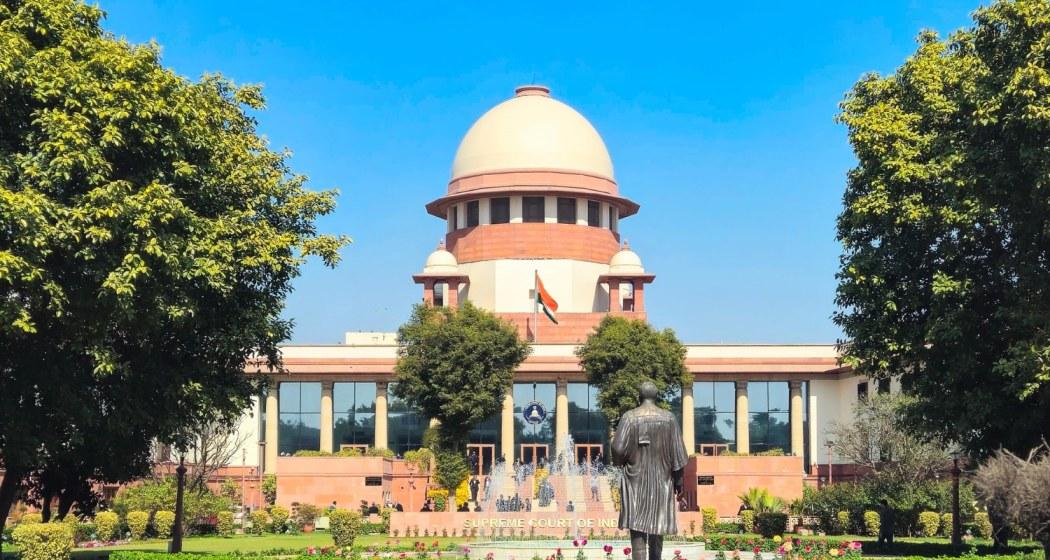
The Supreme Court of India on Saturday directed the Central Bureau of Investigation (CBI) to conduct a preliminary inquiry into allegations of irregular allotment of public contracts by the Arunachal Pradesh government to companies linked to Chief Minister Pema Khandu’s relatives.
A bench comprising Justices Vikram Nath, Sandeep Mehta, and N V Anjaria ordered the CBI to submit its report within 16 weeks, indicating whether a full-fledged investigation is warranted. The agency has been asked to examine contracts awarded between January 1, 2015, and December 31, 2025, while retaining the flexibility to expand the period if necessary.
The court also instructed the Arunachal Pradesh government and its departments to cooperate fully and provide all relevant records within four weeks, ensuring that no documents are destroyed. The state Chief Secretary has been asked to appoint a nodal officer within a week to coordinate with the CBI during the inquiry process.
Also read: SC orders Centre to 'disassociate' from NCERT authors
The order came in response to a petition filed by the Save Mon Region Federation and Voluntary Arunachal Senaa, represented by senior advocate Prashant Bhushan. The petitioners alleged that contracts worth around ₹1,270 crore were awarded to firms associated with the Chief Minister’s family, including his spouse, mother, and nephew. Specific allegations cited contracts awarded to a construction firm linked to Khandu’s spouse and another allegedly owned by his nephew, Tsering Tashi, claiming due procedures were not followed in awarding tenders.
The petition, filed in 2024, sought either a CBI or Special Investigation Team (SIT) probe, alleging favouritism in the allocation of key public works contracts. Over the past year, the case has seen multiple hearings, including a March 2025 direction from the apex court seeking detailed responses from the Ministry of Home Affairs, the Ministry of Finance, and the state government regarding the tendering process. Earlier, a report from the Comptroller and Auditor General (CAG) was also referenced in related proceedings involving allegations against former Chief Minister Dorjee Khandu.
During earlier hearings, then Chief Justice Sanjiv Khanna had noted that the CAG report referred to the code of conduct laid down by the Ministry of Home Affairs, which prohibits ministers from extending undue benefits to relatives.
The Supreme Court’s latest direction marks a crucial step in determining whether the allegations merit a deeper criminal investigation and sets the stage for accountability in the allocation of public contracts in Arunachal Pradesh.

 Follow us