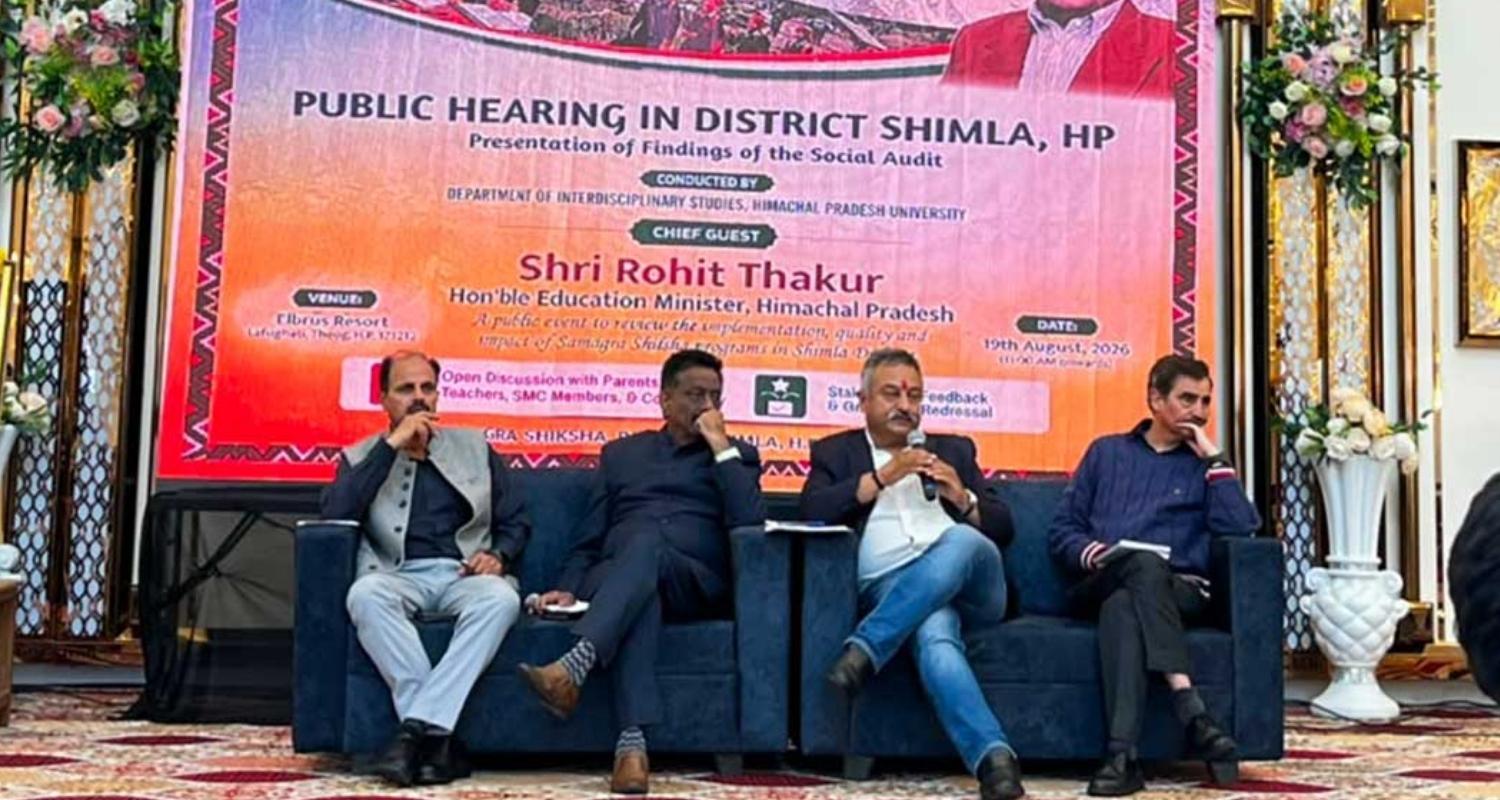
A social audit of schools in Shimla district has highlighted serious gaps in infrastructure, basic facilities, student safety, child protection and academic monitoring. The findings have raised questions about the implementation of Right to Education (RTE) standards across the district.
The audit covered 444 schools under the Samagra Shiksha Abhiyan (SSA). It found shortcomings in classrooms, furniture, drinking water, sanitation, road access and safety arrangements.
The findings were shared at a public hearing in Theog attended by more than 2,100 people. Parents, teachers, School Management Committee members, elected representatives, education officials and local residents took part in the hearing.
Himachal Pradesh Education Minister Rohit Thakur also attended the hearing and responded to several complaints raised by the public. Some issues were addressed on the spot.
Thakur acknowledged the problems identified in the audit. He said Himachal had made progress in education but still had several areas that needed attention. “Our state has many achievements in education and ranks fifth in overall performance in the country, but we also have shortcomings. These have been highlighted in the social audit, and we will work to address them,” he said.
The audit was conducted by a Himachal Pradesh University team led by Arpana Negi and Randhir Ranta. The team assessed 444 schools, which is nearly 20 per cent of the 2,068 schools in Shimla district. The remaining schools will be covered in four more phases. Presenting the report, Ranta said the findings showed several systemic problems affecting the quality of education.
“The report highlights many challenges and gaps in the school education system. The performance of Shimla schools falls short of the standards guaranteed under the Right to Education Act,” he said.
Nearly 47 per cent of the schools surveyed did not have enough classroom space. This included adequate rooms for both teaching and non-teaching staff. About 78 per cent had insufficient or only partly available furniture, leaving many students without proper seating.
The audit said these gaps continue despite the schools being covered under the government-backed Samagra Shiksha programme. Student safety was another major concern. More than 43 per cent of the schools did not have boundary walls or safety fencing.
Road access was also a serious issue. Nearly 79 per cent of the schools were located in areas without motorable roads. This means many students have to walk long distances, creating additional difficulties for children with disabilities. The audit team said accessibility must be addressed as part of efforts to provide inclusive education.
One of the biggest concerns was access to drinking water. Clean drinking water was not available in 81 per cent of the surveyed schools, raising concerns about children's health and hygiene.
Sanitation facilities were also found lacking. Around 23 per cent of schools did not have functional toilets for girls, while nearly 30 per cent lacked working toilets for boys. About 5 per cent of the schools did not have separate kitchens for preparing Mid-Day Meals.
The audit also pointed to gaps in menstrual hygiene facilities.
According to Himanshu, a member of the audit team, more than 13 per cent of schools did not provide sanitary pads to adolescent girls. The team said such facilities were important for health, dignity and regular attendance.
The report also found weaknesses in child safety and grievance mechanisms. School Safety Committees had not been formed in nearly 58 per cent of the surveyed schools.
Complaint and suggestion boxes were missing in around 75 per cent of the schools. This limited formal channels for students and parents to raise concerns.
Counselling services were another major gap. None of the surveyed schools had access to professional counsellors.
The report also flagged inadequate facilities for children with special needs, pointing to shortcomings in the implementation of inclusive education.
Administrative monitoring was also found to be weak. More than 26 per cent of schools did not meet the prescribed library norms. Inspections and monitoring by education officials were also below the required level.
Devender Sharma, co-head of the social audit team, said Block Elementary Education Officers and other lower-level officials were not meeting the required inspection targets.
“The lower educational bureaucracy, including BEOs, has been observed falling short in inspection visits by 47 per cent, creating a non-serious academic climate in the schools,” Sharma said.
The public hearing gave parents, teachers and community members a chance to put their concerns directly before officials. Participants called for better infrastructure, road connectivity, drinking water and sanitation, along with stronger safety measures and greater accountability.
Education experts said the findings showed the need for time-bound action. They said basic facility and service gaps should not affect children's access to equal and quality education. The report is expected to be submitted to the state Education Department for further action. The Theog hearing was the 12th and final public hearing held as part of a social audit exercise conducted across Himachal Pradesh over the past three months.
The assessment of 444 Shimla schools was the first phase of the district-level audit. The remaining schools will be covered in four subsequent phases. The findings highlight the gap between government policies and their implementation on the ground, particularly in basic amenities, safety, accessibility, child protection and administrative monitoring.

 Follow us