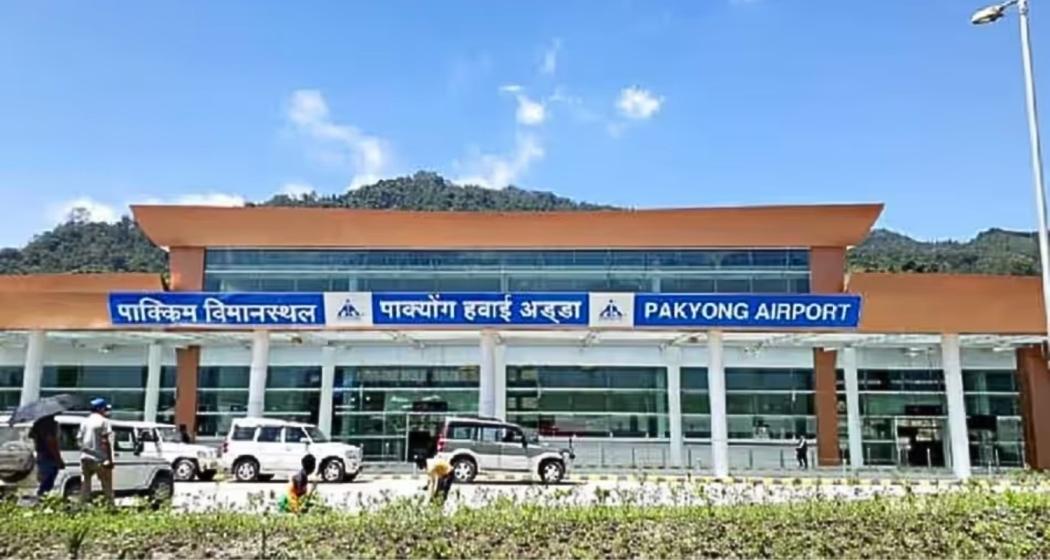
The Sikkim Legislative Assembly on Thursday passed a resolution to rename Pakyong Airport after freedom fighter Trilochan Pokhrel, with the proposal now set to be sent to the Centre for final approval.
The resolution, moved by Tourism and Civil Aviation Minister Tshering Thendup Bhutia and seconded by MLA Aditya Golay, seeks to rename the airport as “Trilochan Pokhrel Airport” in recognition of his contribution to India’s freedom struggle.
Pakyong Airport, a greenfield facility situated at an altitude of 4,848 feet, was inaugurated in 2018 by Prime Minister Narendra Modi as the country’s 100th airport. It serves as the primary air connectivity hub for Sikkim.
The proposal follows the Sikkim Cabinet’s approval on March 19. With the Assembly endorsing the move, the state government will now forward it to the Government of India, which will take a final decision on the renaming.
Trilochan Pokhrel, also known as “Bande Pokhrel” or “Gandhi Pokhrel”, was born in Tareythang in East Sikkim and is regarded as one of the state’s earliest freedom fighters. Influenced by Mahatma Gandhi, he participated in key phases of the national movement, including the Non-Cooperation Movement, Civil Disobedience Movement, and the Quit India Movement.
Also read: Nearly 200 tourists stranded in North Sikkim after landslides
The resolution highlighted his role in linking Sikkim with the broader Indian freedom struggle and promoting Gandhian ideals such as simplicity, self-reliance, non-violence, and the use of khadi and local industries.
In separate legislative business, the Assembly also passed the Sikkim Appropriation Bill for the First Supplementary Demands for Grants for 2025–26. The Bill was introduced by Chief Minister Prem Singh Tamang, who is also the Leader of the House.
The legislation provides for appropriation from the Consolidated Fund of the State to meet supplementary expenditure for the remaining part of the financial year 2025–26.
The twin decisions underscore the Assembly’s focus on honouring historical figures while addressing fiscal requirements through legislative measures.

 Follow us