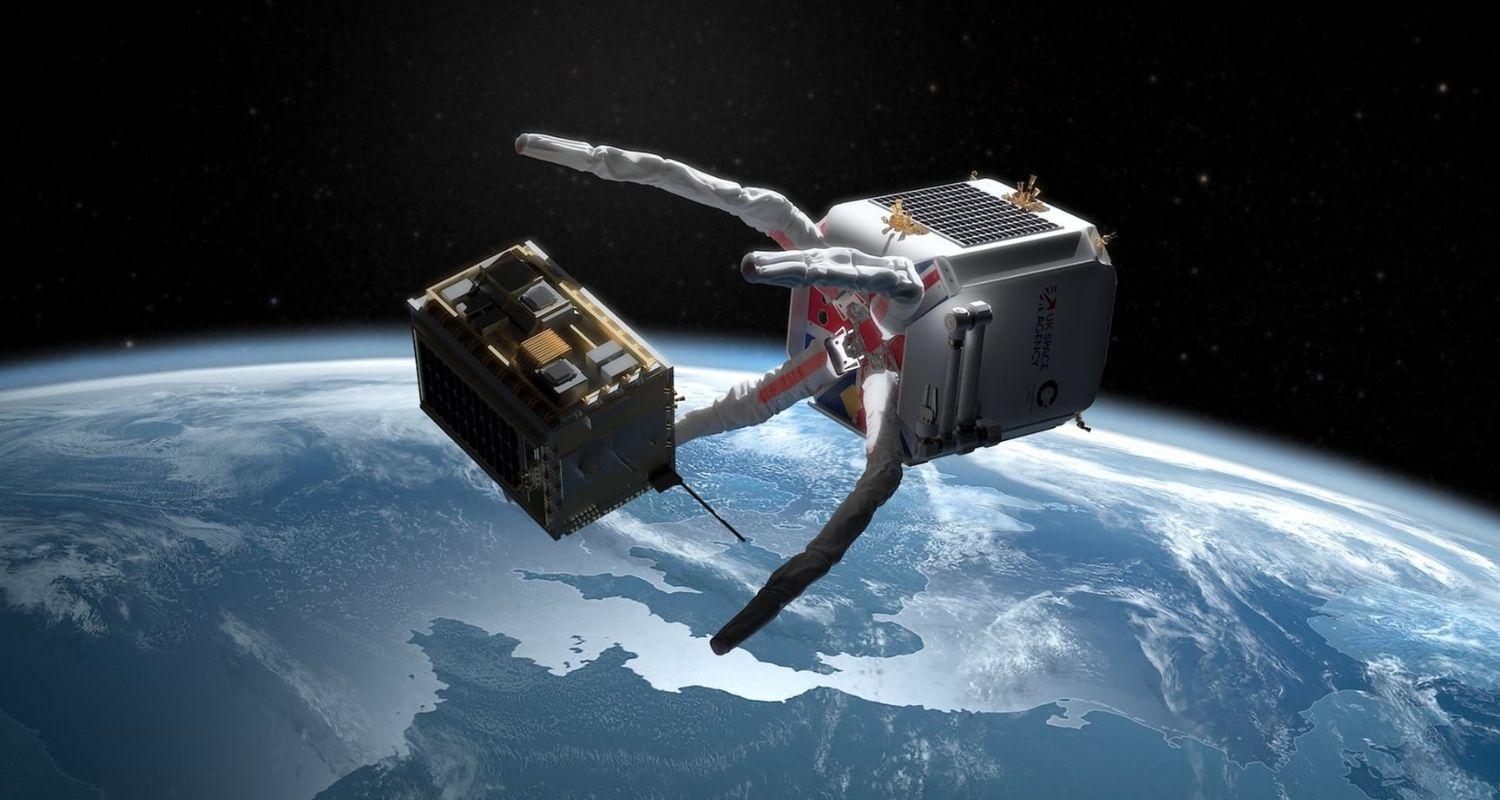
Billed as the first such attempt in the world, a Hyderabad-based startup, Cosmoserve Space, is set to demonstrate a soft robotic capture technology to remove space debris that includes defunct satellites from the Earth’s orbit.
Christened as ‘Mission Embrace’, it will piggyback aboard Skyroot Aerospace’s Vikram-1, whose approved launch window is between July 12 and August 4 from Sriharikota satellite launch centre. The mission will attempt the world’s first demonstration of soft robotic capture in orbit.
This is the first step by the company towards building critical orbital infrastructure that will help create a safer, more sustainable and commercially viable space ecosystem. This demonstration is part of India’s first private orbital launch carrying multiple satellite payloads, underscoring the growing role of private players in space operations.
The mission is an important milestone in advancing technologies that will enable orbital sustainability and space debris removal while demonstrating how rapidly India’s private space ecosystem can innovate through collaboration.
“We developed this technology from concept to flight-ready hardware in four months within a company that is less than a year old, without compromising engineering rigour,” Cosmoserve Space founder and CEO Chiranjeevi Phanindra, a former ISRO scientist, said.
The technology underwent a rigorous review by an independent committee of former ISRO scientists and industry experts, successfully completing the System Concept Review, Preliminary Design Review, Critical Design Review and Flight Readiness Review before receiving launch approval.
In the longer run, the company plans a dual-spacecraft architecture involving a robotic servicer and a “mother craft” that acts as an in-orbit refuelling depot, allowing the servicer to remove multiple dead satellites. “The robotic spacecraft will go to space, collect the space junk, pull it down close to the atmosphere, leave it there and proceed to the next target,” Phanindra said.
Also read: https://newsarenaindia.com/nation/sitharaman-hails-pm-modi-for-securing-aud-500-mn-niif-investment/81958
Riding on Skyroot’s Vikram-1, the country’s first privately developed orbital launch vehicle, the mission exemplifies how collaboration between startups can accelerate technological breakthroughs. Success could position India as a leader in space sustainability solutions, with broader implications for global debris management strategies and the commercialisation of orbital servicing.
With thousands of inactive satellites and debris already in orbit and millions more planned, Active Debris Removal (ADR) is increasingly critical for orbital sustainability. Debris removal or in-orbit servicing also will become something like a rocket industry. “Very few people will be able to do this in space. The numbers are not huge but the margins will be really large compared to any other players,” Phanindra said.
Space debris is a growing threat to the Earth's orbital environment. Defunct satellites, rocket bodies, and collision fragments are steadily increasing the risk of further collisions, particularly in Low Earth Orbit. Even tiny objects, such as something as small as a paint flake, can cause serious damage in orbit due to how quickly it travels — more than 17,000 miles per hour. In total there are already more than 100 million pieces of debris larger than one millimeter in low Earth orbit circling the planet, according to NASA, weighing 6,000 tons.
Until now space cleanup has largely been handled by governments, but a new Federal Communication Commission (FCC) rule set to take full effect next year mandates private players to get involved. The new regulation, implemented from 2027, requires operators to remove dead satellites from low-earth orbit within five years of the end of their missions — a significant tightening from a previous 25-year guideline.

 Follow us