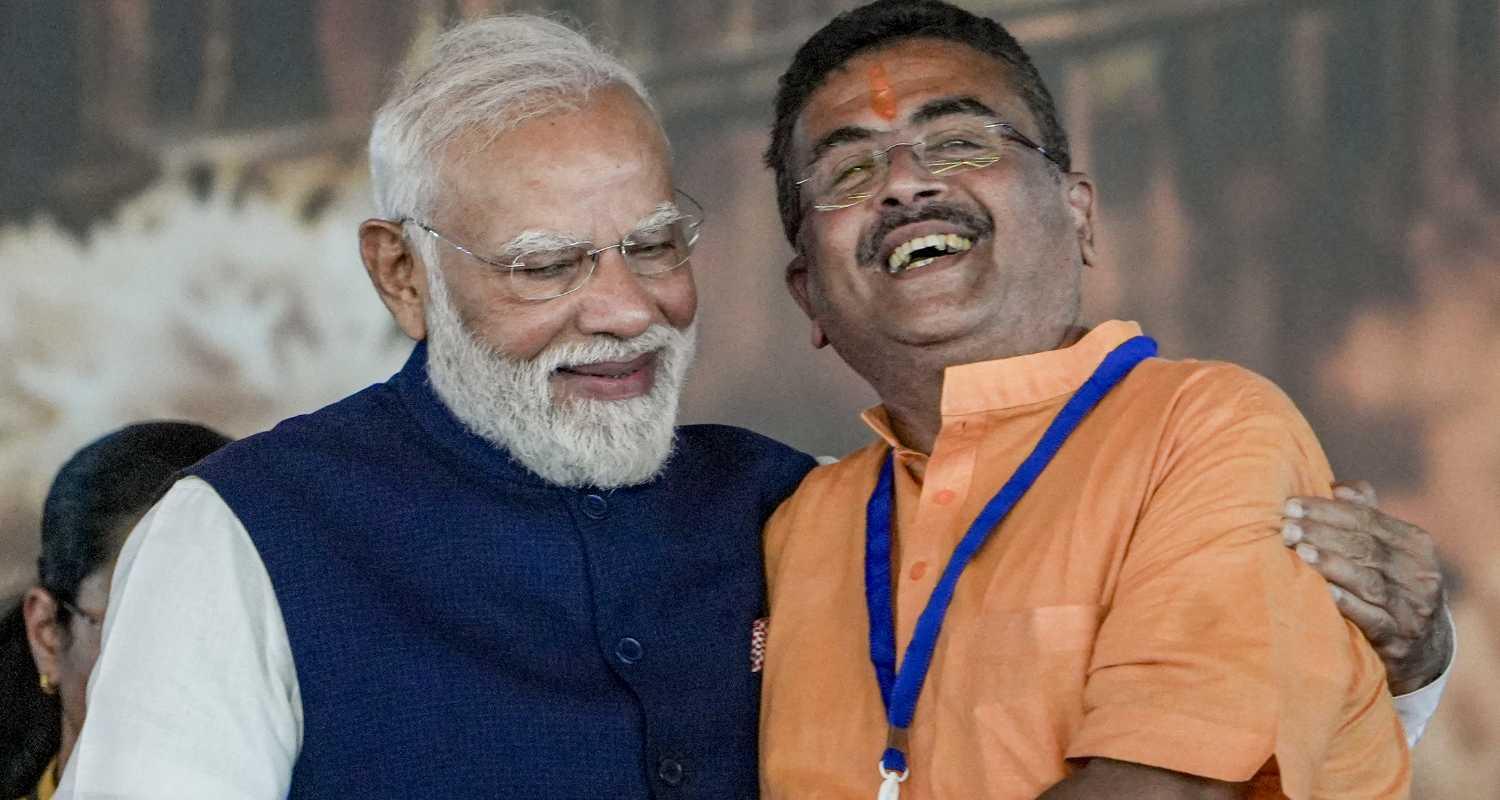
Bringing an end to days of intense speculation following the West Bengal Assembly Elections 2026, Suvendu Adhikari was on Saturday sworn in as the first Chief Minister of West Bengal from the BJP party. The historic ceremony took place at the Brigade Parade Ground, where a sea of saffron marked the party’s emphatic rise to power.
The swearing-in ceremony was attended by Prime Minister Narendra Modi, Union Home Minister Amit Shah, and several Chief Ministers from BJP-ruled states, underlining the political significance of the moment. With this, the question that had dominated Bengal’s political discourse since the declaration of results on May 4 finally received official confirmation.
Alongside Adhikari, five members of his cabinet were also administered the oath. Dilip Ghosh, MLA from Kharagpur Sadar, took oath immediately after the Chief Minister, indicating his seniority in the cabinet. Agnimitra Paul, who won from Asansol South, was sworn in as a Cabinet Minister, followed by Ashok Kirtaniya, representing the Matua stronghold of Bongaon North.
The cabinet also includes Khudiram Tudu, an Adivasi leader from Ranibandh in Bankura, and Nishith Pramanik, who secured victory from Mathabhanga in Cooch Behar. However, no portfolios were allocated during the ceremony. According to sources, the distribution of departments will be finalised after the first cabinet meeting.
Clarifying the leadership choice, Shah stated that during Friday’s BJP legislative party meeting, Adhikari’s name emerged unanimously, with no alternative proposals. The party leadership had earlier promised that the Chief Minister would be a “son of the soil”—a Bengali-educated leader—a commitment that has now been fulfilled.
Adhikari, a prominent face of the BJP’s campaign, further cemented his position by winning from both Nandigram and Bhabanipur—two high-profile constituencies. His elevation is widely seen as recognition of his strategic role in leading the BJP to a commanding majority of 207 seats in the Assembly.
Meanwhile, one notable absence from the initial cabinet list has drawn attention. Shankar Ghosh, a key leader from North Bengal and MLA from Siliguri, was not included. Political observers, however, suggest that North Bengal may receive greater representation during a subsequent cabinet expansion.
With the BJP now firmly in control of the state, Adhikari’s swearing-in marks a significant turning point in Bengal’s political history, signalling the beginning of a new chapter in the state’s governance.

 Follow us