
Trending:
T'gana gears up for high-profile investment conclave
More than 1,300 delegates — including CEOs from several Fortune 500 companies, venture capitalists, diplomats, consulting giants, real estate leaders and tech visionaries — are expected to participate in business sessions. Follow us
News Arena Network - Hyderabad - UPDATED: December 6, 2025, 07:26 PM - 2 min read
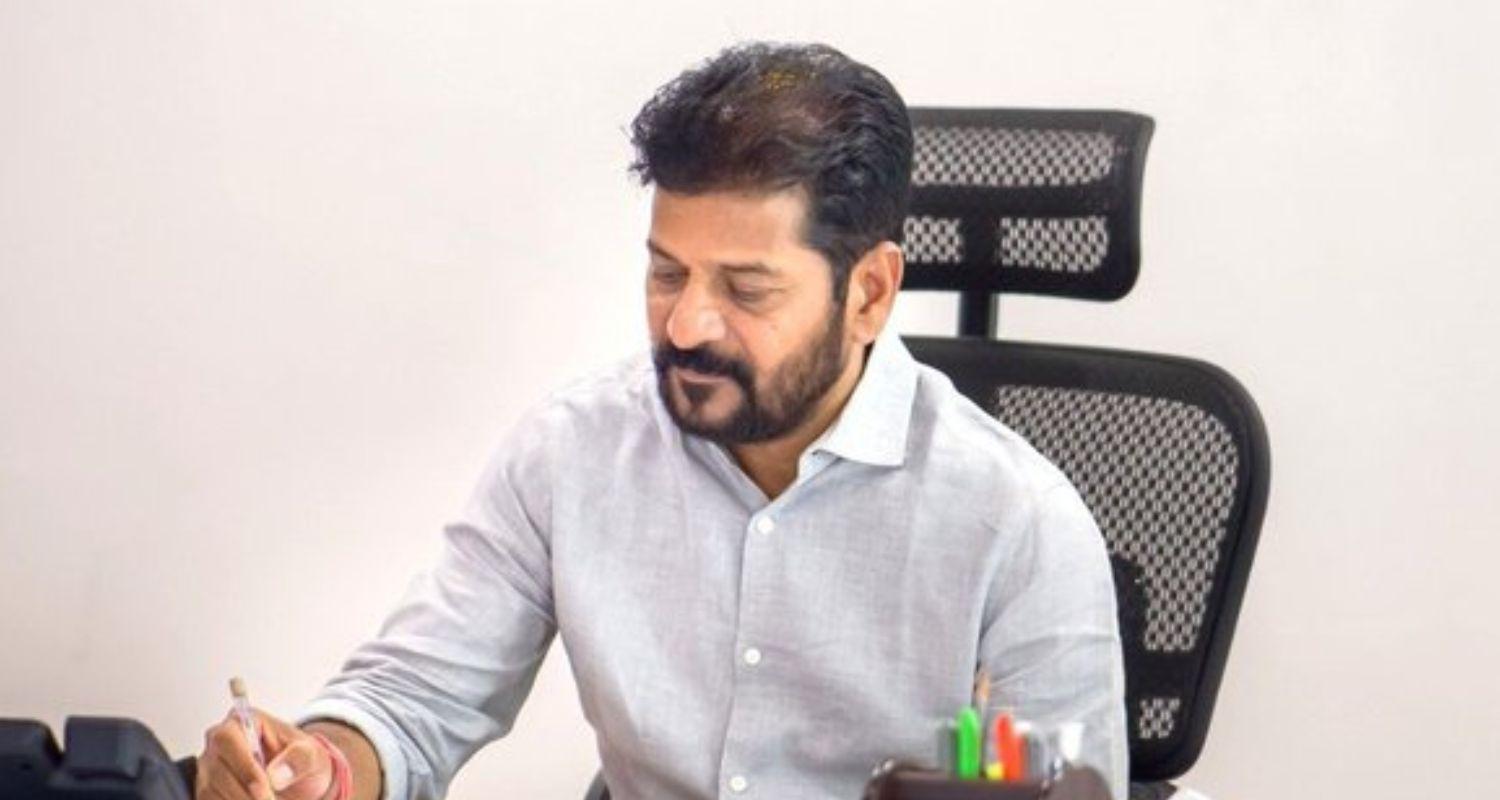
Chief Minister A Revanth Reddy has personally invited Prime Minister Narendra Modi, central ministers and others and also written to the top 100 industrialists in the country through CII and CREDAI.
All roads lead to Mucherla, a bustling Hyderabad suburb, as the Telangana government is gearing up to host the biggest business conclave since the state’s formation more than a decade ago.
The two-day Telangana Rising Global Summit, starting on December 8, will serve as a platform to showcase the investment potential and unveil the ‘Vision-2047’ document, an economic roadmap with an ambitious target of making the state a $3 trillion economy by 2047, contributing nearly 10 per cent to India’s projected GDP.
The high-profile event, to be attended by the virtual who’s who of the corporate world, policymakers, technocrats, academicians, and delegates from major multilateral institutions, will also highlight the achievements of the Congress government in the last two years and position Telangana as India’s most dynamic, knowledge-driven economy.
More than 1,300 delegates — including CEOs from several Fortune 500 companies, venture capitalists, diplomats, consulting giants, real estate leaders and tech visionaries — are expected to participate in business sessions.
Personal invitations
Chief Minister A Revanth Reddy has personally invited Prime Minister Narendra Modi, central ministers and others and also written to the top 100 industrialists in the country through CII and CREDAI.
The opening day will spotlight the government’s flagship initiatives and welfare schemes, presented through high-impact audio-visual displays designed to create a festive atmosphere.
On December 9, the government will unveil the “Telangana Rising – Vision 2047” document, developed in partnership with the Indian School of Business (ISB) and incorporating public suggestions and expert inputs.
The roadmap lays out a trajectory for a $1 trillion economy by 2035 and an ambitious $3 trillion by 2047. Described by officials as a “global investor’s guide,” it details sector-specific policies, incentives, and mega-infrastructure projects including AI City, Musi Riverfront rejuvenation, green logistics parks, industrial corridors, dry ports, and the Net Zero Telangana framework.
A spectacular drone show is being planned on the concluding day, coinciding with the birthday of Congress leader Sonia Gandhi.
Plenary sessions
Representatives from the World Health Organization (WHO), World Bank, Asian Development Bank, UNICEF, along with corporate leaders representing various sectors are expected to attend.
Key sectoral discussions will cover energy, green mobility, IT and semiconductors, healthcare, education, tourism, urban infrastructure, agriculture, industry, women entrepreneurship, the gig economy, social welfare, and start-ups.
The Olympic Gold Quest session will bring together sportspersons including P.V. Sindhu, Anil Kumble, Pullela Gopichand, Gagan Narang, and Jwala Gutta, while the Creative Century segment will feature S.S. Rajamouli, Riteish Deshmukh, Sukumar, Guneet Monga, and Anupama Chopra.
The government expects that the summit will drive investments, strengthen technology partnerships, and support innovation-led growth across sectors.
Vision Document
The draft vision document said Telangana's current economic trajectory would yield a GSDP of roughly US$ 1.2 trillion by 2047. To more than triple this outcome, the government proposes an integrated strategy built on enhanced productivity, large-scale human capital development, and increased domestic and global investment flows.
According to the vision document, the growth path is anchored in three mutually reinforcing pillars: human capital development, productivity and innovation and investment and savings.
“The state plans substantial investments across education, skilling, and healthcare to create a globally competitive workforce. Initiatives will focus on strengthening foundational learning, promoting high-end research, and ensuring that Telangana’s talent pool can drive innovation across sectors,” the document said.
Similarly, a major thrust will be on lifting total factor productivity by expanding Telangana’s science, technology, and innovation ecosystem. The programmes such as the Telangana Scientific Return Program, EduCities, and frontier technology missions aim to convert research into enterprise and ensure that every district contributes to the innovation economy.
At the same time, the state government intends to raise domestic savings and investment through fiscal discipline, greater financial inclusion, capital market deepening, and more efficient project execution. Policymakers aim to ensure that household and institutional savings translate into productive growth.
“None of these pillars can function in isolation; instead, they collectively reinforce the state’s transition to a high-productivity, innovation-led economy,” the document said.
The vision document projects a gradual structural shift in Telangana’s economy, with the share of agriculture and industry expected to decline slightly from 17 pc and 18pc to 15 percent each over the next decade. Meanwhile, the services sector is anticipated to increase its share from 65 pc to 70 pc, reflecting a transition toward high-value, knowledge-driven services.
“By 2047, services alone are expected to contribute nearly US$ 1.9 trillion—more than two-thirds of the state’s GSDP—followed by industry and agriculture at around US$ 0.4 trillion each. This mirrors trends in advanced regional economies where IT, financial services, logistics, tourism, and creative industries dominate value addition,” the document said.
Industry growth will continue to play a vital role through manufacturing, clean mobility, life sciences, and semiconductor clusters, helping Telangana consolidate its position as a next-generation industrial hub. In agriculture, the focus will shift from primary production to agri-food processing, exports, and functional foods, supporting rural prosperity and inclusive development.
The vision document also highlights other critical issues such as strategic area-based economic planning, empowering women, youth and farmers, human development, net zero goal.
Officials said the strategic area-based economic planning model is structured around three development tiers: urban core comprising Hyderabad and major urban clusters, which will serve as global hubs for technology, innovation, and high-end manufacturing; peri-urban zones which will facilitate economic integration through medium-scale manufacturing and rural Telangana with focus on agritech, livestock development, forest-based industries, handicrafts, cultural entrepreneurship, and eco-tourism.
“These three tiers collectively aim to ensure balanced regional development and economic resilience,” the document said.
Also read: Telangana's new excise policy brings in big moolah
