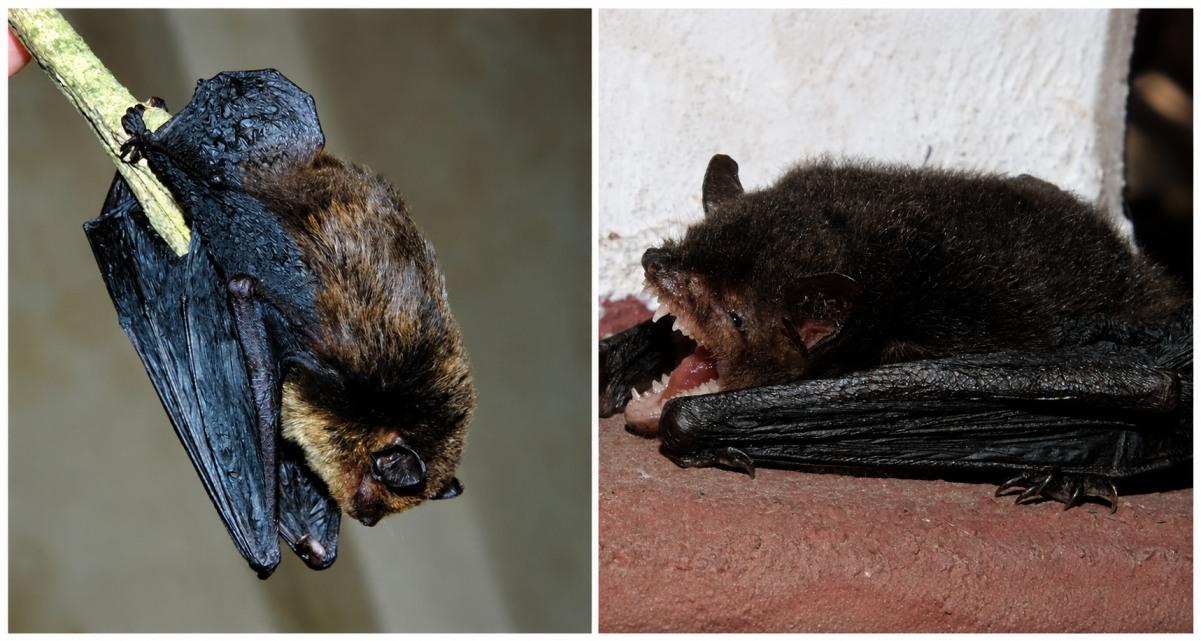
A team of Indian and Hungarian researchers has recorded two bat species in India for the first time during biodiversity surveys in Mizoram, expanding the known geographical range of both species and raising the country's documented bat diversity to at least 138 species.
The findings, published in the journal Animal Taxonomy and Ecology, were made by researchers from the Zoological Survey of India (ZSI), Shillong, in collaboration with scientists from other Indian institutions and the Hungarian Natural History Museum.
The study documented the first Indian records of the Indo-Chinese thick-thumbed bat (Glischropus bucephalus) and the Indo-Chinese mouse-eared bat (Myotis indochinensis), both previously known only from parts of Southeast Asia.
The discoveries were made during extensive biodiversity surveys conducted across Mizoram between 2023 and 2025. Researchers confirmed the identity of the two species through detailed morphological examinations, molecular genetic analysis and echolocation studies, ensuring the accuracy of the records.
According to the study, Glischropus bucephalus had earlier been reported only from Cambodia, Vietnam, Thailand and Myanmar. Its discovery in Serchhip district extends the species' known distribution by approximately 670 kilometres westward from its previously recorded westernmost location in Myanmar.
Also read: Giving tiny drones the navigation skills of bats
Similarly, Myotis indochinensis, which was earlier known from Vietnam, Laos and southern China, was recorded in Reiek, Mizoram, extending its known range by nearly 1,300 kilometres westward into India.
Researchers also suggested that a genetic sequence from Bangladesh, previously assigned to another bat species, may actually belong to Myotis indochinensis. If future studies confirm the identification, it could indicate that the species has a much broader distribution across South Asia than previously recognised.
The researchers said the findings reinforce the ecological importance of Northeast India, which lies at the junction of the Indian and Southeast Asian biogeographic regions and continues to yield new insights into the region's rich but relatively underexplored biodiversity.
The study noted that such discoveries help address the "Wallacean Shortfall"—a term used in biodiversity science to describe the lack of comprehensive knowledge about the geographic distribution of species. Improving this understanding, the researchers said, is essential for conservation planning, habitat protection and assessing the ecological significance of biodiversity-rich regions such as Mizoram.

 Follow us