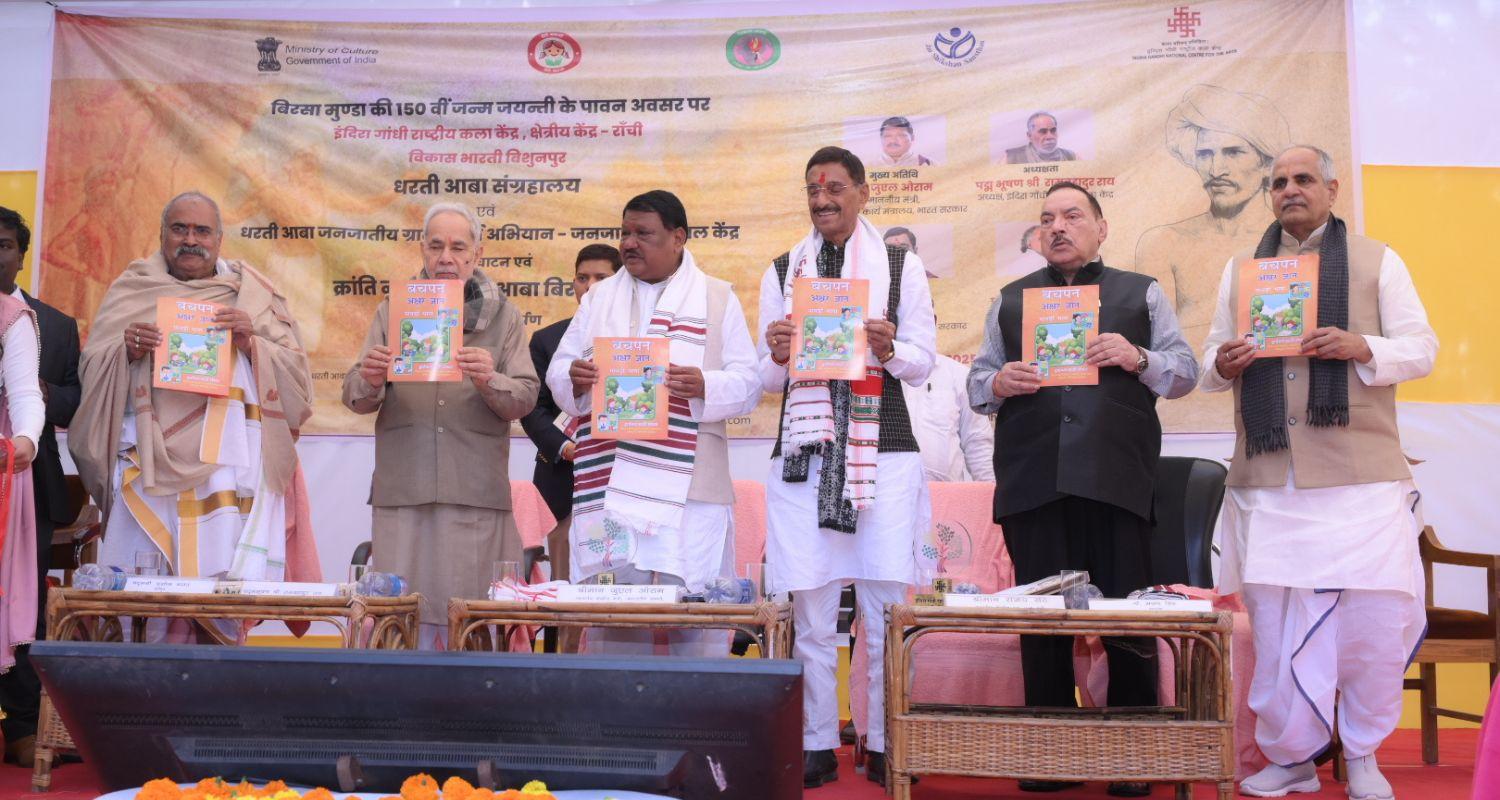
The Dharti Aaba Birsa Munda Sangrahalay, inaugurated on Saturday in Ranchi, stands as a significant milestone in the preservation and celebration of Jharkhand’s rich tribal heritage.
Launched on the 150th birth anniversary of Bhagwan Birsa Munda, the museum is a joint initiative of the Indira Gandhi National Centre for the Arts (IGNCA), Regional Centre, Ranchi, and Vikas Bharti, Bishunpur.
Chief Guest and Tribal Affairs Minister Jual Oram, Guest of Honour and Minister of State for Defence Sanjay Seth, Padma Shri Dr Ashok Bhagat and IGNCA Trust President Padma Bhushan Shri Ram Bahadur Rai graced the inaugural ceremony.
The museum holds deep cultural importance as it documents, preserves, and presents the ancestral knowledge systems of Jharkhand’s tribal communities.
Housing traditional tools, household objects, weapons, musical instruments, and art forms such as Dokra, Sohrai, Patkar, and bamboo craft, the museum offers an immersive experience of the region’s indigenous identity.
Its exhibits reflect the resilience, ecological wisdom, craftsmanship, and social values that have shaped tribal life for centuries.
Calling the museum a cultural landmark, Union Minister Sanjay Seth said it aligns with the national vision of strengthening tribal identity, noting that 11 tribal museums are being developed across India.
Shri Ram Bahadur Rai described the Sangrahalay not merely as a museum but as a “Janjatiya Tirth” — a pilgrimage of tribal heritage that brings visitors closer to their roots. He emphasized its role in inspiring research and deeper understanding of tribal arts.
Dr Ashok Bhagat announced the establishment of the Dharti Aaba Kaushal Vikas Kendra to empower tribal youth through skill development.
Visitors and scholars praised the museum’s relevance, noting that it provides an invaluable educational space for students and researchers to engage with authentic artifacts, oral histories, and traditional knowledge. They expressed hope that the Sangrahalay will encourage wider appreciation and preservation of Jharkhand’s tribal culture for generations to come.
Also read: ‘Imprecise’ Tagore statue at Ranchi’s Rabindra Bhavan sparks row

 Follow us