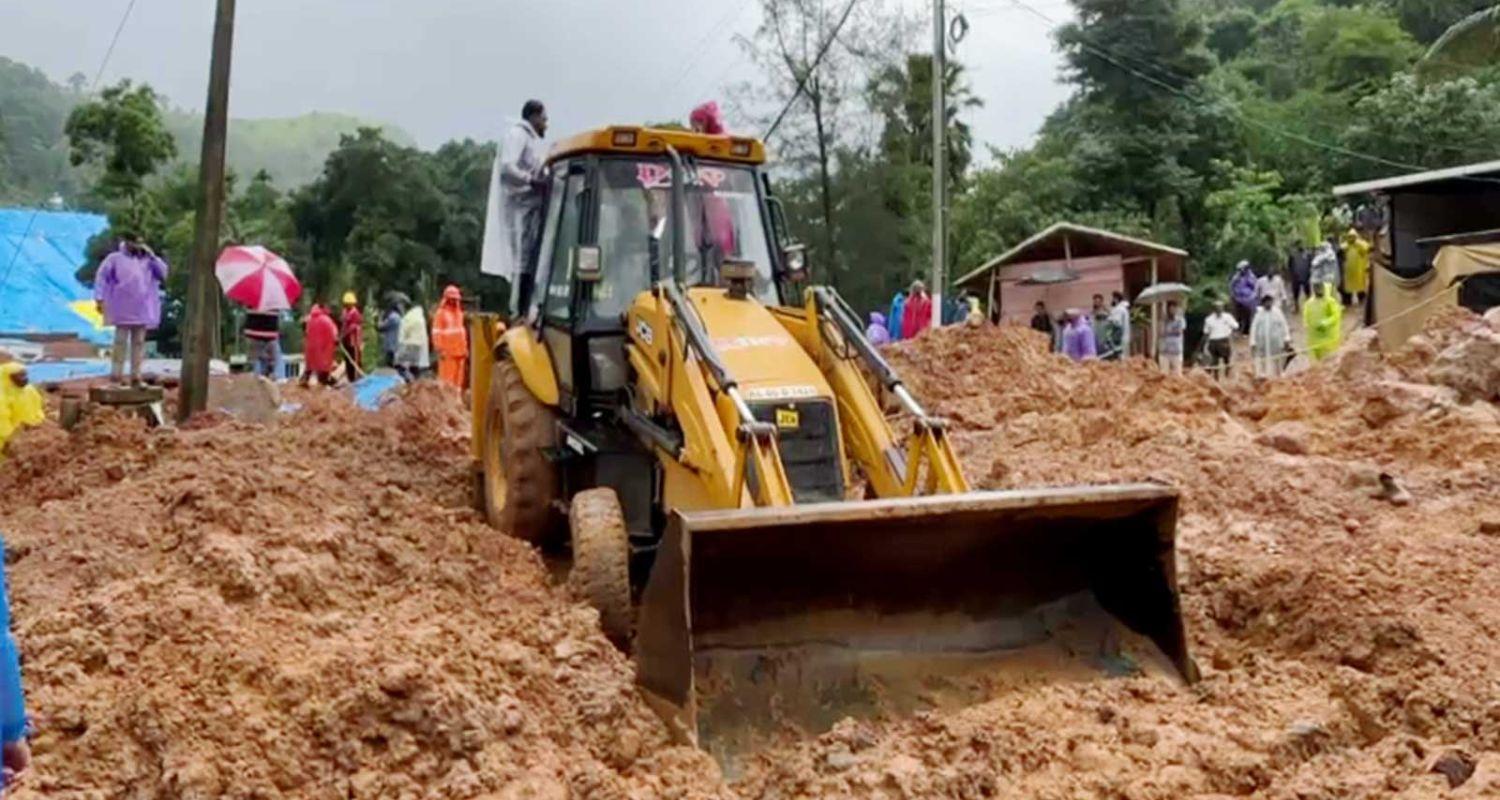
The landslide at a tunnel project site in Kerala's Wayanad was a disaster waiting to happen, claiming the lives of six people on Tuesday. An internal report accessed by the media, prepared by the sub-contractor in charge of the tunnel work, Dilip Buildcon Limited (DBL), reveals that the hillside above the Wayanad tunnel's North Portal was already breaking apart well before the tragedy. The document was jointly compiled and signed off by DBL's own senior geologist Raju Sagar, A Ramesh Kumar of the Geological Survey of India (GSI), and Dr HK Singh, the Authority Engineer from Turkish Engineering Consulting & Contracting.
The infrastructure project links two sides: a South Portal on the Kozhikode side at Anakkampoyil, and a North Portal on the Wayanad side near Kalladi-Meppadi. The landslide struck right at the mouth of the North Portal, where the entrance to the tunnel is meant to be.
The geological assessment paints a deeply disturbing picture of the site. Engineers who inspected the area between June 3 and 11 found that the hillside above the tunnel entrance comprised a remarkably thick layer of loose, silty soil, roughly 35 metres deep on the left side, sitting atop harder rock. This type of soil drains water poorly; during heavy downpours, water becomes trapped inside, making the earth heavier, weaker, and highly unstable. Although the company had cut the slope into steps, sprayed it with a thin layer of concrete known as shotcrete, and driven in metal soil nails to secure it, the report notes that the slope was already failing during the inspection. Engineers observed cracks widening across multiple levels, earth slumping along the benches, muddy water seeping out, and internal cavities forming within the soil.
Perhaps most disturbingly, the water could be heard trickling beneath the ground between the two layers of supporting earth. It showed that the water was creating its own secret tunnel under the loose earth, silently washing the hill away from inside while the outside still looked sound. The report warned that this internal erosion could trigger a sudden and catastrophic collapse. It specifically singled out the left-hand slope as carrying a significantly higher risk than the right, stating bluntly that under the prevailing rainfall, it could culminate in a sudden slope failure at any moment.
Meanwhile, the safety systems designed to prevent such an occurrence were failing. Whilst drainage holes had been drilled to relieve the water pressure building up inside the soil, very few on the high-risk left slope were actually functioning. Crucial early-warning instruments, such as piezometers to measure underground water pressure, had not even been installed, and the sole monitoring device in use failed to accurately reflect the visible and audible distress on the ground. Despite these warning signs, trial blasting was carried out on June 5, 6, and 11. Though the report revealed that the blast vibrations were well within the permissible limit and the cracks occurred due to the heavy rainfall rather than the blast itself, the move of going ahead with the blast on the already troubled slope seems quite bizarre.
In order to avoid any further risk, the report advised the installation of gabion wall using stones and wire on the left slope to protect the area by covering it with the protective matting and the tarpaulin sheets from the top to the bottom, digging up lined trenches to guide the rainwater away from the slope. Moreover, it emphasised the need of carrying out immediate testing of the current soil nails and drainage holes in case of saturation. Another aspect of risk that was highlighted in the report was the location of the concrete mixing plant which posed risk of instability of the cut soil and needed relocation.
When contacted, an engineer with Konkan Railways defended the project management, claiming that work at the portal was completely halted after the report was issued, and that the assessment was primarily intended to study blasting impacts. The official asserted that standard practices were followed, including injecting 12-metre-long concrete rods alongside the shotcrete, and claimed that the scale of the landslide was beyond what any safety measure could hold.
Nevertheless, the management did not give any satisfactory explanation about the poor construction of gabion walls and the place of disposal of the excavated soil. The contractor accused the government of not having provided land on time to dispose the excavated soil, which was to be used at a later stage.
In the wake of the disaster, fear has gripped the workforce, with 200 workers at the South Portal fleeing to their homes. Management has stated they will not resume operations until a government-appointed expert committee is satisfied with their safety measures. Ultimately, the internal report clearly foresaw the calamity, allowing the contractor to stop work six days before the District Collector issued an official stop-work order on June 20, suggesting engineers were simply waiting for the monsoon to pass.
Also read: Wayanad landslide: Road restored, search for missing continues

 Follow us