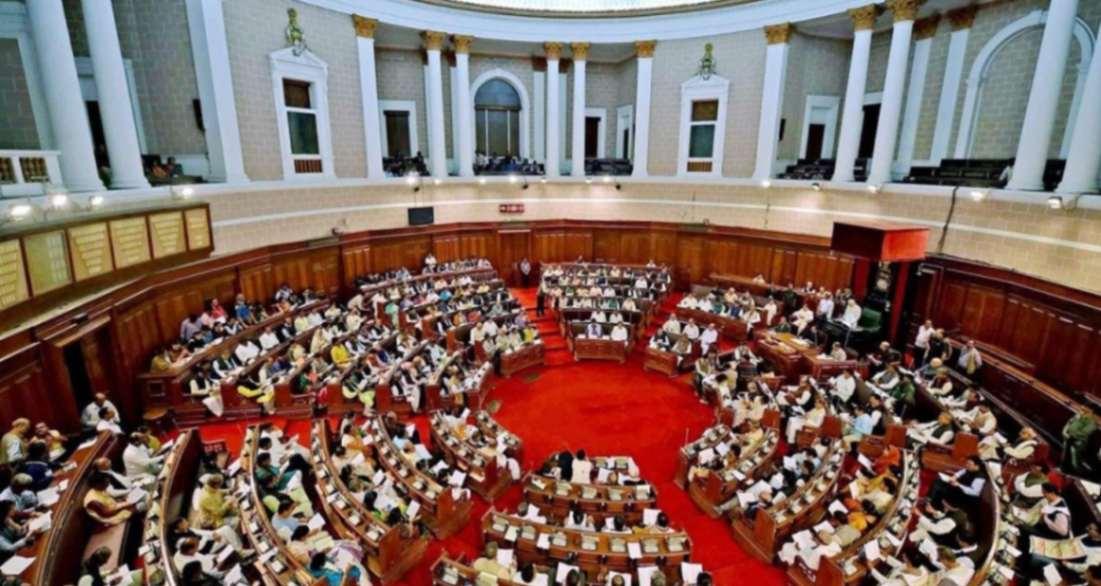
In a significant move, the West Bengal government on Monday passed two key amendment bills in the Legislative Assembly aimed at overhauling the reservation policy for Other Backward Classes (OBC). The bills were passed with 186 votes in favour and 17 against, while six MLAs abstained from voting. The bills were tabled by State Backward Classes Welfare Minister Gourishankar Ghosh. During the proceedings, ISF MLA Naushad Siddique strongly opposed the amendments and demanded a division of votes. Assembly Speaker Rathin Basu accepted the demand, marking the first instance in recent times where a government bill was put to vote instead of being passed unanimously.
The two legislations introduced were the ‘West Bengal Backward Classes (Other than Scheduled Castes and Scheduled Tribes) Reservation of Vacancies in Services and Posts (Amendment) Bill, 2026’ and the ‘West Bengal Commission for Backward Classes (Amendment) Bill, 2026’. According to the government, the amendments are intended to correct inconsistencies in the OBC reservation framework that arose during the tenures of the Left Front and the Trinamool Congress.
As per the proposal, no changes have been made to the list of 65 communities under OBC Category ‘A’. However, the amendment provides for the removal of ‘Schedule One’, which contains the list of 78 communities included in Category ‘B’ during the previous Trinamool regime. At the same time, the bill introduces provisions allowing individuals or groups to raise objections regarding the inclusion or exclusion of communities through the West Bengal Backward Classes Commission.
The Assembly witnessed an unusual political scenario during the voting process. While MLAs aligned with the so-called ‘Kalighat faction’ of the Trinamool Congress participated in the vote, a group led by Ritabrata Banerjee staged a walkout. However, several MLAs from that faction, including Kajol Sheikh, Baharul Islam, Bayron Biswas, Pannalal Halder, and Tausifur Rahman, defied the party’s stance and remained present in the House. Leaders from the Kalighat camp, such as Sovandeb Chattopadhyay, Biman Banerjee, Kunal Ghosh, Alifa Ahmed, and Pulak Roy, actively took part in the voting.
BJP MLA Arijit Bakshi from Dum Dum was among the first to support the bills, launching a sharp critique of the previous administration. He alleged that the earlier Trinamool government had prepared the OBC list for political appeasement and vote-bank considerations, thereby depriving genuinely backward communities. On the other hand, opposition MLAs, including Naushad Siddique, Javed Khan, and Sabina Yasmin, opposed the bills and reiterated their demand for a formal vote.
In a dramatic turn of events just before voting, a majority of MLAs from the Ritabrata faction walked out after the Speaker ordered a division. Shortly thereafter, Chief Minister Suvendu Adhikari entered the House, prompting some MLAs from the same faction — Kajal Sheikh, Tausifur Rahman, Baharul Islam, and Dr. Mosarraf Hossain — to approach him and engage in a brief discussion. Eventually, six MLAs from the faction participated in the voting, while senior leaders, including the Leader of the Opposition, the Chief Opposition Whip, and the Deputy Leader, stayed away.
Political observers believe that the passage of these amendment bills will lead to a major restructuring of the OBC reservation framework in West Bengal, particularly in the areas of government employment and higher education. The move is expected to have far-reaching implications for the state’s socio-political landscape.
Also read: WB to defer tabling of UCC bill; Panel to be formed

 Follow us