
Trending:
Where boats float on air: The story of Dawki
In Meghalaya’s border town of Dawki, the Umngot River runs so clear that boats appear to float on air. For generations it has sustained livelihoods, culture and trade. Today, tourism fuels prosperity even as development pressures threaten the fragile balance that keeps its waters crystal. Follow us
News Arena Network - Shillong - UPDATED: February 27, 2026, 01:17 PM - 2 min read
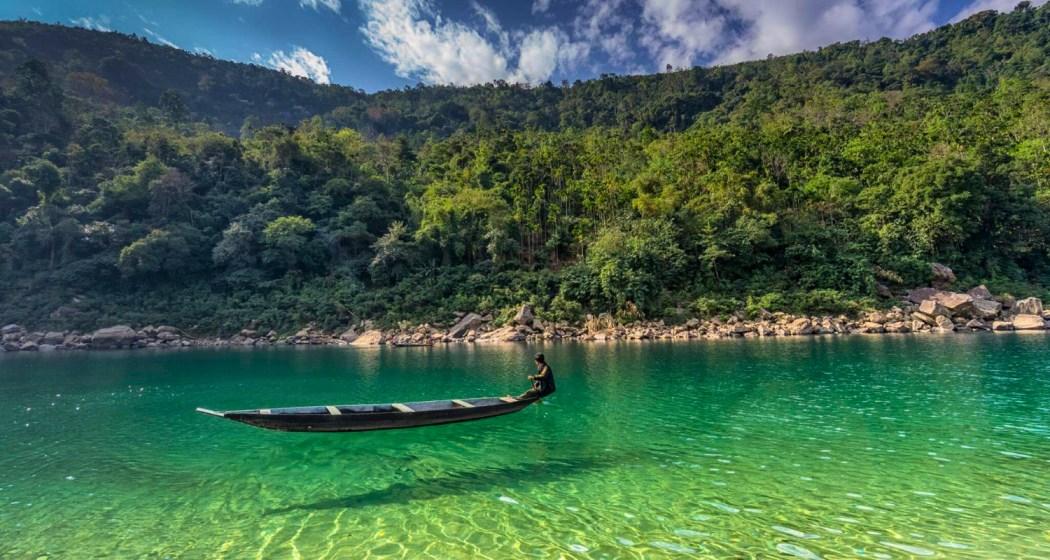
A boatman guides his wooden craft along the transparent waters of the Umngot River in Dawki, Meghalaya.
The Dawki River, known locally as the 'Umngot', winds through the green hills of Meghalaya like a ribbon of glass. It begins high in the eastern slopes near Shillong Peak, around 1,800 metres above sea level, where rainwater gathers quietly before starting its southward journey. Unlike snow-fed rivers born in dramatic glaciers, Umngot’s beginnings are quieter, emerging from limestone layers in the Jaintia Hills. As it moves through forested valleys, the water is filtered naturally through rock, shedding sediment and leaving behind clear water.
Further downstream, the river becomes a boundary, first between the Khasi and Jaintia Hills, and then between India and Bangladesh. In 1932, the British built the Dawki Suspension Bridge, turning the quiet settlement of Dawki into a trade point between British India and what was then East Bengal. The iron bridge still stands, narrow but firm, trucks rumbling across it while wooden boats glide underneath.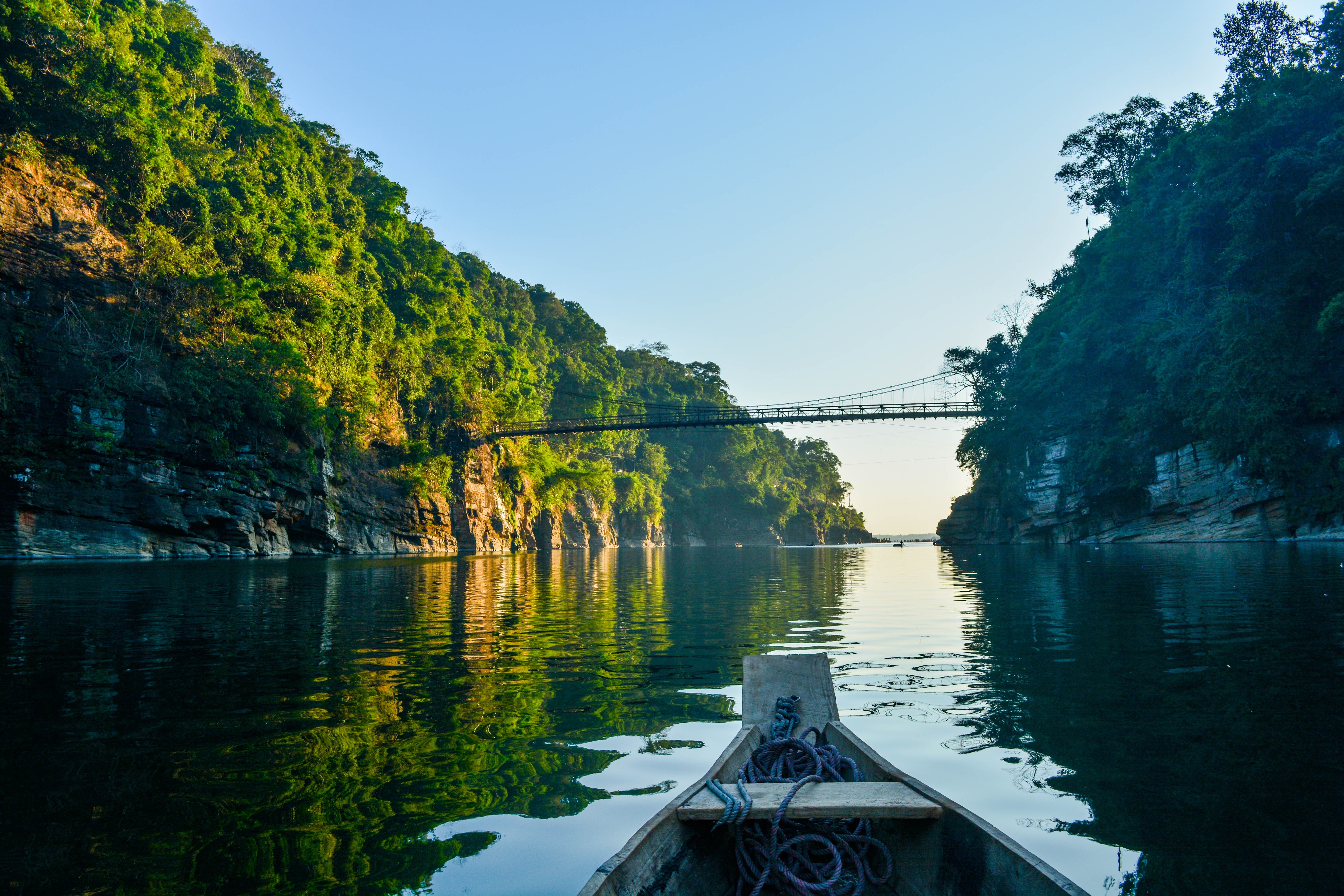
Lifeline for local communities

For the Khasi and Jaintia families who live along its banks, the river is not scenery. It is routine. It provides fish through small-scale methods, bamboo traps, hand lines, and careful seasonal fishing. Enough for a meal, sometimes enough for sale.
Long before tourism arrived with drones and Instagram reels, Umngot carried trade. Wooden boats once transported dried fish, betel nut and bamboo downstream, while salt, rice and cloth came back upriver. The river was not merely water cutting through hills, it was movement, exchange, connection.
Its waters also nourish paddy fields and vegetable plots in narrow valleys where farming is already a challenge. In the humid months, villagers bathe here, wash clothes here, and cool off here, though always with an understanding that the river must not be dirtied. Downstream, it feeds into Bangladesh’s Piyain and Surma rivers, carrying with it not just water but shared geography.
Rikman Marak, a third-generation boatman, who greets visitors in Khasi, switching easily to Hindi or English says, “People come here for the crystal water, but for us, it is everything. Our families fished here, our children learned to swim here, and this river feeds our homes.” Fishing, he adds, “isn’t only commerce, it is heritage.”

Life along Dawki banks
During the dry months, especially between November and April, the Umngot turns astonishingly transparent. Boats appear suspended mid-air, their shadows resting clearly on stones several feet below. The clarity comes largely from the limestone bed and the steady flow that keeps algae low.

This clarity is not just beautiful to look at. Beneath the surface, fish move freely, visible even from a passing boat. Among them is the prized mahseer (Tor species), a large, powerful fish often seen as a sign of a healthy river. Deeper pools hold catfish, while smaller fish flash across the shallows in quick streaks of silver. Freshwater shrimps and crabs cling to stones along the riverbed, quietly playing their part in keeping the water alive. Local communities practise careful fishing, using selective methods and seasonal pauses to protect these populations.
Above the water, birds keep their own watch. Kingfishers perch on low branches, herons stand motionless in the shallows, patient and alert. Asian green bee-eaters sweep low across the riverbank.
The surrounding hills deepen the sense of richness. Meghalaya is known for its orchids, more than 350 species have been recorded across the state, and many thrive in the moist stretches near the river. Grasses and shrubs hold the banks together, preventing erosion and providing shelter to insects, amphibians and small mammals. The valley does not announce this biodiversity loudly. It simply continues.
Cultural significance of ‘Umngot’
The word “Umngot” roughly translates to deep or clear water. For the Khasi community, rivers are living presences, not inanimate resources. Folklore speaks of water spirits and ancestral guardians. During festivals like Shad Suk Mynsiem, communities gather in thanksgiving for harvest and harmony. The river may not be named directly in every prayer, but it remains part of the landscape that sustains such traditions, values that balance with nature.
That bond is palpable. Myntri Syiem, an elected village leader reflects quietly, “We have stories of our ancestors speaking to this river. It is part of our identity. The way we fish, cultivate, even how we greet strangers, the river taught us respect for balance. It gives, and in return, we must take nothing that is not ours to give.”
Tourism and a changing economy
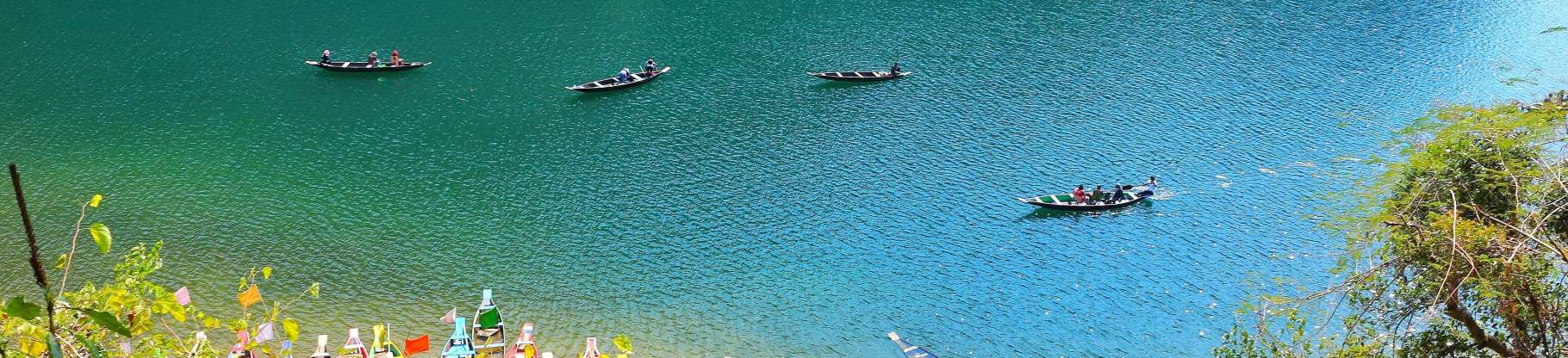
In recent years, tourism has altered Dawki’s rhythm. Visitors have begun arriving in larger numbers. Boat operators in Dawki and nearby Shnongpdeng now charge between ₹1,500 and ₹3,000 per ride, guiding families and photographers along the calmest stretches.
Homestays have multiplied. Meals of pork and rice, forest ferns, and fresh river fish are served to guests who wake up to mist rising off the water. “Farming alone barely covered costs,” says a boat operator from Shnongpdeng. “Now tourists from across India and abroad keep things going.”
Meghalaya recorded roughly 1.5 million tourist arrivals in 2025, according to state estimates, with domestic travel driving much of the growth. Dawki draws a significant share during the dry season. On peak weekends, thousands pass through. The state hopes to double tourism numbers by 2028, promoting eco-friendly destinations such as this one.
Shadows on clear water
The river’s clarity has not remained untouched. Since late 2025, sections of the Umngot have turned murky due to soil and debris flowing from the ongoing Shillong-Dawki road widening project. Hill-cutting and excavation linked to work overseen by NHIDCL with JICA funding have allowed loose earth to slip into tributaries during rains. The Meghalaya State Pollution Control Board inspected sites and fined the agency ₹15 lakh, directing immediate clean-up and stabilisation measures.
Locals say the impact has been immediate. Some report up to an 80 per cent drop in bookings as visitors cancel trips, expecting the postcard image they have seen online. Alan West Kharkongor, president of the Meghalaya Rural Tourism Forum, described the situation as an “economic emergency” for families dependent on river tourism in Dawki, Shnongpdeng and Darrang.
Unregulated sand mining, litter and erosion add to the strain. Traditional institutions such as Hima Khyrim have called for stronger conservation measures. Some environmental observers caution that full recovery of the river’s famed transparency could take time.
Still, the Umngot flows!

It has endured colonial trade, shifting borders and changing economies. It now faces development pressures that test its resilience. Whether it continues to be known as the river where boats float on air will depend on how carefully growth is managed.
For now, in the right light, the illusion remains. A wooden boat drifts across water so clear it seems unreal. Beneath it lie stones, fish, memory, and a community along its banks that hopes the river will stay as it has always been: A giver, connector, and a quiet keeper of life.
By Deepan Chattopadhyay
