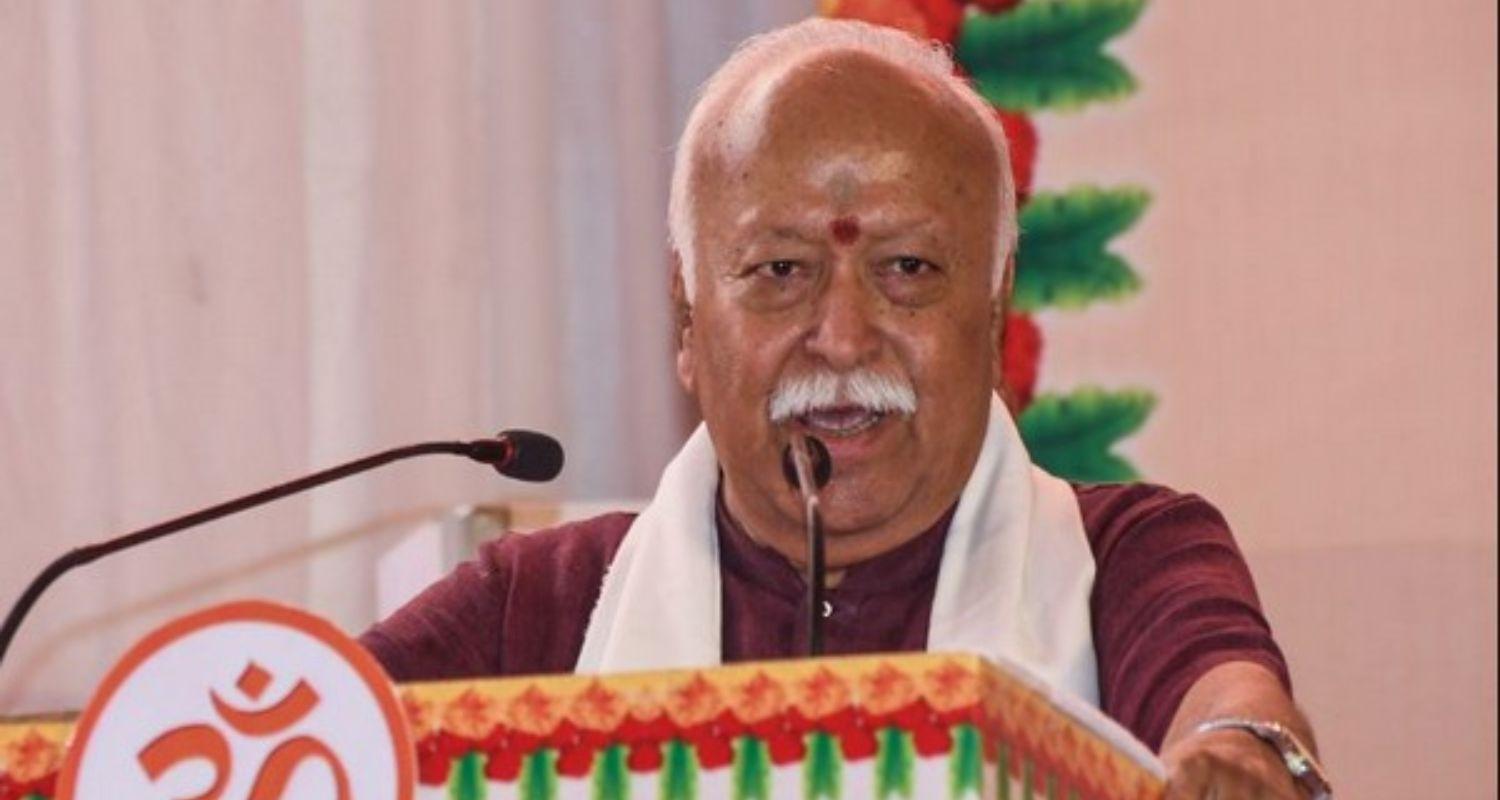
The Rashtriya Swayamsevak Sangh (RSS) chief, Mohan Bhagwat, claimed on Friday that the organisation's distinct model of character-building has garnered international interest, with visitors from five continents asking if RSS volunteers could help replicate this value-based training for youth in their own countries. Speaking at the launch of the 100th YouTube video in a series charting the lives and contributions of RSS pracharaks (full-time workers), Bhagwat stated that the Sangh's mission extends well beyond shaping individual character. He noted that the journey is very much ongoing, with "miles to go," and that their work does not simply stop at setting a good example.
Bhagwat argued that the principles of the Sangh cannot be fully understood through books or lectures alone, but must be genuinely lived. In his view, what distinguishes the qualities of a swayamsevak (a volunteer) is not just politics or activism, but a willingness to live a structured and disciplined way of life driven by values. He has also tried to dispel any misunderstandings about the organisation’s structure by rejecting the myth that the parent organisation controls all its subsidiaries, each working in its own domain. It is true that the volunteers do get trained in the Sangh first, but afterwards they work independently in diverse domains depending upon the requirement of society.
Asserting that no other method in the world matches the Sangh's approach to human development, Bhagwat mentioned that observers from both India and abroad frequently visit to study their operations. He remarked that visitors from all five continents have enquired whether RSS members could train local coordinators to establish similar frameworks back home. Reflecting on the growth of the movement, Bhagwat said the current generation of workers is paying a fitting tribute to the pioneers who laid the organisation's foundations. He stressed that even as the RSS expands and wins greater public affection and respect, its fundamental ethos must remain completely unchanged by shifting external circumstances.
Turning finally to India’s place on the world stage, Bhagwat observed that the international community still believes the country has the capacity to offer moral direction to humanity. However, he cautioned that this would only happen if India advances firmly on the foundation of its own civilisational values to emerge as a nation of supreme strength and merit.
Also read: Bhagwat calls for 'society-centric' use of technology

 Follow us