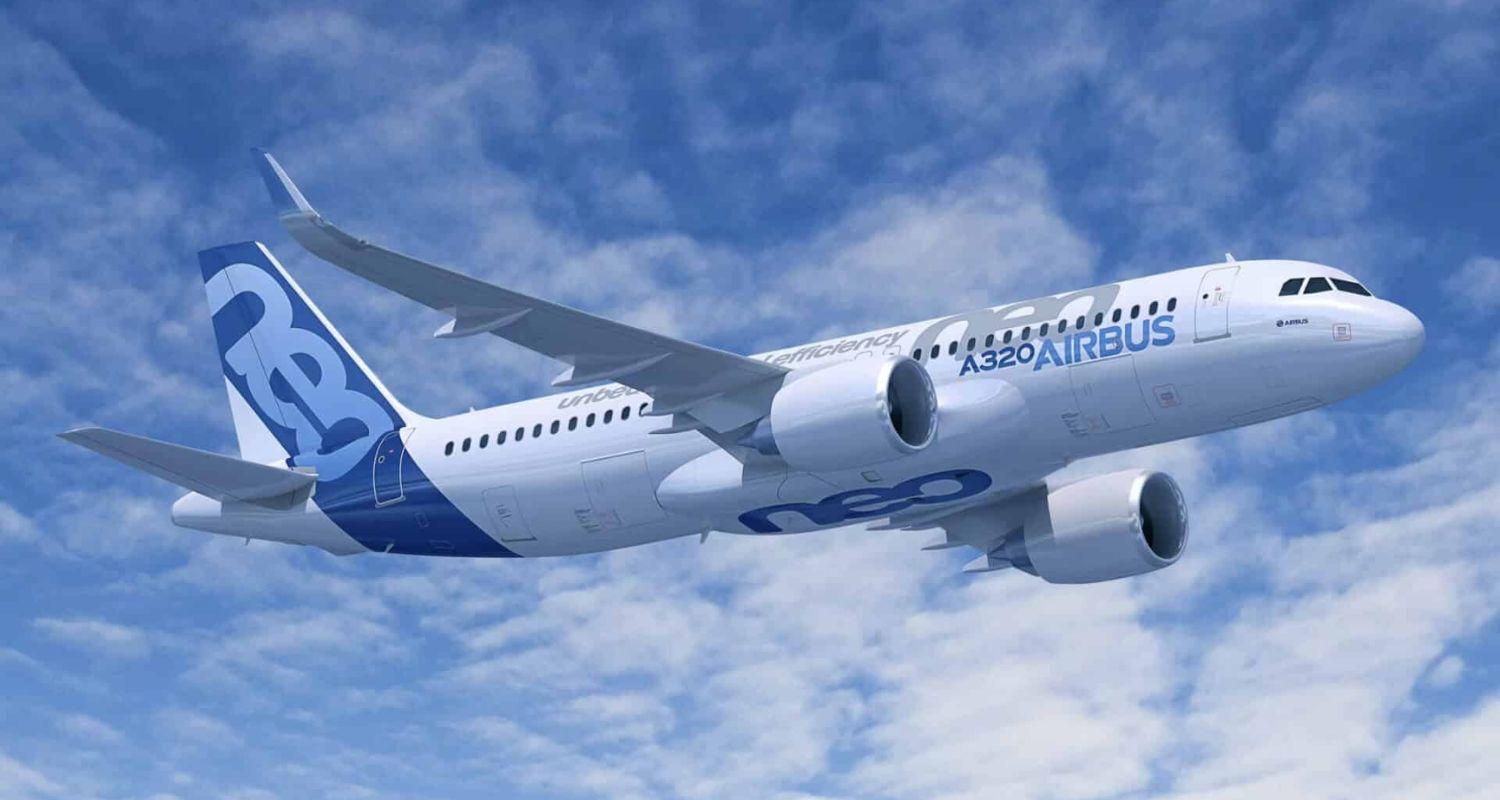
A recent flight recall by aerospace giant, Airbus, of nearly half of its global fleet has brought the focus back on the impact of space weather and climate change on communication systems, flight software, and GPS.
The France-headquartered aircraft-maker blamed a powerful solar flare for damaging its flight software, which it said led to an A320 airbus unexpectedly losing altitude during a Mexico-US flight on October 30, injuring 15 passengers. Following the incident, the company said in a November 28 statement that it would be re-examine all of its aircraft which it suspects might have been subjected to the intense solar radiation.
Although experts cast doubt on Airbus’ solar flare theory, saying they found no significant solar event of concern on October 30, the event is a wake-up call for authorities, governments, and scientists to take into account the effect of space weather on flight safety.
Intense cosmic radiations are known to cause “single-event upsets”, which can corrupt data, especially with the sun now said to be at the peak of its heightened phase of solar activity in the current ongoing ‘solar cycle 25’. A cycle of solar activity typically lasts 11 years.
Asa Stahl, a US-based astronomer and science communicator, explains that high-energy particles from the sun can temporarily corrupt data when they strike aircraft computer chips, causing system malfunctions or even permanent electronics damage.
Since solar storms occur periodically as the sun’s internal dynamo process intensifies and weakens, creating its magnetic field, a solar storm can release a huge amount of charged particles, thereby discharging energy and magnetic fields into the solar system.
Prasad Subramanian, faculty at the Indian Institute of Science Education and Research (IISER), Pune, said: “Intensity of solar radiation during a solar flare, which is part of a solar storm, is high, which can cause ‘single event upsets’. In other words, a ‘1’ can be flipped to a ‘0’ or a ‘0’ can be flipped to a ‘1’. “Binary digits ‘0’ and ‘1’ are fundamental to computers and electronics, with ‘1’ typically representing ‘true/ON’ and ‘0’ representing ‘false/OFF’. Any change to ‘0’ and ‘1’ instructions in devices central to keeping planes in flight can be catastrophic.
Now, a piece of software is relying on the hardware to interpret its commands. You’re making a software, believing that it’ll work, believing that the electronic chip is going to obey and interpret a ‘0’ as a ‘0’ and a ‘1’ as a ‘1’,” he said.
“But here you have an energetic particle hitting the semiconductor device, causing an anomaly, or an abnormality. So in effect, it flips the bits and so the software doesn’t do what it’s intended to do,” Subramanian said.
Also Read: Airbus A320 recall: Software glitch impacts over 6,000 planes
R Ramesh, senior professor at Bengaluru’s Indian Institute of Astrophysics, said the earth’s magnetic field at altitudes of 30,000-40,000 feet weakens, but aircraft are built for such possibilities.
“At the altitude of 30,000 to 40,000 feet above the Earth’s surface, where commercial aircraft typically fly, the Earth’s magnetic field, which shields the planet from energetic particles, weakens. This makes aircraft and satellites vulnerable to charged particles shot out by the sun during flares and coronal mass ejections,” he said.
Stahl said experts have known for decades that solar radiation could potentially cause the computers on aircraft to malfunction, “so flight software is typically designed to automatically detect and correct for such disruptions”.
Space weather is monitored by organisations worldwide to provide timely information on disruptions from the sun that can possibly cause communication blackouts and satellite outages.
Astrophysicists say that while it is plausible for energised, charged particles from a solar storm to cause serious damage to aircraft, there was a lack of clarity on Airbus’s linking the damage caused to flight electronics on October 30 with solar radiation.
Dibyendu Nandi, a space weather expert at the Centre of Excellence in Space Sciences India (CESSI) and Professor at the Indian Institutes of Science Education and Research (IISER), Kolkata, indicated in a post on X that there was no major space weather event that day.
Nandi was part of a CESSI team that had predicted in 2018 that activity in the current solar cycle would peak in 2024. Its findings were published in the journal Nature Communications.
“An analysis of space weather data shows no significant solar event of concern on October 30, 2025,” he said.
Nandi said “it is certainly not yet clear what transpired to lead to the fleet recall and updates”.
“Assuming all other possibilities have been ruled out by Airbus aircraft carefully, I would lean towards cumulative space weather impacts, or a very rare energetic particle enhancement from galactic sources, manifesting during that specific October 30, 2025, Mexico-US flight,” he added, and said previous “impacts” may have somehow escaped scrutiny from routine ground checks.
Subramanian too says there were no major events reported on October 30.
“So, I’d say that it’s not clear why Airbus thinks that the flight electronics could have been corrupted by a solar flare event.” “It’s possible that a solar flare event that happened much earlier could have corrupted some of the electronics onboard, but the software malfunction made itself felt only later,” he suggested.
While it’s the first time that there has been such a major recall of a global aircraft fleet because of risks linked to solar radiation, said Stahl in an email, the recall by Airbus could well “set a major precedent” by signalling that space weather needs to be given more importance for aircraft safety.
“Solar activity poses real risks to important infrastructure that we depend on in our day-to-day lives, like cell service, GPS, or really anything that depends on satellites – which is a lot. This incident is a reminder of that,” the US-based astronomer added.

 Follow us