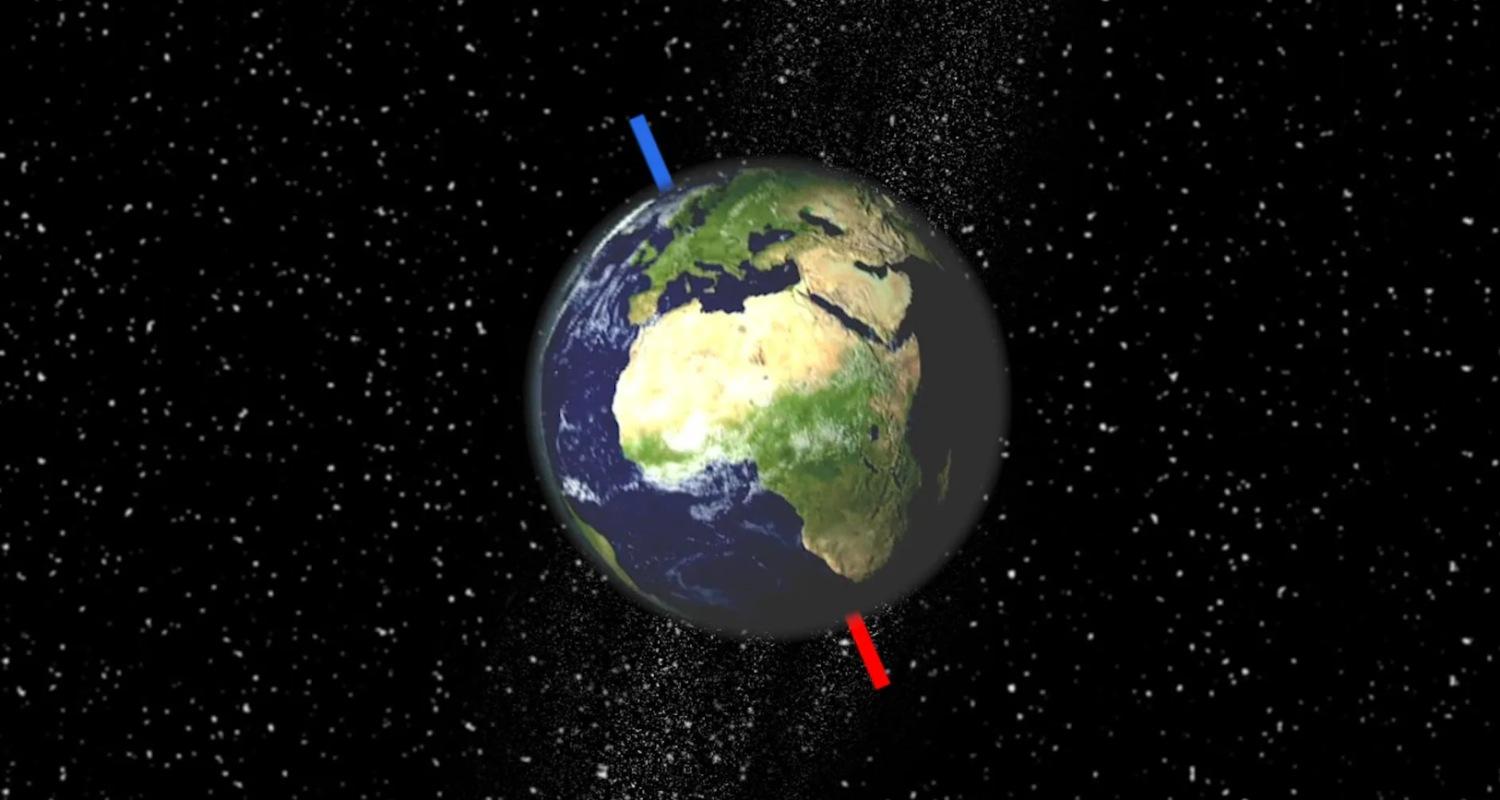
A recent study examining climate change's effects on our planet has made a startling revelation—the Earth's axis has deviated by 31.5 inches (almost 80 centimetres).
Researchers attribute this alteration to humans' extraction of groundwater, which they claim can not only affect the planet's rotation but also influence sea-level rise. This research has been published in the journal Geophysical Research Letters.
According to Popular Mechanics, this shift in the Earth's tilt corresponds to a 0.24-inch rise in sea level.
"Earth's rotational pole undergoes significant changes. Our research indicates that among climate-related factors, the redistribution of groundwater has the most substantial effect on the drift of the rotational pole," stated Ki-Weon Seo, a geophysicist from Seoul National University and the lead author of the study.
The researchers further explained that the Earth's spin is altered as water is reallocated.
The tilt of the Earth, or axial precession, is affected by how mass (in this case, water) is distributed across the planet. The melting of glaciers and polar ice sheets from Greenland and Antarctica plays a major role in this redistribution.
As glaciers melt, the resulting water flows toward the equator, shifting the Earth's balance and causing its axis to move - a process similar to how a figure skater's spin slows when extending their arms outward.
The study analyses data from 1993 to 2010, which indicates that the extraction of up to 2,150 gigatons of groundwater has contributed to an approximate 31.5-inch change in the Earth's tilt. This groundwater extraction primarily serves irrigation and human consumption, as noted in the study first published in 2023 and later revised.
Groundwater refers to water stored beneath the Earth's surface within soil pores and rock fractures, contributing to the hydrological cycle. It originates from rainfall seeping into the ground, replenishing underground aquifers. These aquifers are essential freshwater reserves, providing drinking water, agricultural irrigation, and supporting industrial uses.
Groundwater is typically accessed through wells and springs. Its availability and quality are influenced by recharge rates, geological formations, and human activities.
It serves various purposes, including agricultural use and as a source of drinking water.
While the tilt may appear minor from a human perspective, over geological timeframes, such shifts can lead to significant environmental impacts. For example, the redistribution of water can cause regional variations in sea level changes. It also affects the Earth's internal mechanisms, including its magnetic field, which protects us from harmful solar radiation.

 Follow us