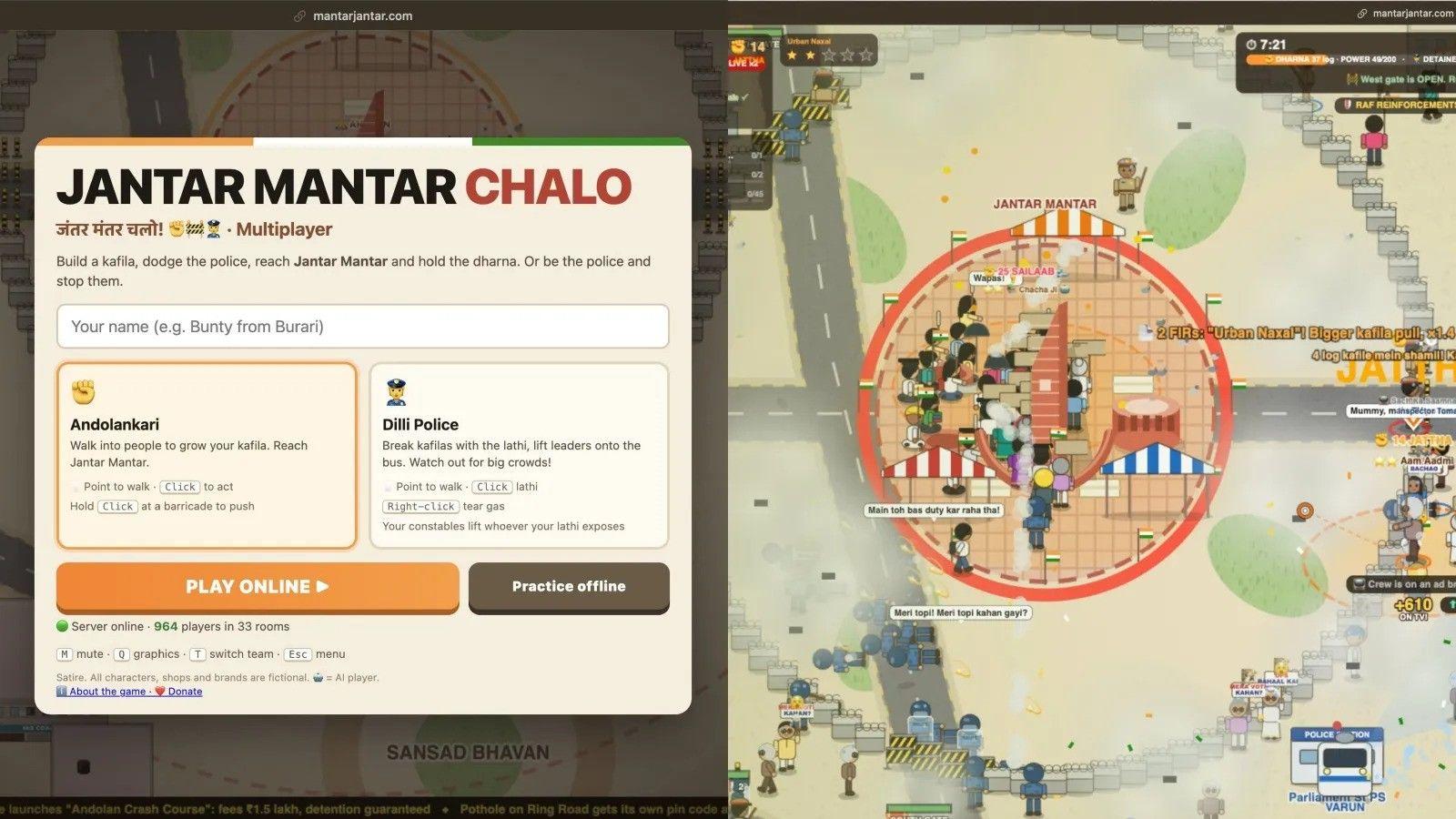
A new video game titled Jantar Mantar Chalo allows users to participate in a virtual demonstration without travelling to Delhi. Players can either take on the role of an andolankari trying to reach Jantar Mantar or play as a Delhi Police officer tasked with stopping the protesters.
The game was created by 27-year-old Suraj Kushwah, an IT professional from Bareilly, Uttar Pradesh. It was developed against the backdrop of several calls for protests in the national capital and presents the difficulties of organising a march through a satirical gaming format.
Suraj said recent news about proposed marches towards Jantar Mantar encouraged him to build a three-dimensional game in which players would have to negotiate police deployments and reach the protest venue. He added that he was concerned about the situation in Delhi and the discomfort it was causing many people.
He also said he was influenced by the way members of Gen Z approach events with humour, creating content rather than making matters unnecessarily complicated. Reels on social media were another source of inspiration for the game.
Suraj uses the Instagram handle Bugswriter. He works as a DevOps engineer at oneplay.in and runs a YouTube channel about Linux, which has around 30,000 subscribers from different parts of the world.
Although he studied game design in college, Suraj used artificial intelligence tools, including Claude, to support parts of the coding process. Other software was used to assist with the artwork. He said the core concept and gameplay were his own, while Slither.io was among the games that inspired him.
Building a procession and crossing barricades
Players selecting the protester role must make their way to Jantar Mantar, persuade others to join the procession and cross barricades before holding a dharna in the central area designated for protests. A larger kafila helps players move forward more effectively.
The virtual route includes challenges associated with demonstrations in Delhi. These include alerts about metro station gates being closed, lathi charges and interruptions to internet connectivity. Pop-ups that glitch on the screen are used to recreate the effect of network disruptions.
Players can also be detained if they are unable to avoid the police. Those taken into custody may be transported to places such as Narela or the Kapashera border and must then make their way back towards the protest site.
Gamchhas, golgappas and detention grounds
The game combines political satire with familiar elements of Delhi life. A tea stall provides an opportunity for a short break, while golgappas help restore stamina. Players can also use a gamchha to avoid CCTV cameras.
Temporary detention centres are represented through locations including the Burari and Kapashera grounds. Potholes, overflowing garbage bins and cows blocking roads add further obstacles along the route, while roadside food stalls offer brief relief during the journey.
Playing as the Delhi Police
Those who choose the Delhi Police role face the opposite task: preventing protesters from reaching Jantar Mantar. The game allows them to use lathis and tear gas, detain demonstrators and move them in police buses.
By giving both sides different objectives, Jantar Mantar Chalo presents the same demonstration from the viewpoints of protesters and police. Its combination of barricades, recruitment, detention and everyday urban obstacles turns the journey to a protest site into a satirical contest.

 Follow us