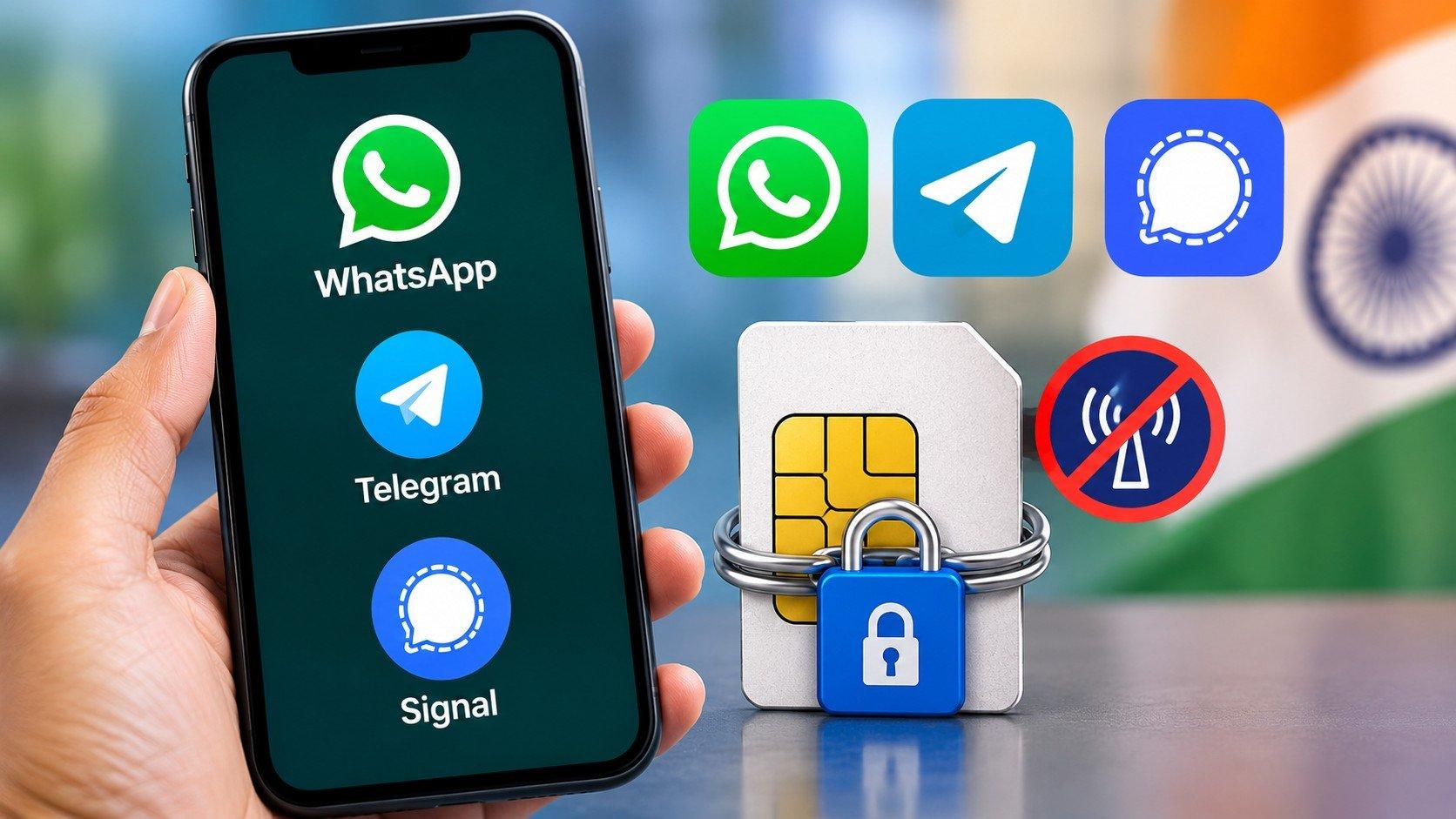
Users of WhatsApp, Telegram and other messaging platforms may face interruptions if the SIM card registered with their account is removed, replaced or deactivated. The proposed requirements are expected to influence access to these services from January 1, 2027.
The Department of Telecommunications (DoT) has extended the compliance deadline for the proposed framework to December 31, 2026, following representations from the industry. The rules would apply to platforms that use Indian mobile numbers for user registration and require them to ensure that the corresponding active SIM card or eSIM remains present on the device.
How SIM binding would work
SIM binding would connect a messaging account with an active mobile connection verified through know-your-customer (KYC) checks. At present, users can generally continue using an account even after removing the SIM card originally used for registration.
Under the proposed system, messaging platforms would need to verify that the registered number continues to be linked to an active SIM or eSIM on the device. If the connection is removed, changed or deactivated, the service could suspend account functionality until the number is restored through a valid SIM card or eSIM profile.
The proposed requirements are expected to cover both physical SIM cards and eSIMs. Users who have an active eSIM connected to their registered number are therefore unlikely to be affected solely because they do not use a physical SIM card.
Government’s stated objective
The DoT has proposed the measure as part of efforts to tackle cyber fraud, including phishing, impersonation and digital arrest scams. The department has said that fraudsters have acquired Indian SIM cards, used them to create messaging accounts and then operated those accounts from outside India.
Keeping an active SIM linked to an account is intended to make Indian mobile numbers more difficult to misuse in cross-border fraud. The government has also pointed to the financial losses suffered by Indian consumers because of cybercrime as a reason for tightening the authentication requirements.
Apps and users that may be impacted
WhatsApp and Telegram are expected to come within the proposed framework because both services use phone numbers for registration and user identification. Signal’s position remains unclear, while Snapchat is unlikely to be covered under the requirements.
The rules could have a greater effect on users who keep their registered SIM in a secondary handset while operating the messaging account on another device. People who remove the SIM after completing registration, or who primarily use messaging services over Wi-Fi, may also experience disruption.
Users of dual-SIM phones may need to ensure that the number connected to their messaging account remains active and satisfies the platform’s verification requirements.
The proposed changes do not indicate that WhatsApp will stop working on specific iPhone or Android models from January 1, 2027. Their focus is on SIM verification and account authentication, not on handset manufacturers or operating systems.

 Follow us