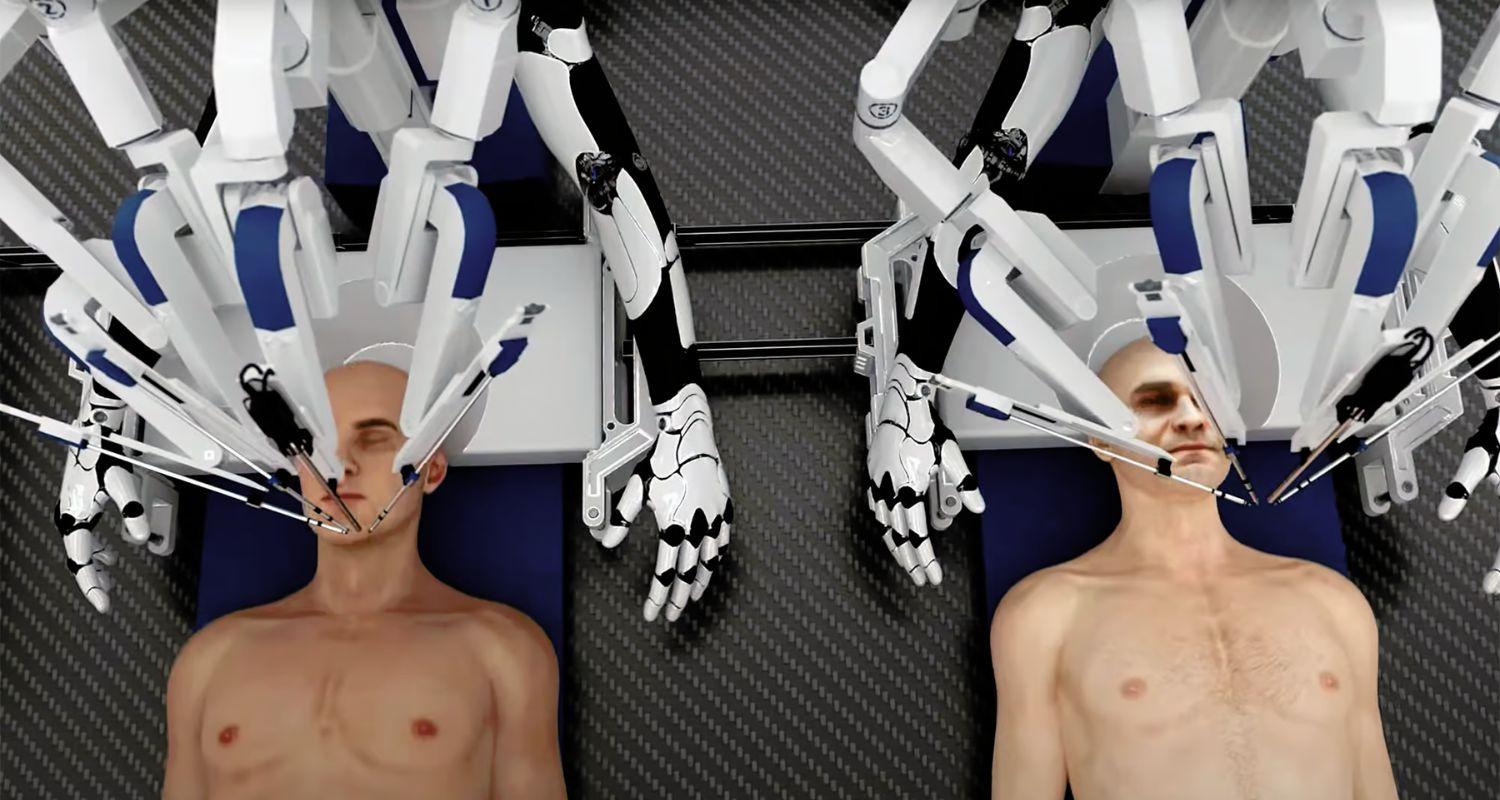
BrainBridge, a US-based startup, has announced the development of the world's first artificial intelligence (AI) guided head transplant system.
This pioneering technology, still in its developmental phase, promises to offer a new lease on life for patients with terminal illnesses and neurodegenerative diseases by enabling the transplantation of their heads onto healthy donor bodies.
The concept hinges on the use of advanced robotics and real-time molecular-level imaging to achieve unprecedented precision in head transplants.
The process involves sophisticated robotic systems that would simultaneously remove the heads of both the donor and recipient, followed by the seamless transfer of the recipient's head onto the donor's body.
BrainBridge's system, guided by AI, aims to ensure the precise reconnection of the spinal cord, nerves, and blood vessels.
The company has released a demonstration video highlighting the role of robotic surgeons and AI in executing the complex procedure.
Despite the ambitious vision, one of the significant hurdles remains the full repair of nerve and spinal cord damage.
To address these challenges, BrainBridge is actively recruiting top specialists from various fields to collaborate on solutions.
The startup believes that by attracting the brightest minds, they can accelerate progress in whole-body transplantation.
The company's vision extends beyond head transplants, anticipating breakthroughs in spinal cord reconstruction that could transform healthcare.
The brainchild of Dubai-based biotechnologist and science communicator Hashem Al-Ghaili, BrainBridge's concept is meticulously planned based on extensive scientific research.
For the transplant to succeed, the donor must be a brain-dead patient with a functional body and vital organs in good condition.
Additionally, the procedure will include a face transplant from the donor, adding to the complexity of the operation.
While the notion of a head transplant may seem like science fiction, BrainBridge's announcement has ignited interest and debate within the scientific community.
Some experts remain skeptical about the feasibility of such a procedure, citing numerous ethical and technical challenges that need to be addressed.
Skeptics question the practicality of reconnecting the spinal cord and the ethical implications of such transplants.
However, BrainBridge remains resolute in its mission. Led by Al-Ghaili's vision, the startup is determined to push the boundaries of medical science and provide hope to those suffering from otherwise untreatable conditions.
The potential impact on healthcare is profound, pending the successful realization of this groundbreaking concept.
If achieved, the implications could be immense, offering renewed hope to individuals with terminal illnesses and advancing the field of medical science in unprecedented ways.

 Follow us