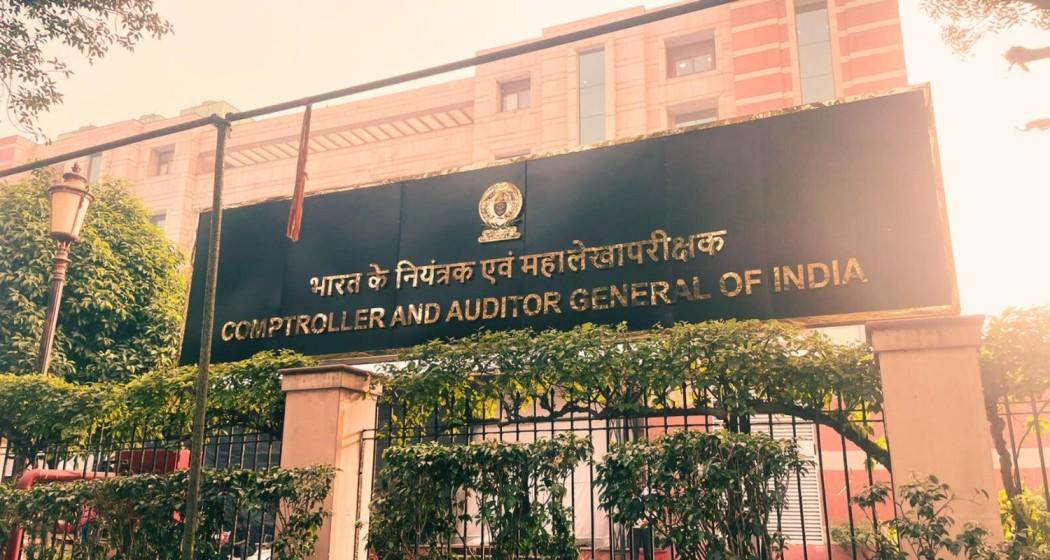
The overall liabilities of the Union government increased during 2024-25 mainly due to an increase in public debt, the Comptroller and Auditor General (CAG) said in a report on Thursday.
“Internal debt and external debt increased by 8.35 per cent and 9.83 per cent, respectively, compared to 2023-24. At the end of FY 2024-25, internal debt stood at Rs 1,59,25,949 crore and market loans, its primary component, accounted for 69.96 per cent of the total internal debt,” CAG report tabled in Parliament said.
Capital expenditure as a percentage of GDP decreased slightly from 2.78 per cent in 2023-24 to 2.70 per cent in 2024-25, it said. Repayment of debt has been the biggest draw from the Consolidated Fund of India, accounting for 62.57 per cent of the total outgo during 2024-25, it added.
Both revenue deficit and fiscal deficit declined compared to the previous year, indicating prudent fiscal management, it said, adding the revenue deficit was 1.78 per cent of GDP in FY 2024-25. It decreased by 26.24 per cent compared to FY 2023-24, reflecting better control over revenue expenditure and steady growth in revenue receipts. The fiscal deficit was 4.62 per cent in FY 2024-25. It decreased by 8.27 per cent compared to FY 2023-24.
The report said irregularities were noticed in accounting of the Central Government Employees Group Insurance Scheme (CGEGIS). Test check revealed incorrect booking of CGEGIS payments up to minor head level instead of prescribed sub-head level, which impacts calculation of closing balance under Insurance Fund/Saving Fund and consequently calculation of interest on the CGEGIS balances, it said.
Variation was observed between CGEGIS figures maintained by PAO-IDA (Pay & Accounts Office-Internal Debt & Accounts) and those appearing in the Union Government Finance Accounts (UGFA), it said. Further, it said, instances of incorrect classification of saving fund/ insurance fund payments and double accounting of receipt figures pertaining to Ministry of Railways were also noticed, affecting the accuracy of the accounts.
“We also noted instances of misclassification in accounting amounting to Rs 12,754.47 crore. Of these, Rs 4,011.91 crore related to receipts and remaining misclassifications aggregating to Rs 8,742.56 crore related to expenditure and were largely related to booking of expenditure under wrong object head (Rs 8,723.83 crore),” it said.
Supplementary provisions obtained in respect of 26 minor/sub-heads under 16 Grants during 2024-25, in anticipation of higher expenditure, were found unnecessary as the final expenditure was less than the original provisions under the corresponding minor/sub-heads, the report said.
“With respect to re-appropriation, we noticed that re-appropriations exceeding Rs 10 crore each were injudiciously made to 18 minor/sub-heads across 10 grants/appropriations, as the sanctioned provision under the minor/sub-heads to which augmentation was made by way of re-appropriation were adequate and re-appropriations were not required,” it said.
Similarly, it said, re-appropriations were injudiciously made from 10 minor/sub-heads across seven Grants, resulting in avoidable excess expenditure in these minor/sub-heads.
CAG flags gaps in skill development initiatives
The CAG has found several gaps in skill development initiatives under the Ministry of Electronics and IT, including instances of multiple registrations of candidates with similar demographic details, low placement outcomes and data validation mismatch.
In its report tabled in Parliament on Thursday, the CAG found a low enrolment rate in deep-skilling paid courses under Future Skills Prime (FSP) and a lack of industry recognition of certification under this programme, affecting learners’ motivation.
Also read: Only 52% MGNREGS works completed in Maharashtra: CAG

 Follow us