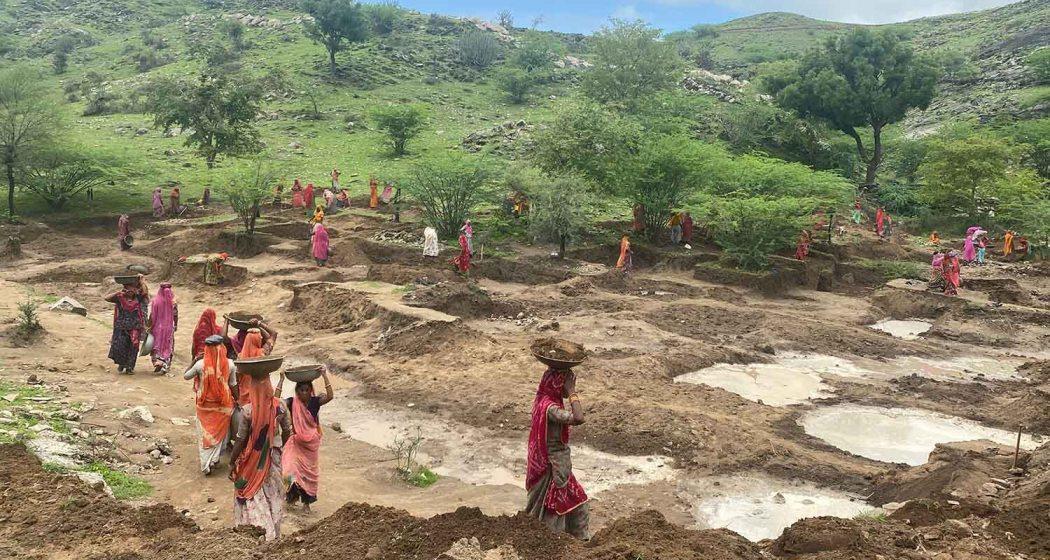
Only about 52 per cent of works undertaken under the Mahatma Gandhi National Rural Employment Guarantee Scheme (MGNREGS) in Maharashtra were completed between 2019-20 and 2023-24, the Comptroller and Auditor General of India (CAG) has found, flagging significant gaps in implementation.
According to the CAG report tabled in the state legislature, a total of 25.72 lakh works were approved during the period, but only 52.81 per cent were completed. Expenditure patterns revealed that Rs 6,725.65 crore was spent on completed works, while a substantial Rs 5,361.02 crore was incurred on works that remain incomplete.
The audit highlighted a growing backlog, with around 7.10 lakh approved works yet to commence as of March 2025. Of these, 2.48 lakh works have remained pending for more than three years. Additionally, out of 5.03 lakh incomplete works, over 1.07 lakh have been awaiting completion for more than three years.
Also read: Kerala budget focuses on welfare, development, fiscal constraints
The report also pointed to serious lapses in the implementation of provisions related to unemployment allowance. Under MGNREGS, employment must be provided within 15 days of demand, failing which eligible households are entitled to compensation. However, against dues of Rs 34.85 lakh between 2019-20 and 2023-24, only Rs 2,268 was disbursed, leaving the bulk unpaid.
Further, the CAG flagged deficiencies in social audits, which are meant to ensure transparency and accountability. Of Rs 11.22 crore identified for recovery in 1,084 cases of misappropriation, action in 314 cases involving Rs 4.44 crore remained pending.
The report attributed these shortcomings partly to inadequate funding, noting that the Social Audit Unit received less than one-third of the required funds from the Centre, while the state government also fell short in its allocations.
It also observed that the Maharashtra State Employment Guarantee Council, tasked with monitoring the scheme’s implementation, did not convene meetings regularly, raising concerns over oversight and governance.
The findings underscore persistent structural and administrative challenges in the execution of one of India’s flagship rural employment programmes in the state.

 Follow us