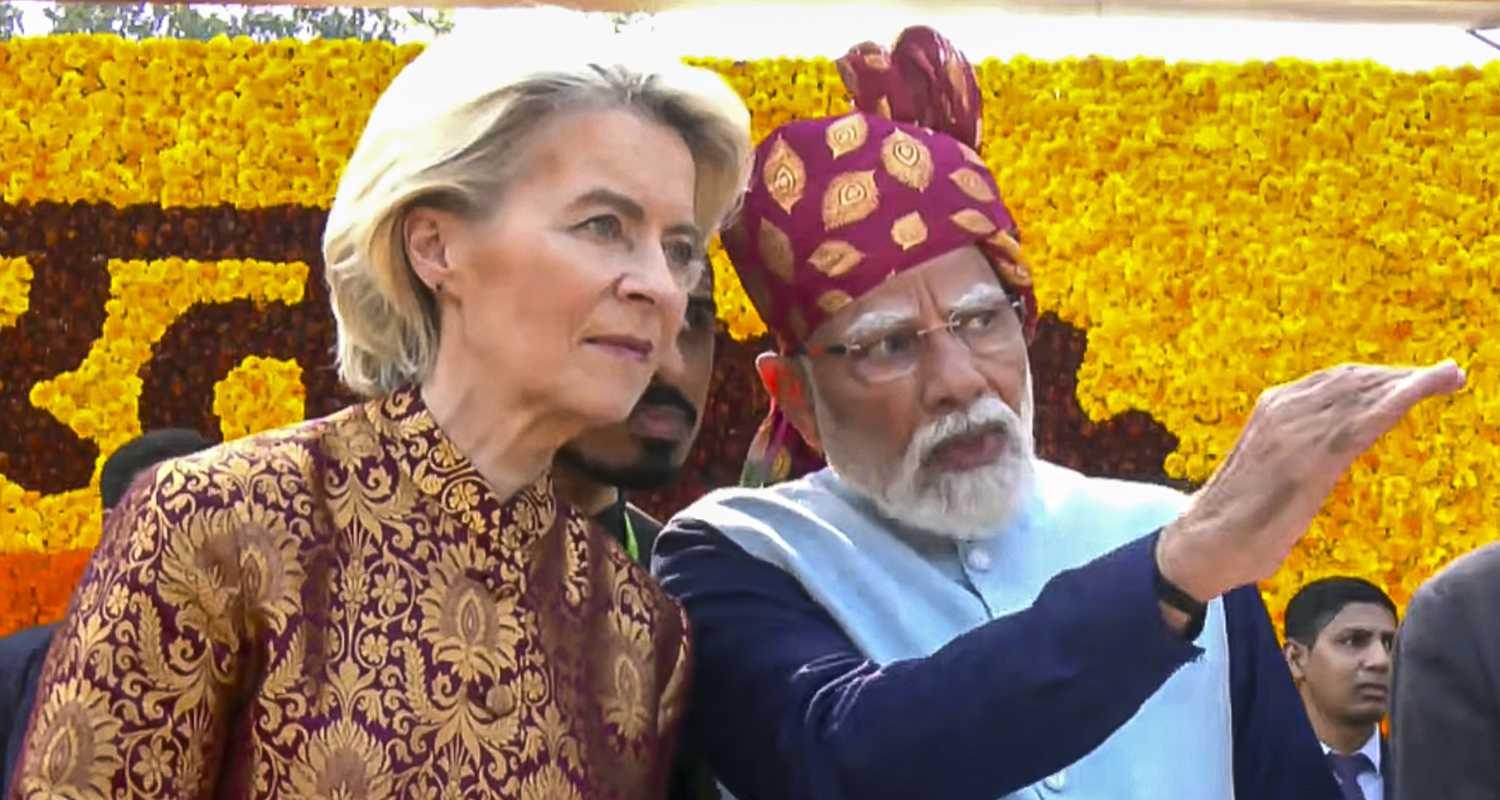
The India-European Union (EU) FTA “deal” following successful long-negotiations is announced. Leaders from both sides adopted a joint comprehensive strategic agenda and discussed trade in the context of the ongoing free trade agreement negotiations, initially started in 2007 and relaunched in 2022 and concluded yesterday.
Together, India and the EU represent almost one-fifth of global trade and around 25 per cent of the world population. This says/highlights the growing economic and strategic weight of the India-EU partnership, who are working closely to promote economic prosperity, a rules-based international order and sustainable development.
Speaking on the deal, European Commission President Ursula von der Leyen said, "India and Europe have made a clear choice. The choice of strategic partnership, dialogue and openness. Leveraging our complementary strengths. And building mutual resilience. We are showing a fractured world that another way is possible."
European Council President Antonio Costa echoed that thought, saying, "India is a crucial partner for the EU. Together, we share the capacity and responsibility to protect the rules-based international order."
Besides firming up the free trade agreement, the two sides are set to unveil a defence framework pact and a strategic agenda. The proposed Security and Defence Partnership (SDP) will facilitate deeper defence and security cooperation between the two sides, officials said. The SDP will bring interoperability in the defence domain and will open up avenues for Indian firms to participate in the EU's SAFE (Security Action for Europe) programme.
The EU is India's second-largest trading partner, right after China and ahead of the United States, accounting for 11.5 per cent of India's total goods trade. As per the official data, in 2024, EU-India trade in goods was valued at over Euro 120 billion. This included Euro 71.4 billion worth of EU imports from India and Euro 48.8 billion in EU exports to India. Over the past ten years, the bilateral trade in goods has doubled. During this period, EU imports from India grew by 140 per cent, while EU exports to India increased by 58 per cent, showing the steady expansion of commercial ties.
The main goods exported by the EU to India include machinery and appliances, transport equipment and chemicals. On the other hand, the EU primarily imports machinery and appliances, chemicals and fuels from India.
Meanwhile, in 2024, EU-India trade in services was worth over Euro 66 billion, with more than Euro 37 billion in EU imports and around Euro 29 billion in EU exports. Looking over the past ten years’ trade numbers in services between India and the EU, recorded a growth of 243 per cent. Key services traded between India and the EU include telecommunications, computer and information services, other business services such as professional and management consulting, and transport services.
In 2024, the EU's foreign direct investments in India were valued at over Euro 132 billion, making the EU the leading investor in the country.
On the policy front, the EU and India relaunched negotiations for a free trade agreement (FTA) in June 2022, aimed at removing barriers and helping boost the export of more open services. At the same time, separate negotiations were initiated on investment protection and geographical indications.

 Follow us