
Trending:
A 22,000 km journey: The Amur Falcon migration
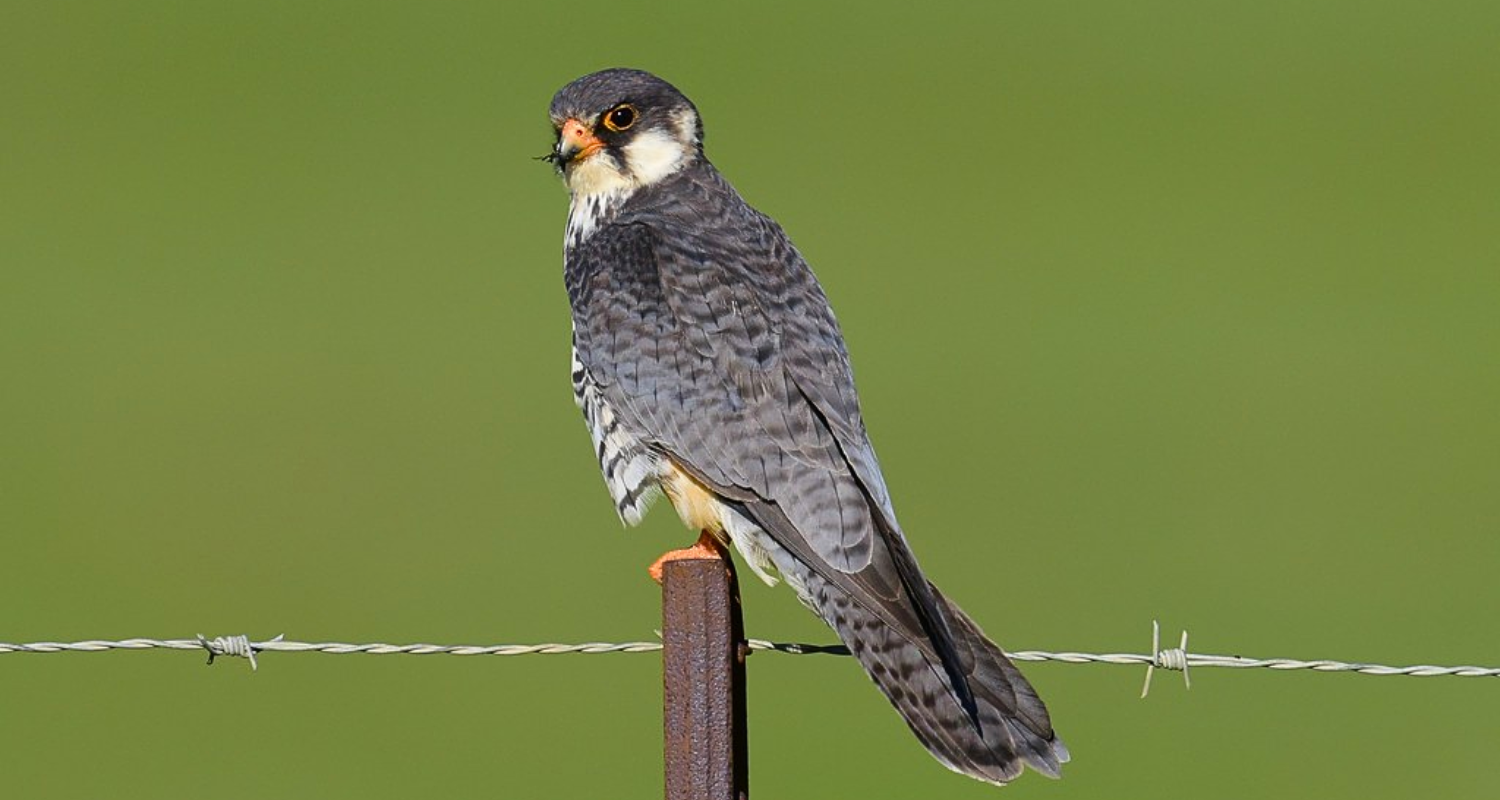
Each year, over a million Amur Falcons cross continents and oceans in a 22,000 km journey. From northeast India to southern Africa, this small raptor undertakes one of the longest and most demanding migrations in the avian world. Follow us
News Arena Network - Chandigarh - UPDATED: April 23, 2026, 02:08 PM - 2 min read
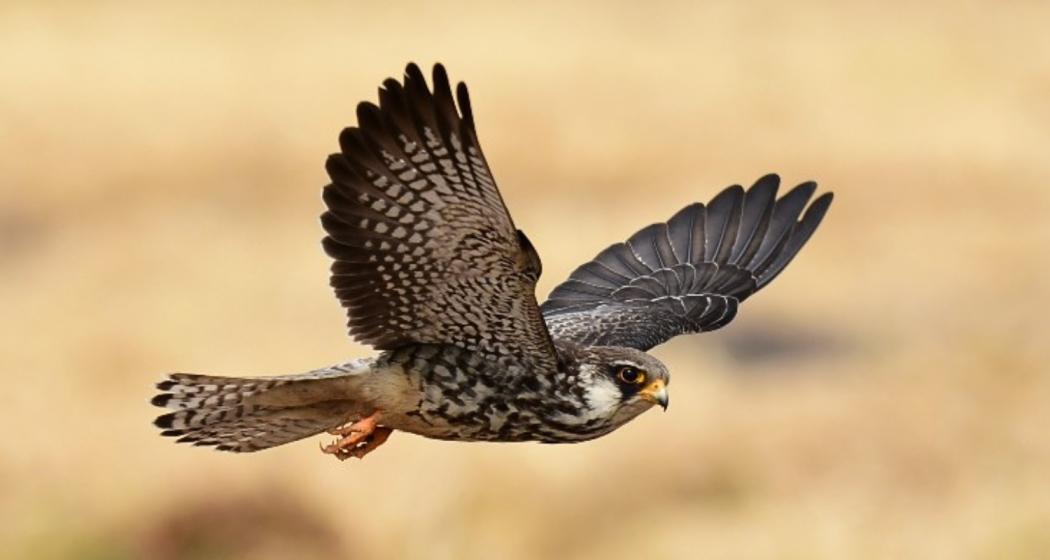
An Amur Falcon in flight, a migratory raptor famed for its long-distance journey linking East Asia, northeast India and southern Africa.
In late October, if you follow the reports closely enough, a pattern begins to emerge. First from eastern Asia, then from northeast India, and then, almost suddenly, from across the Indian Ocean. The Amur Falcon is on the move again. It is a small bird. About 120 to 180 grams. Pigeon-sized, at best. But what it does every year is anything but small.
From breeding grounds in Mongolia, northern China and parts of Russia, it travels all the way to southern Africa. Then it comes back. Roughly 22,000 kilometres in all. The scale of it doesn’t quite sink in until you try to map it out, and even then, it feels excessive.
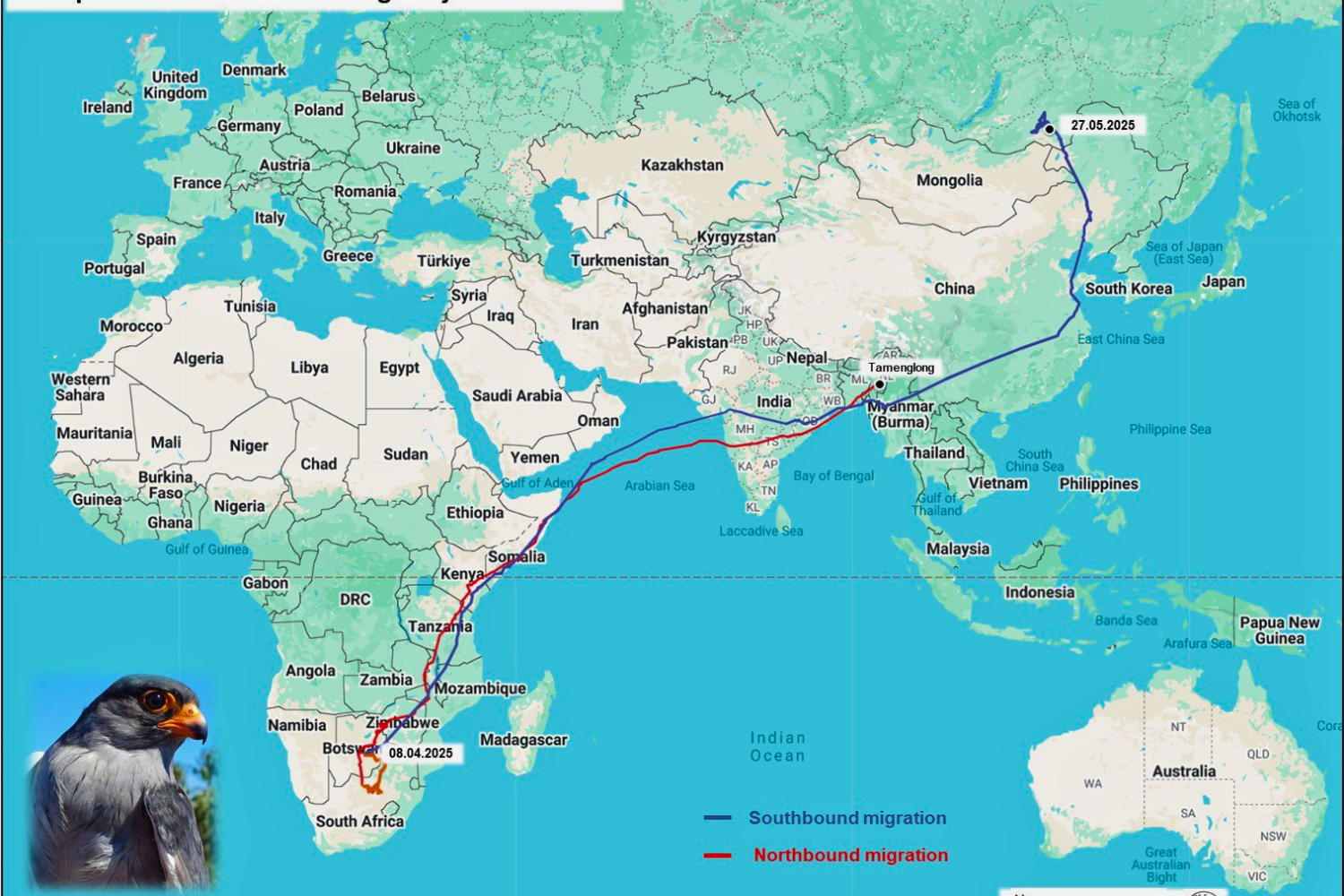
Amur Falcon migration route across Mongolia and southern Africa, mapped using satellite tracking. Image shared by the Wildlife Institute of India.
What makes it more striking is the number. Estimates suggest over a million Amur Falcons undertake this migration annually, moving in loose waves rather than a single flock. Smaller batches, sometimes in the tens of thousands, pass through different corridors over several weeks, particularly across northeast India. Researchers tag Amur Falcons with tiny GPS-satellite transmitters that record and transmit their position during migration. The data has helped map their non-stop ocean crossings and identify critical stopover sites.
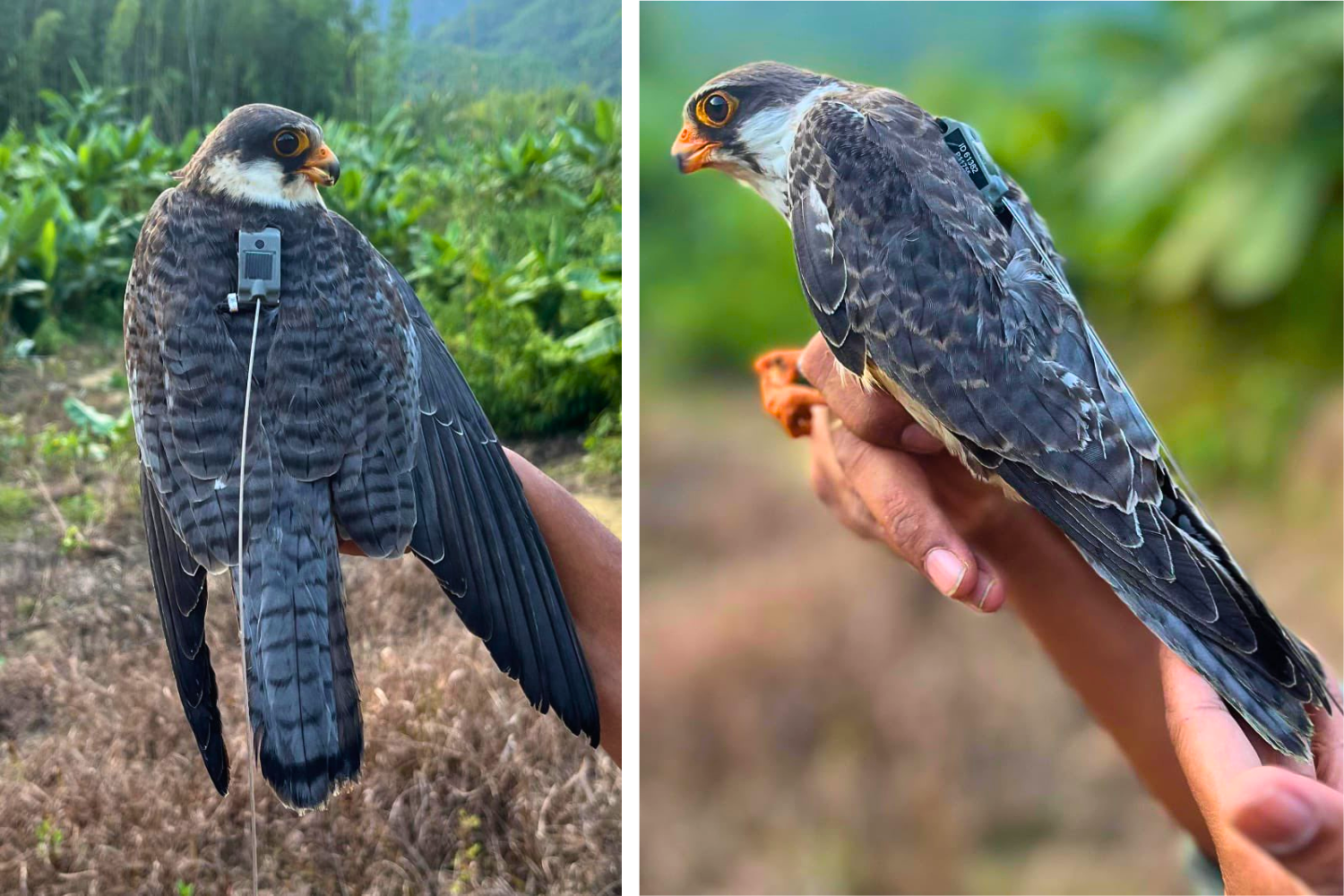
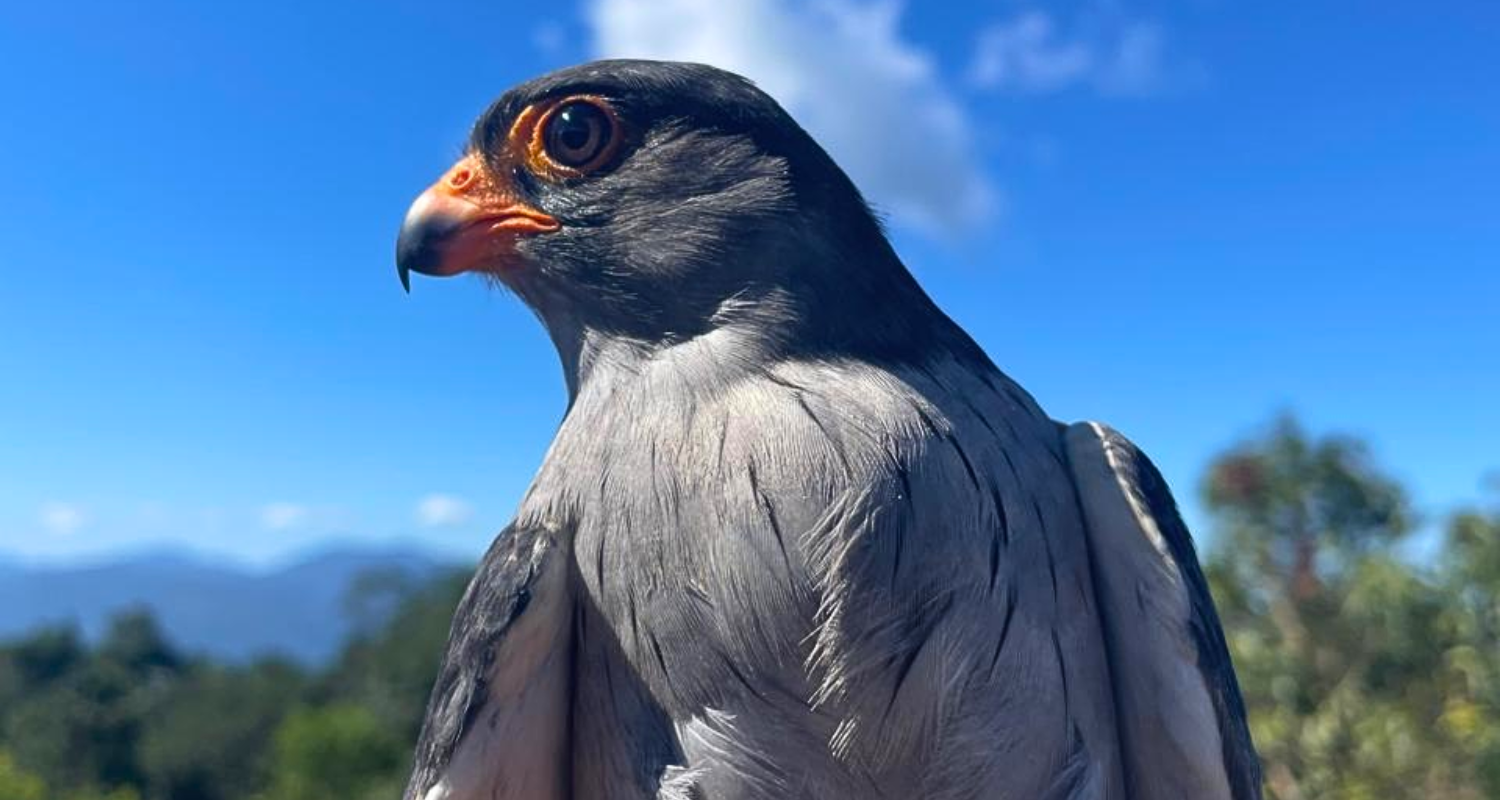
Amur Falcons being fitted with lightweight satellite transmitters in Manipur before their long migration to southern Africa.
Where the land disappears
The most difficult part of the journey isn’t over land. It is the stretch where there is nothing.
After halting in parts of northeast India the falcons take off over the sea. No trees, no wires, no second stop. Just open water for days. Satellite-tagged birds have been recorded flying between 3,000 and 3,500 kilometres non-stop across the Indian Ocean, typically taking three to five days.
They do not eat during this stretch. Instead, they prepare for it. Before departure, the birds feed aggressively on termites, dragonflies and other insects, building fat reserves that can nearly double their body weight. That stored energy is all they carry into the crossing.
Leading Indian ornithologist and former Director of the Bombay Natural History Society, Dr Asad Rahmani had once noted that such a sustained powered flight is unusual for raptors. “Most birds of prey depend on thermals. Over the ocean, those don’t exist. The Amur Falcon is different, it keeps flapping, it keeps going,” he said.
That difference is not minor. It is the reason the journey is even possible.
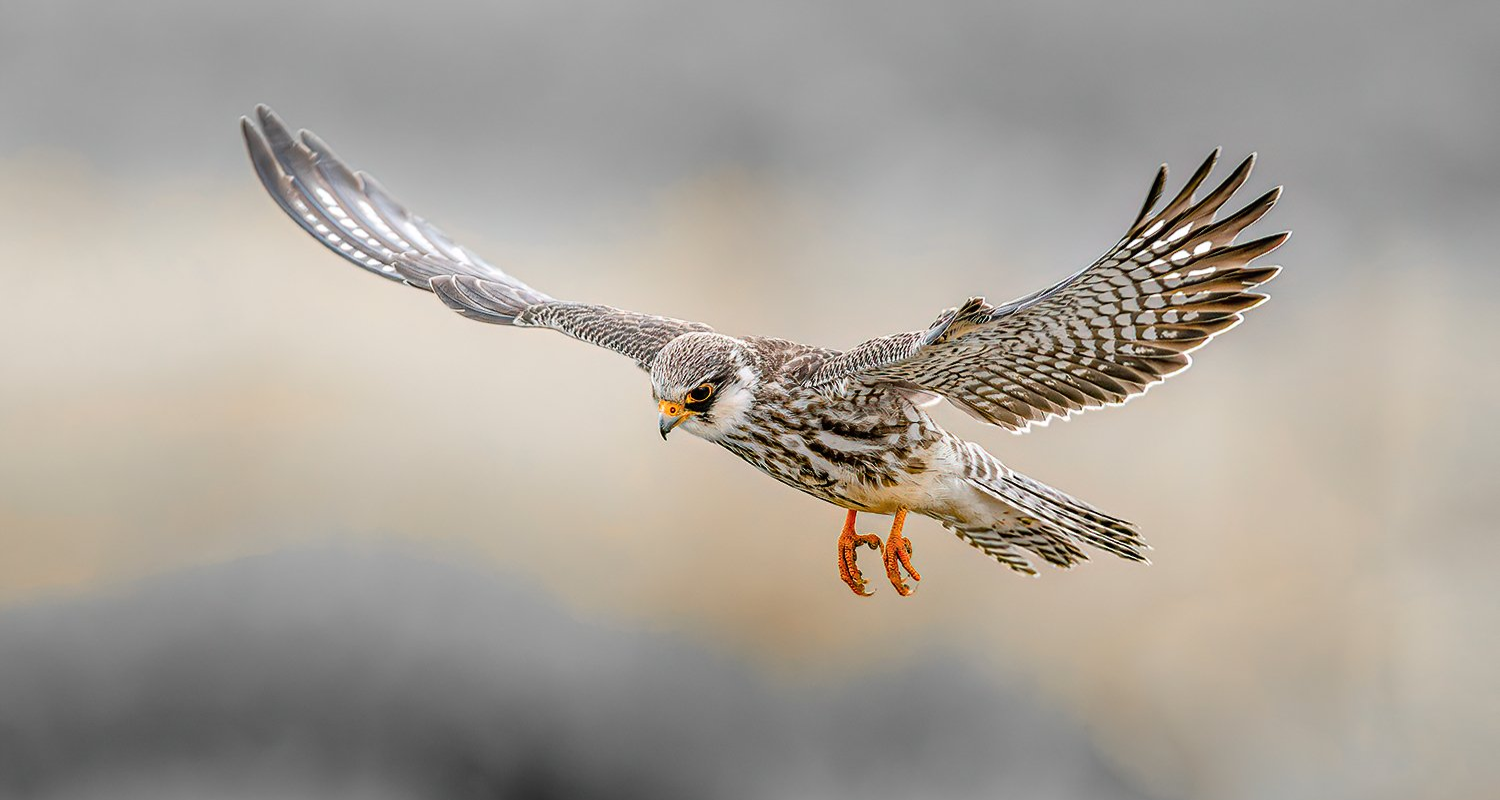
Why risk everything?
Migration, for most birds, is not a heroic act. It is more practical than that. The falcons breed in East Asia during summer, when insects are plenty and days are long. Winters there are harsh. Southern Africa offers easier feeding during those months, open landscapes, swarms of insects, fewer constraints. So they move. Not because they want to, but because it works. The route has stayed more or less consistent across generations. Timing too, arrival in northeast India usually between late October and early November, departure soon after.
According to BirdLife International, the species has evolved to depend on very specific stopovers. Miss one, and the energy calculations begin to fail.
Manipur and the pause before the sea. The northeastern region of India sits quietly in this story, but it is not incidental. It is one of the last major feeding grounds before the longest flight begins.
Here, and across parts of Arunachal Pradesh, Manipur, Nagaland and parts of Assam, the falcons arrive in large numbers, often roosting in forest patches and near water bodies. For a few days, sometimes weeks, they feed almost constantly. Termite swarms triggered by post-monsoon conditions are especially an important feed. Nagaland, where these birds are are called Kahuaipuina is known as the "Falcon Capital of the World". Whereas, Manipur's Tamenglong district has recntly put a ban on hunting, catching, killing and selling the Amur Falcon.
https://twitter.com/supriyasahuias/status/2007807857396477989/video/2
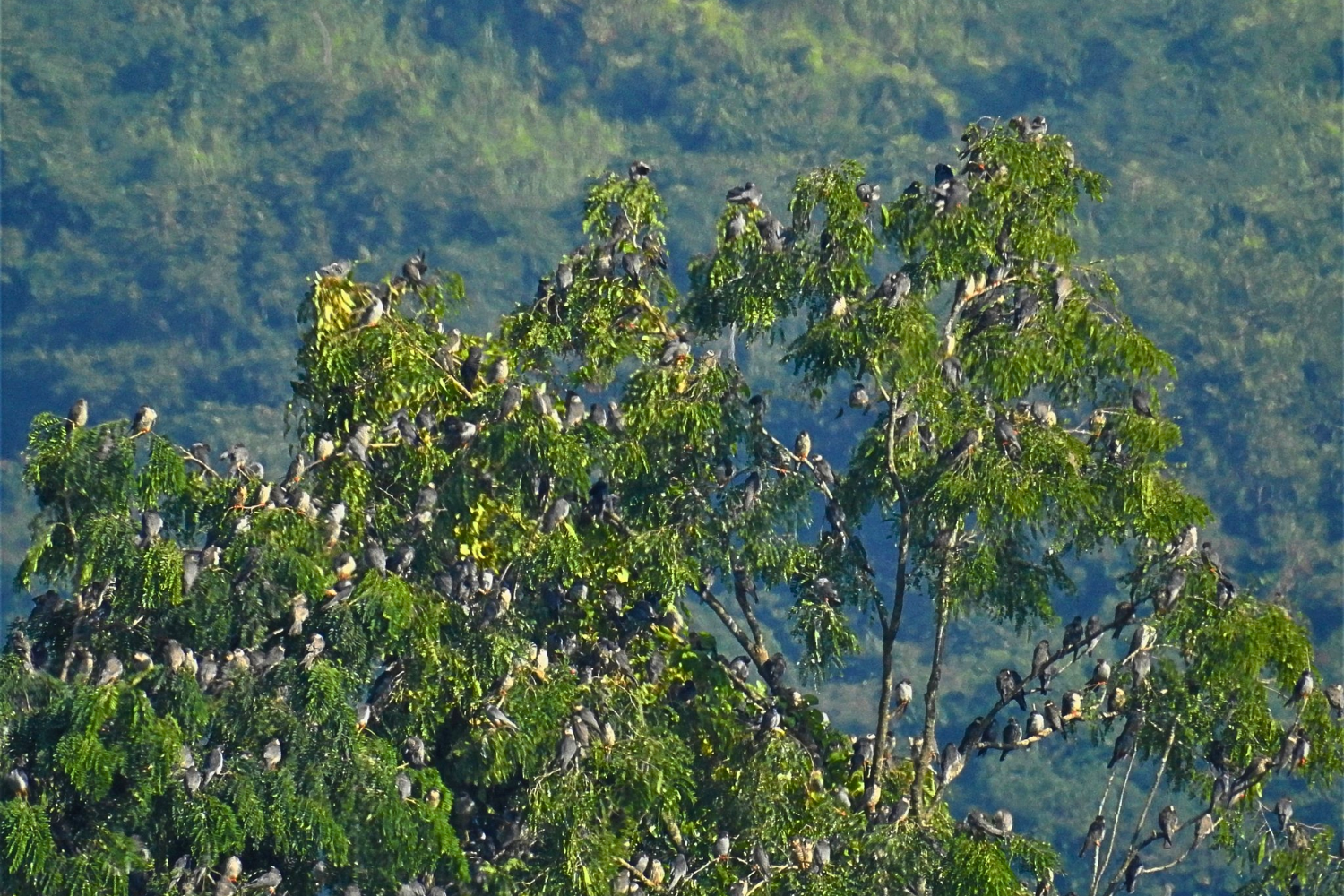
Locally, the birds have begun to acquire a different meaning over the years. Not just visitors, but seasonal markers. In some areas, their arrival is spoken of as a sign of changing weather, of the shift towards winter.
Senior scientist at the Wildlife Institute of India, known for work on migratory birds, Dr Suresh Kumar has pointed out in field discussions that these stopovers are “critical refuelling stations”. Without them, the ocean crossing would simply not be possible.
The scale is not always obvious unless you look for it. Thousands, sometimes tens of thousands, feeding in phases, moving on, replaced by another wave. It does not announce itself. But it is happening.
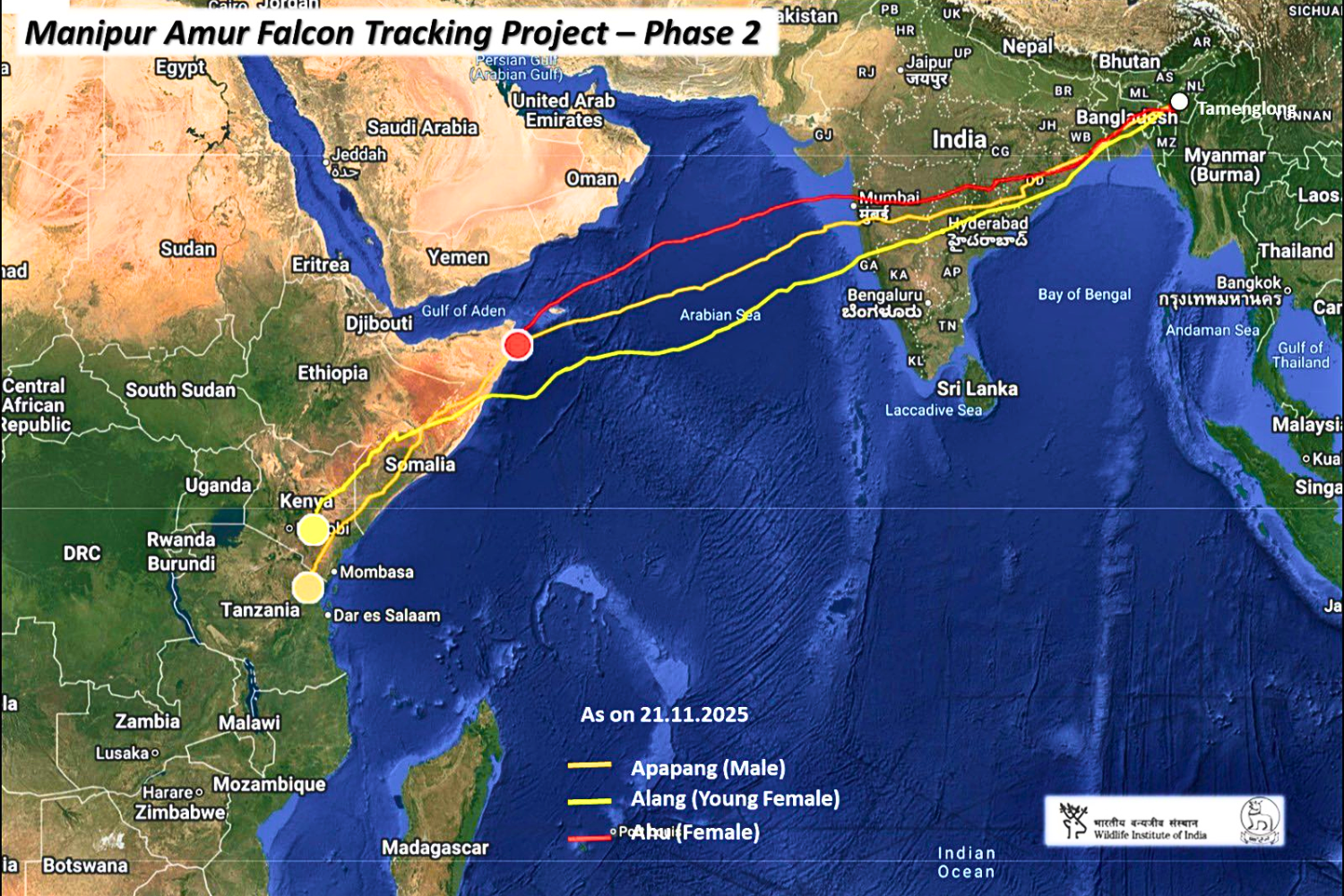
Amur Falcon migration route across Manipur and southern Africa, mapped using satellite tracking. Data and image shared by the Wildlife Institute of India.
No room for error
The journey is not guaranteed. Meteorological data from recent tracking studies show that falcons often rely on tailwinds over the Indian Ocean to complete the crossing. A deviation, even a 10–15 km/h shift in wind direction can increase energy expenditure significantly.
Cyclonic activity over the Bay of Bengal and Arabian Sea during October-November adds another layer to the risk. In years with stronger systems, departure timings have been observed to shift.
They do not feed mid-air. Everything depends on what they carry at take-off. If those reserves run out, there is no fallback. Even so, a significant proportion survives. Precise return rates are difficult to measure, but long-term ringing and satellite studies suggest that a majority of adult birds that successfully migrate once tend to repeat the journey, with survival rates estimated between 60–70% annually for experienced individuals.
Their lifespan in the wild is typically 10 to 13 years. That means a single bird could complete this route several times.
Why others don’t
It is tempting to ask why more birds don’t attempt something similar.
Some birds do go farther: The Bar-tailed Godwit, for instance, holds the record for the longest non-stop migration, flying over 11,000 kilometres across the Pacific without landing. But that is a shorebird, built differently, with a body designed almost entirely for endurance over open water. Among birds of prey, the Amur Falcon stands apart.
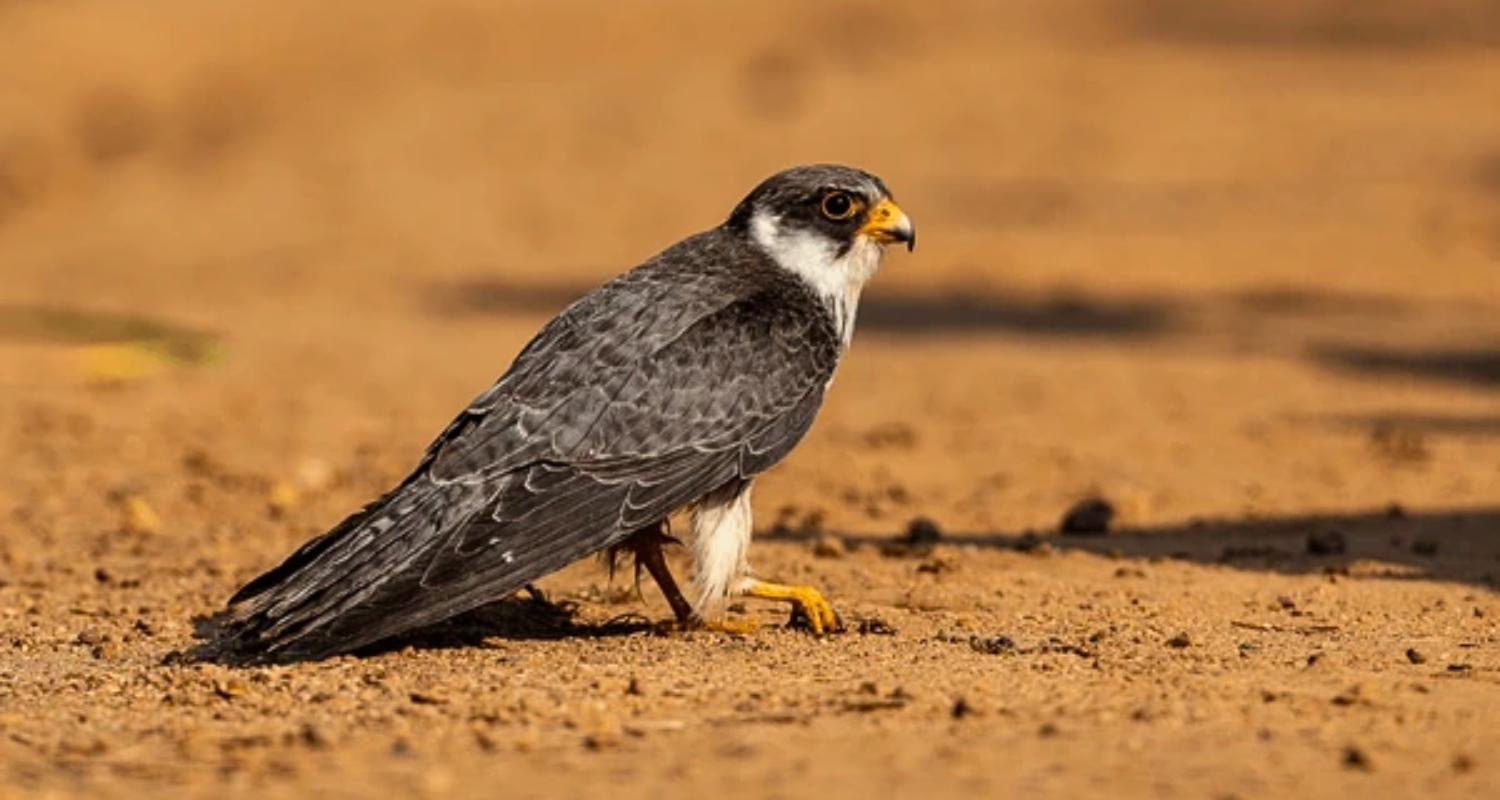
Even species comparable in size, like the Eurasian Hobby, migrate between Europe and Africa but avoid long transoceanic stretches, staying over land where thermals can assist flight. Larger raptors like Eagles, and vultures depend heavily on gliding. Continuous flapping for days would exhaust them.
The Amur Falcon sits in an unusual middle ground. Light enough to sustain powered flight, efficient enough to conserve energy, and opportunistic enough in feeding to prepare quickly. It is not that others don’t try. It is that most cannot.
The journey, under watch
In recent years, there have been small shifts. Tracking data from 2023–2025 has indicated slight changes in departure timing from northeast India, possibly linked to delayed monsoons and changing wind patterns over the Indian Ocean. Warmer sea surface temperatures during El Niño phases have also been flagged by researchers as a factor that could influence migration routes and success rates.
Nothing dramatic, not yet, but enough to be noticed. But a journey that leaves little room for error, even minor changes carry weight.
For now, the journey stays on course, across continents, across seasons.
https://twitter.com/colourfulind/status/1992042849354088513
Information for this article is drawn from published material by BirdLife International, studies and briefings by the Wildlife Institute of India, and research and field notes from the Bombay Natural History Society. Additional reference has been taken from journal papers on Amur Falcon migration.
By Deepan Chattopadhyay
