
Trending:
Konyak headhunters: India’s warrior tribe that feared no enemy
In Nagaland’s Mon district, the Konyaks’ headhunting past survives in tattoos, rituals, and village life; a living bridge between warrior heritage, tradition, and a borderland identity shaped by history. Follow us
News Arena Network - Chandigarh - UPDATED: April 10, 2026, 02:02 PM - 2 min read
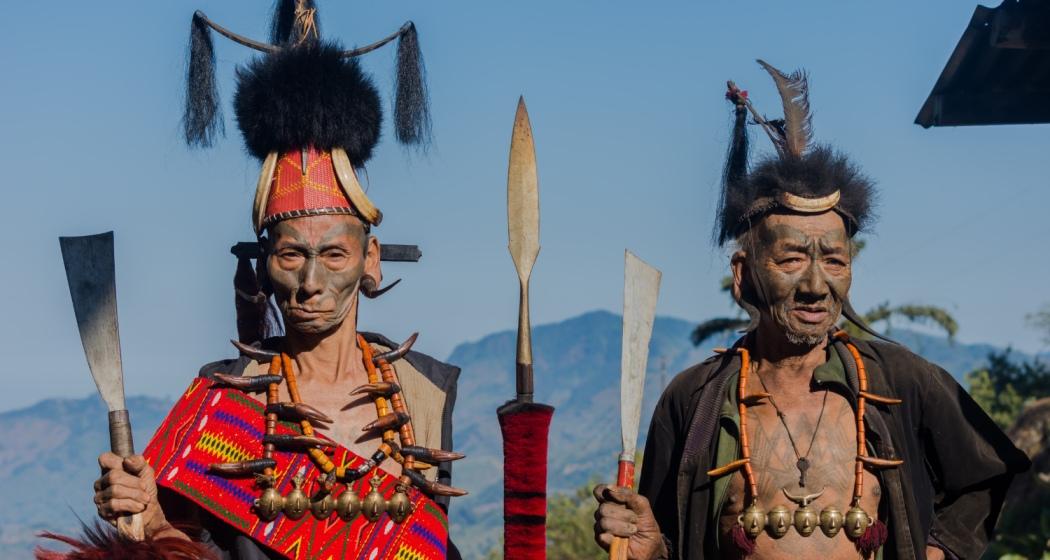
The Headhunters of Nagaland.
India’s easternmost frontier, where the forests of Nagaland merge into the hills of Myanmar, is home to a tribe whose history is defined by courage, ritual, and identity. The Konyaks of Mon district were once headhunting warriors, a practice in which young men earned social prestige and recognition by taking the heads of enemy combatants during inter-village conflicts and raids.
Headhunting, however, was not random violence. It was a ritualised and socially regulated practice, deeply tied to ideas of honour, protection of the village, and status within the tribe. Though the practice was formally abandoned decades ago, its imprint survives in the tattoos etched on the faces of elders, fortified villages, oral traditions, and collective memory.
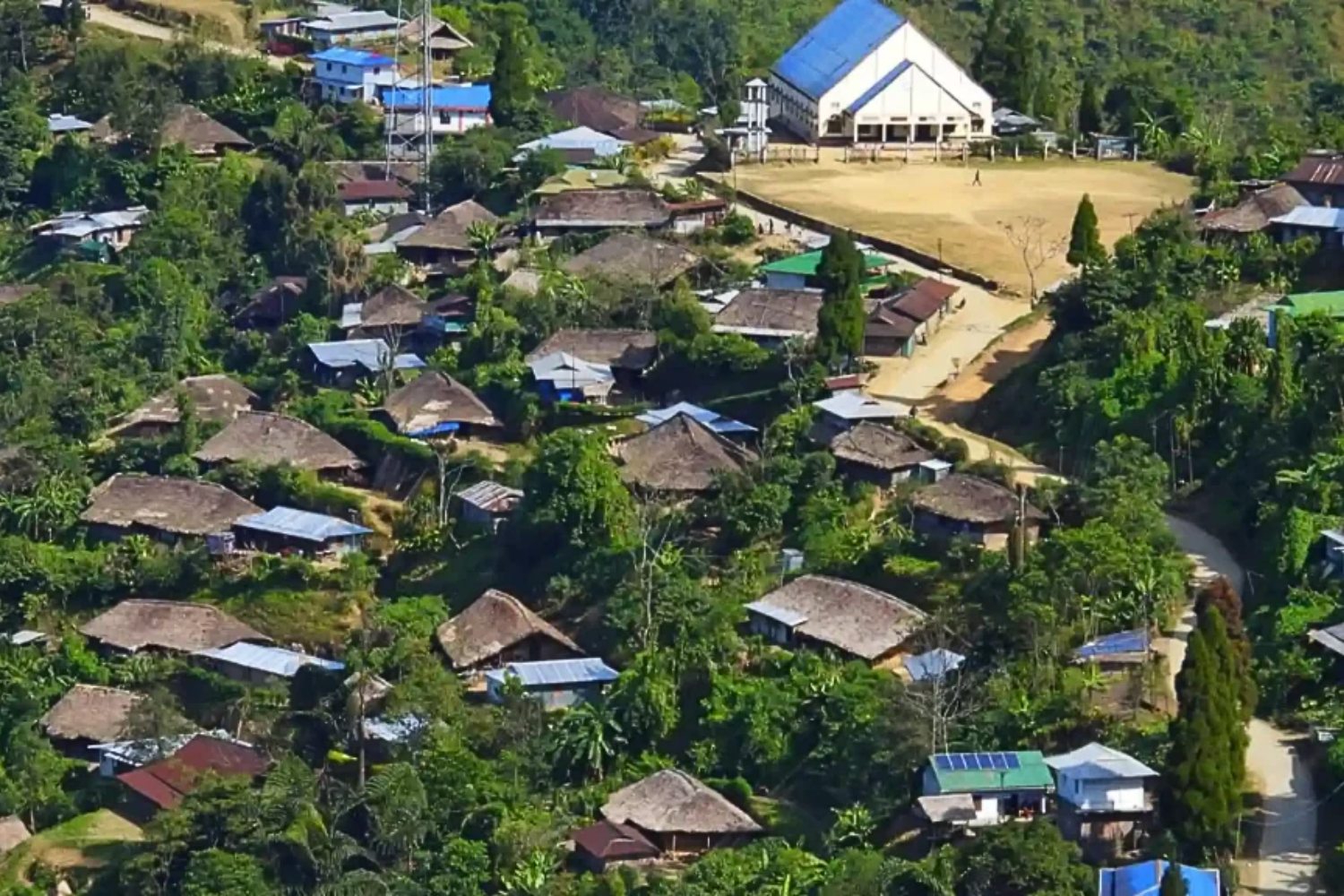
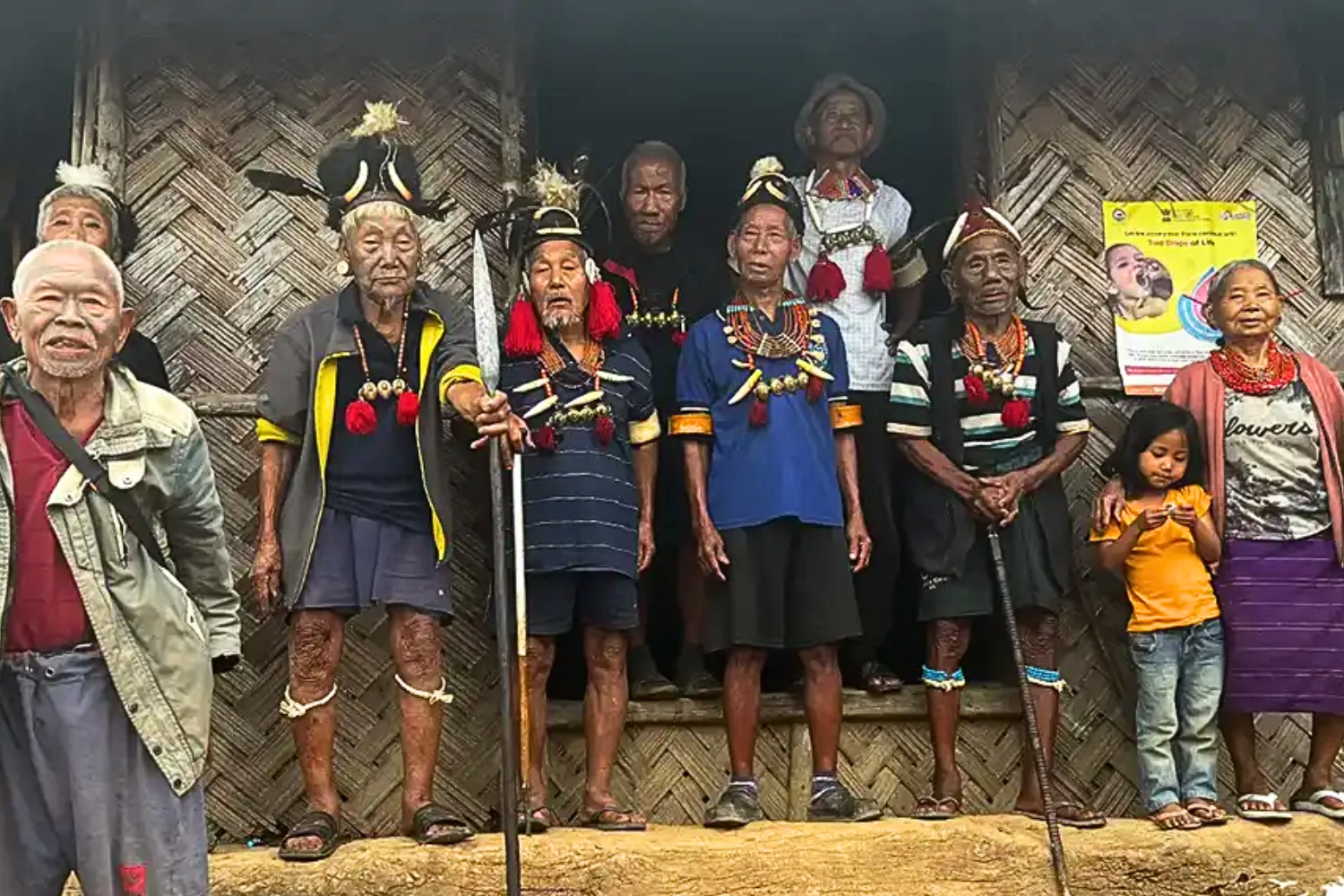
Today, the war cries have faded into silence, replaced by church hymns, education, and mobile phones. Yet, in villages like Longwa, Chen Wetnyu, Chui, and Jaboka, the past remains visible, not as history alone, but as lived heritage.
Origins and migration
Scholars trace the Konyaks to the Tibeto-Burman tribes of the Indo-Myanmar borderlands. Oral histories describe a gradual migration southwards into present-day Nagaland centuries ago, where settlements formed along ridges, rivers, and dense forests that offered both protection and livelihood.
Over time, the Konyaks developed a distinct language, social structure, and cultural identity, separating them from other Naga tribes. Life in isolated hill settlements meant that conflict over land and resources was frequent, shaping a society where warfare, survival, and honour became deeply interconnected.
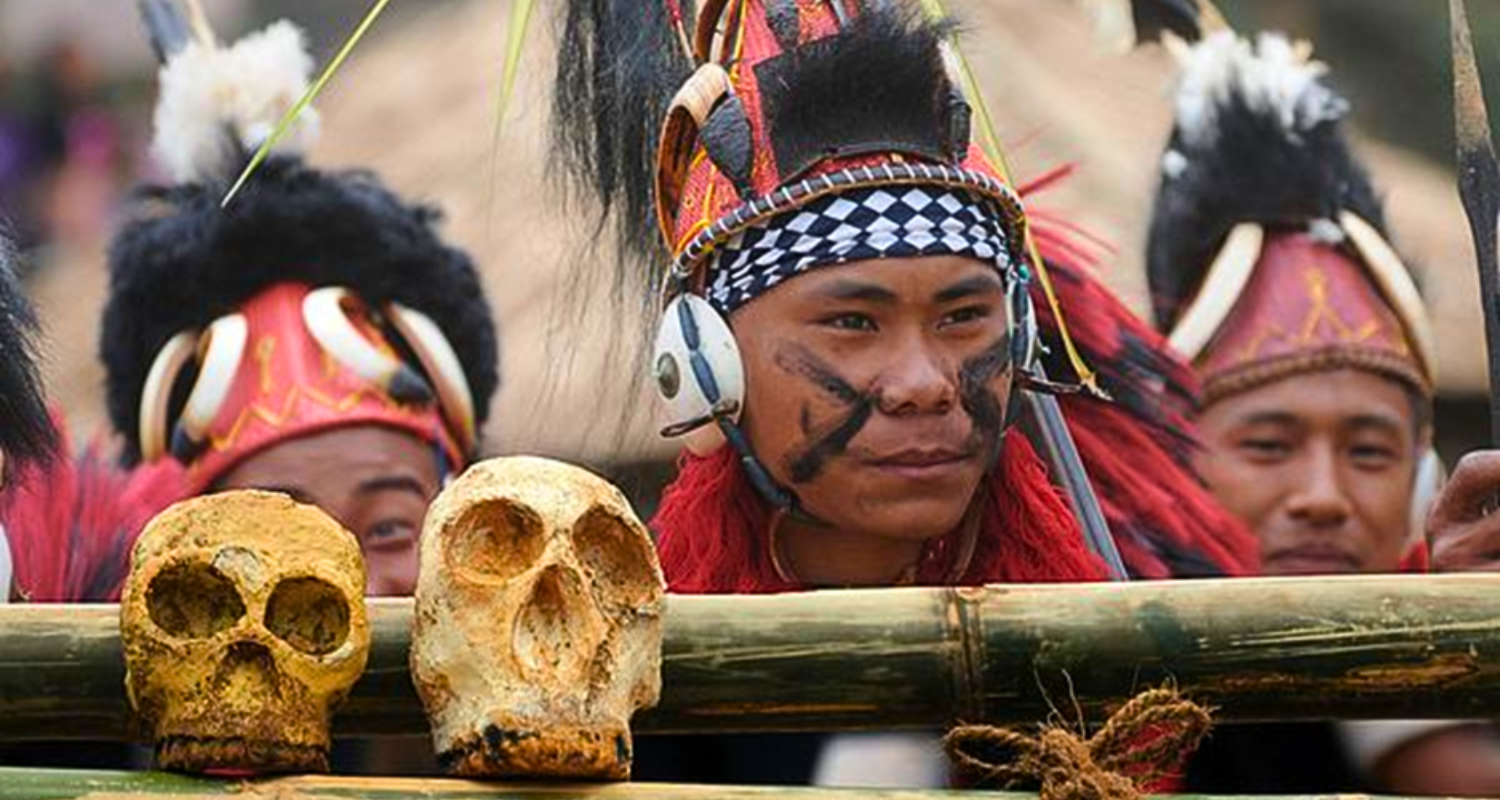
Villages often engaged in raids against rival settlements. Victorious warriors would return with enemy heads, which were displayed in morungs, community halls where young men were trained in customs, folklore, carving, and martial traditions. These skulls were considered symbols of power, believed to carry spiritual strength and prosperity for the village.
With the arrival of the Indian state, colonial administration, and later Christianity, headhunting was banned. The last reported instances date back to the 1960s. Eventually, many of the skulls once displayed in villages were buried or removed.
Village life and the institution of Angh
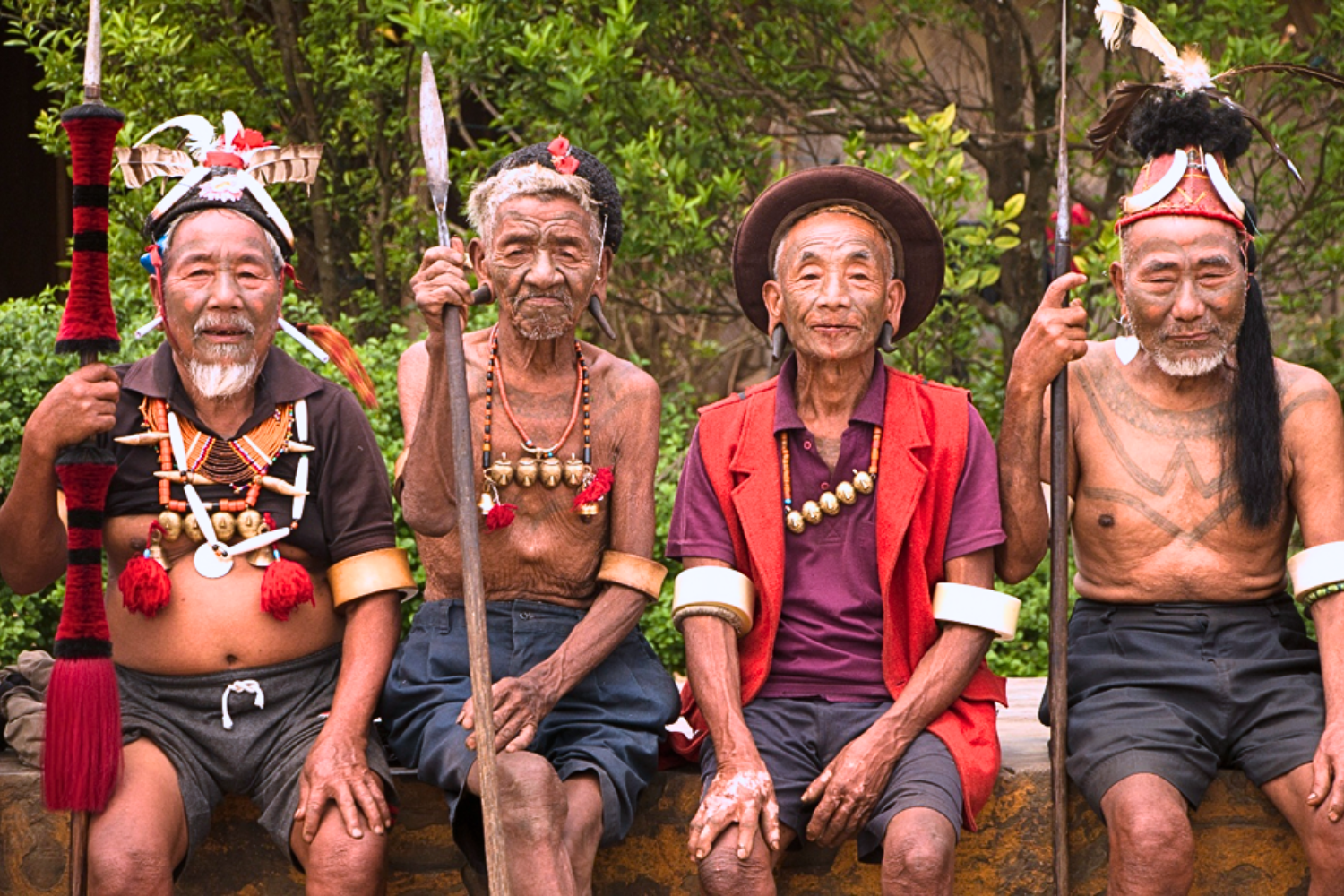
Konyak society is structured around the institution of the Angh, a hereditary chief whose authority extends over villages and, in some cases, across the international border into Myanmar.
The Angh system is unique. There are Pongyin Angh (Great Chief) and Angha (sub-chiefs) who oversee smaller settlements under the guidance of the principal chief. In Mon district alone, major Angh centres include Longwa, Mon, Chui, Shangnyu, Jaboka, Tangnyu, and Shengha Chingnyu.
The Angh administers villages with the help of elders’ councils, handling disputes related to land, marriage, and community affairs. As one Angh of Longwa explains, “Our people live by courage, respect for nature, and loyalty to the village. Even as the world changes, we must remember who we are. Tradition is not only in the past; it guides how we live today.”
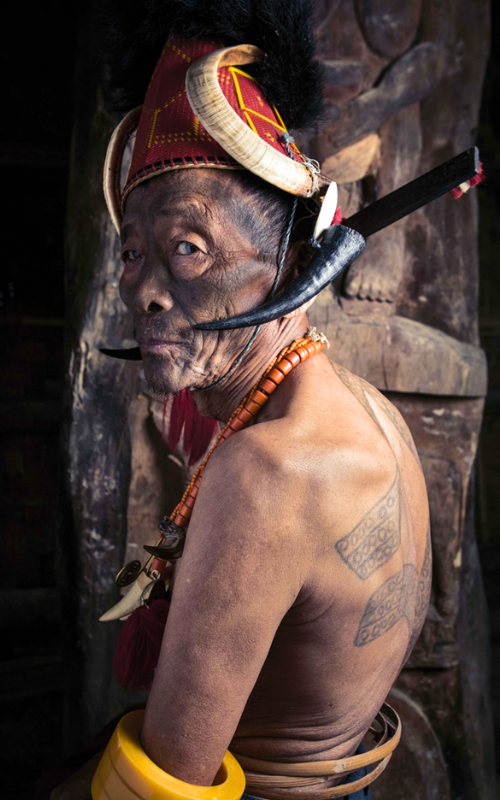
Tolei Angh, 90, the ‘angh’ (village chieftain) of Chen Wetnyu village
A village that lives in two countries
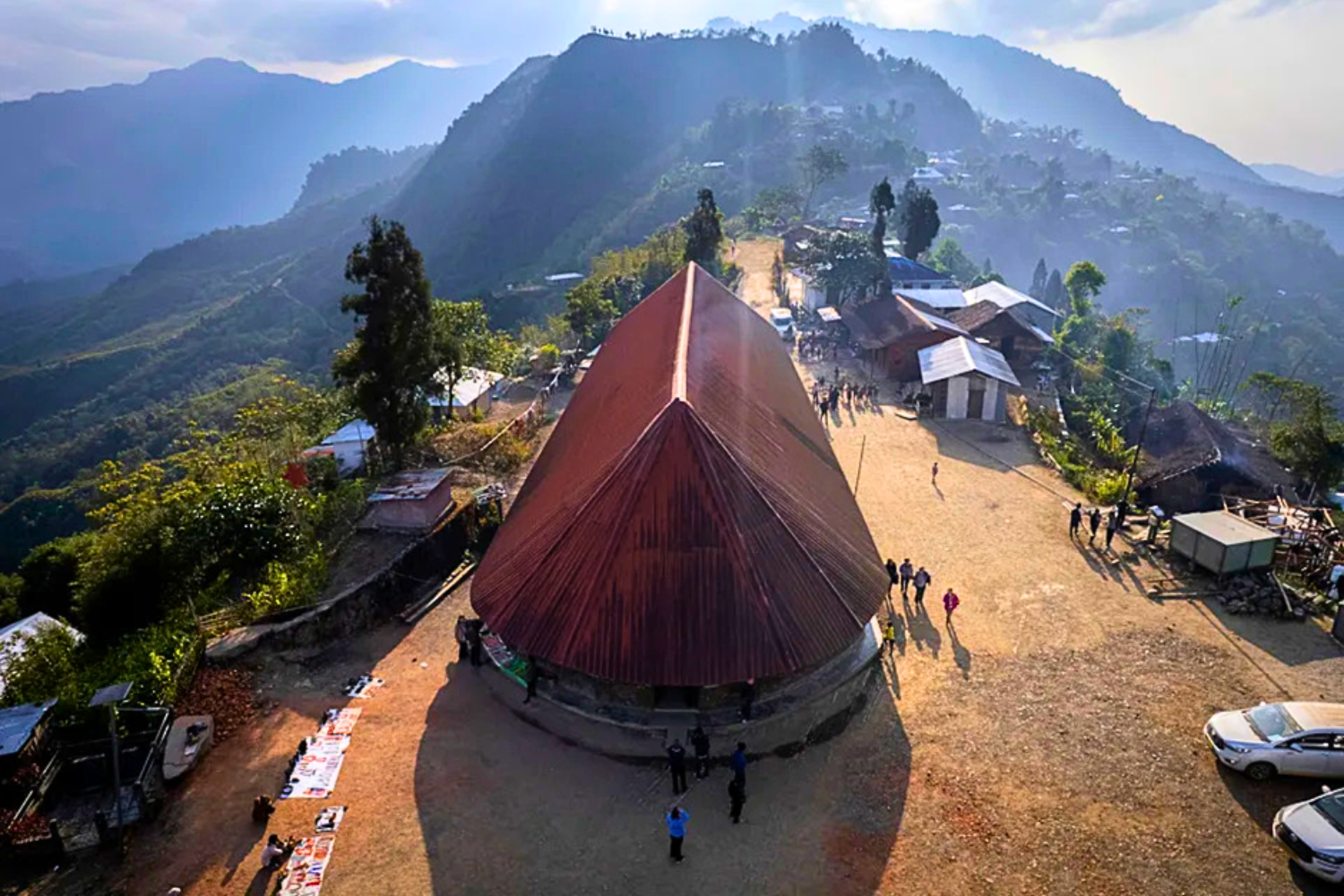
Perhaps the most unusual example of Konyak life is Longwa village, which straddles the India-Myanmar border. The international boundary runs directly through the Angh’s residence, his bedroom lies in India, while the living room extends into Myanmar.
Chief Tonyei Konyak, the Angh of Longwa, governs not just this village but also surrounding settlements on both sides of the border. Residents move freely across the boundary, and many are effectively part of a shared cultural and administrative system that predates modern national borders.
Reports indicate that Longwa has a population of around 6,700 residents, who maintain close cross-border ties. The Angh himself is an Indian voter and participates in Indian elections, though his authority and cultural influence extend into Myanmar territory as well.
The Angh also oversees development matters in his jurisdiction. Locals say infrastructure is more visible on the Indian side, while villages across the border remain less developed. A school built in 2014 serves children from both countries, reinforcing Longwa’s unique dual identity.
Tattooed testaments of courage
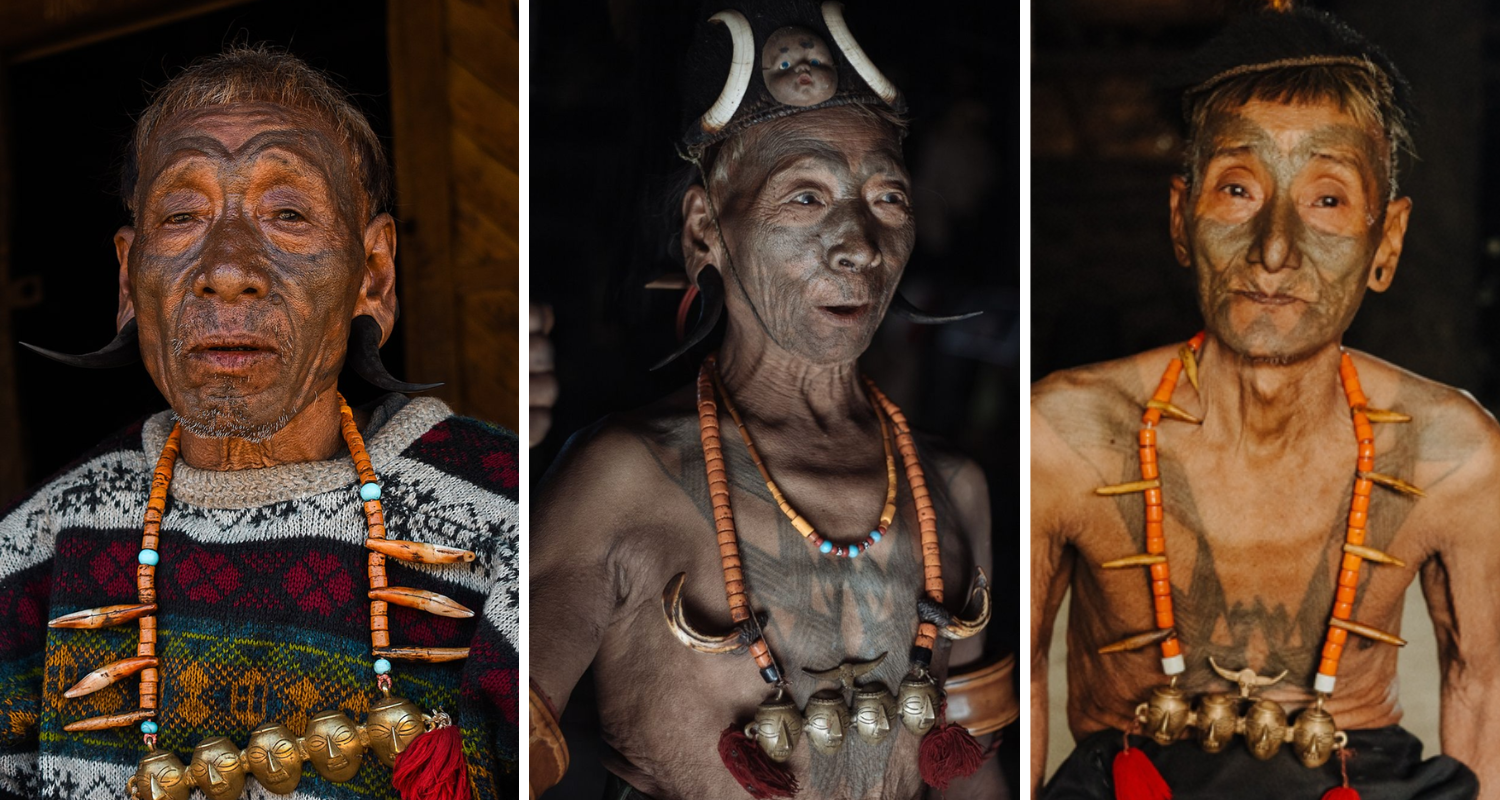
Among the Konyaks, tattoos are not decorative but earned symbols of achievement. A young man traditionally received his first facial tattoo only after proving bravery in combat or raids.
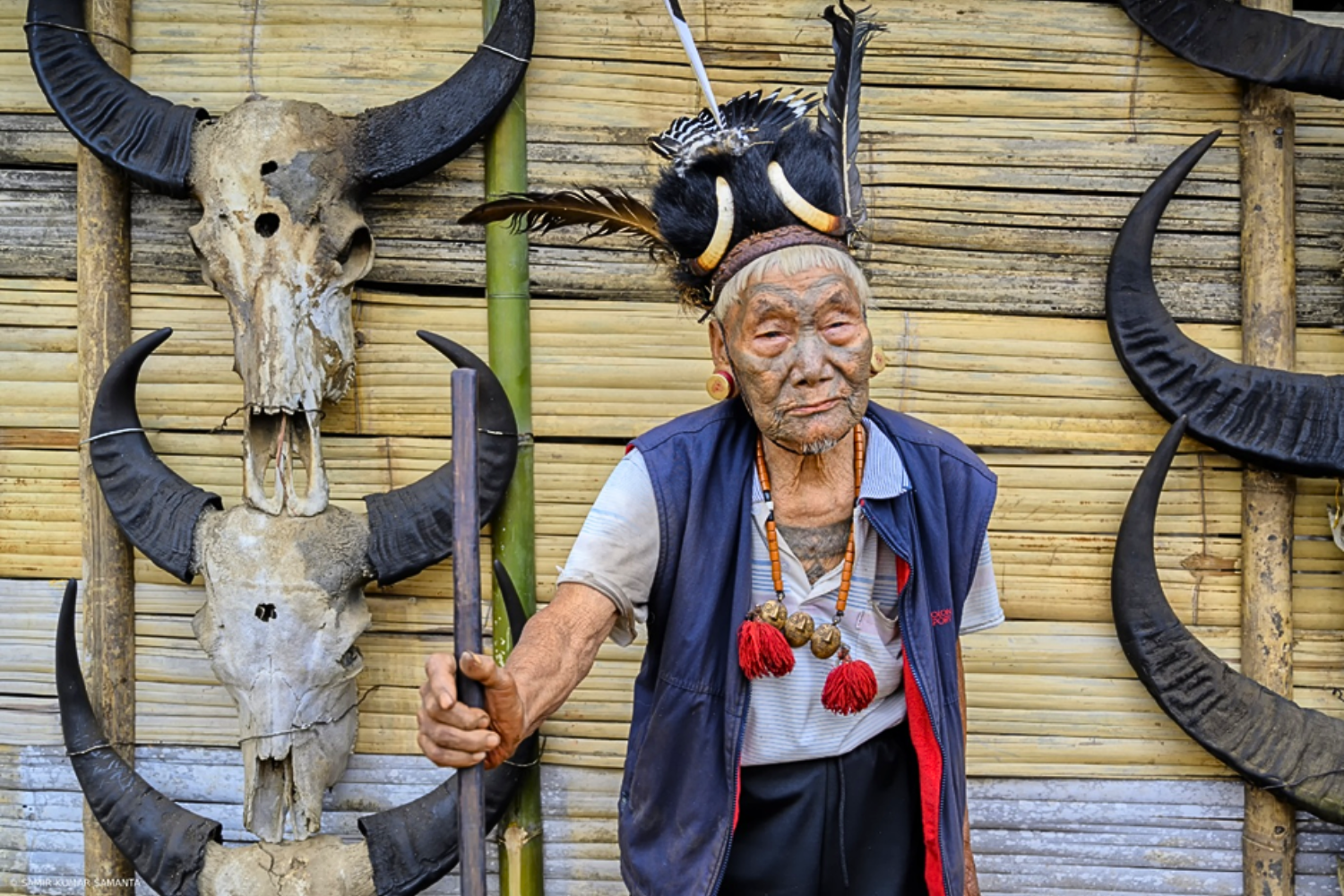
Each pattern recorded social rank, clan identity, and acts of courage. One of the last tattooed elders, Nyemwang Wanghu, explains, “These lines are our history. They tell who I was and what I did for the tribe.”
These fading tattoos, etched onto elderly faces, remain among the most powerful visual records of a warrior past that has otherwise disappeared.
Rituals, nature, and festivals
Central to Konyak society is the morung, a traditional community institution where unmarried men are taught customs, songs, carving, hunting skills, and oral history. It functioned as both a school and a cultural training centre, preserving identity across generations.
The Konyaks traditionally followed animistic beliefs, worshipping spirits associated with forests, rivers, and mountains. Sacred groves remain protected, and certain areas are still considered spiritually significant.
Hunting and farming were accompanied by rituals and offerings. Festivals such as Aoling (spring sowing festival) and Tokhu Emong (harvest festival) continue to be central to community life. Dances, songs, and feasts often reflect symbolic references to hunting, warfare, and seasonal cycles.
Some rituals remain restricted to insiders, preserving their sanctity.
Daily life remains deeply connected to the land. The Konyak diet includes rice, smoked meat, bamboo shoots, wild herbs, and axone, a fermented soybean preparation with a strong aroma and cultural significance.
Shifting cultivation and foraging require deep ecological knowledge passed orally through generations. Hunting, once tied to initiation into adulthood, now survives more as tradition than necessity.
From warriors to modern citizens
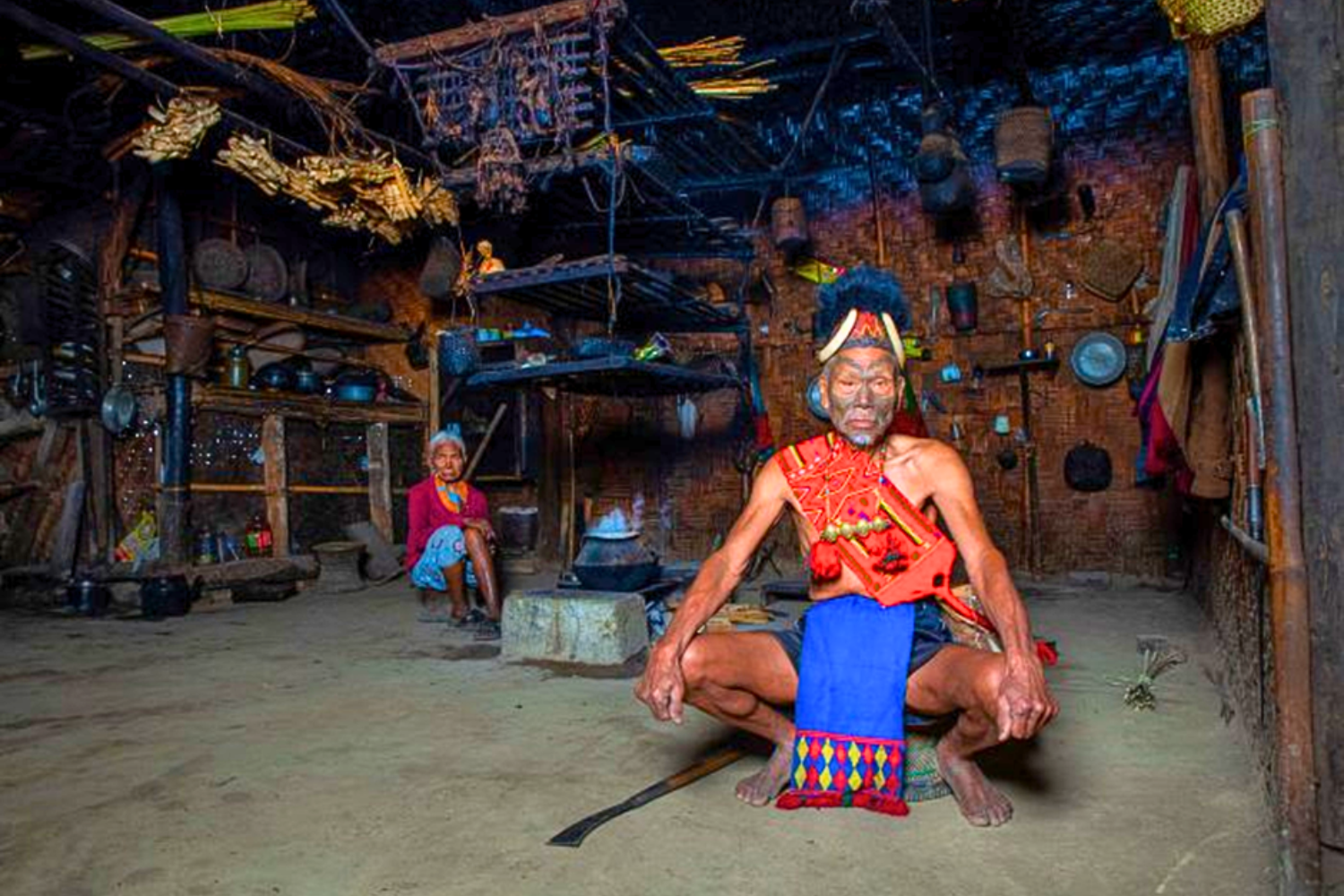
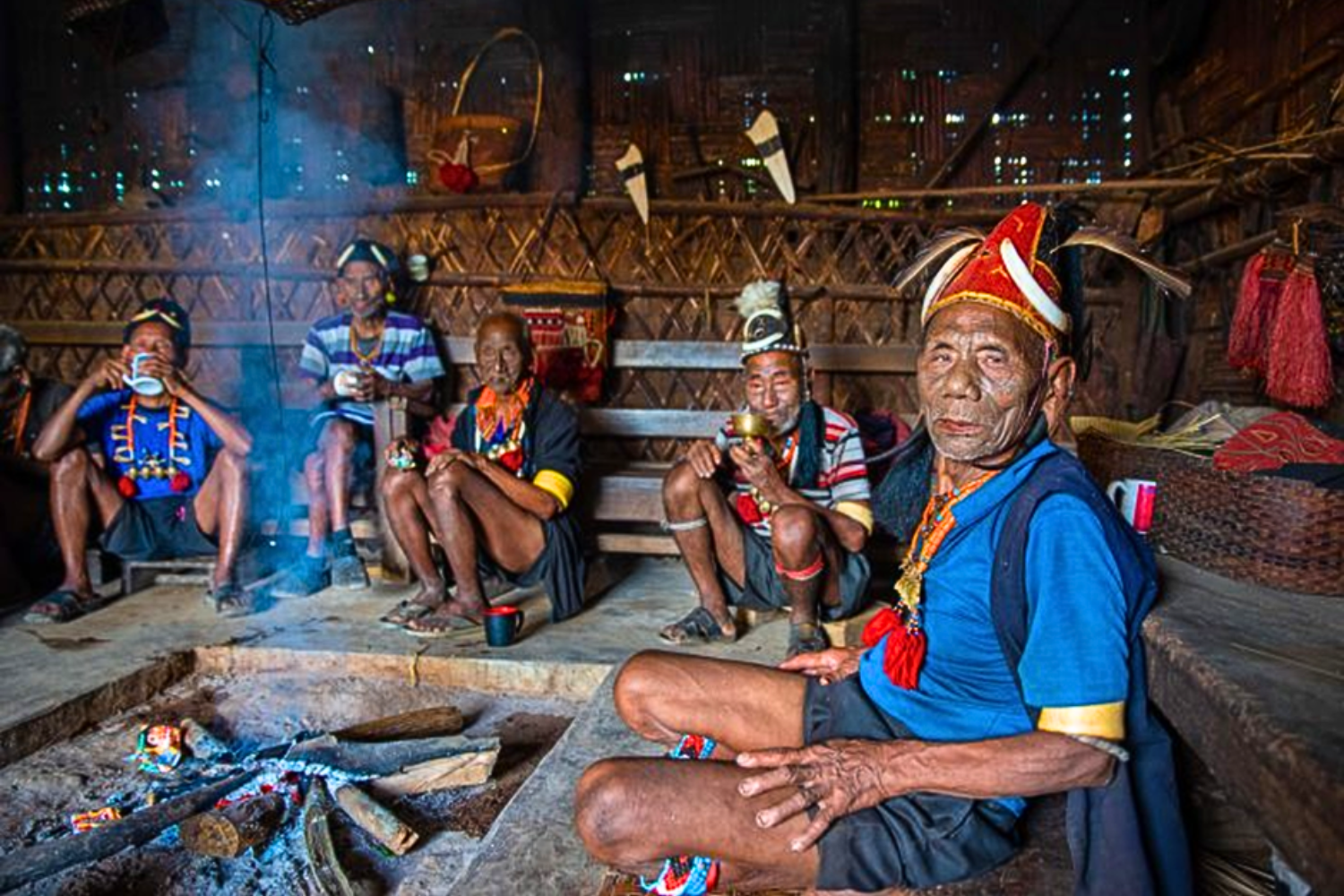
Modern influences have reshaped Konyak life. Younger generations now attend schools in Kohima and Dimapur, use smartphones, and adopt modern clothing and education systems. Christianity has become dominant, replacing earlier animistic belief systems in most areas.
Yet identity remains strong. The Angh system, festivals, oral histories, and community structures continue to anchor cultural continuity. Elders serve as custodians of memory, ensuring that the legacy of the past is not lost.
A living borderland legacy
The Konyaks remain one of India’s most distinctive tribal communities, shaped by a history of headhunting, migration, and borderland geography. Unlike urbanised India, their identity is rooted in community, tradition, and oral history rather than written records or state structures.
In Mon district, where India meets Myanmar without a clear cultural divide, the Konyaks stand as a reminder that history does not always disappear, sometimes it survives in tattoos, in wooden houses, in festivals, and in the quiet authority of elders who remember when courage was the highest form of identity.
Sources: “The Nagas: Hill People of North-East India” by J.P. Mills; National Museum of Anthropology; Nagaland Heritage Publications; Department of Anthropology, North Eastern Hill University (NEHU).
By Deepan Chattopadhyay
