
Trending:
What Is an OCI Card? Who Can Apply and What Are the Benefits?
What an OCI card is, who is eligible, its key benefits, and restrictions. Know the rights OCI cardholders enjoy and the limitations they face. Follow us
News Arena India - New Delhi - UPDATED: October 16, 2026, 04:43 PM - 2 min read
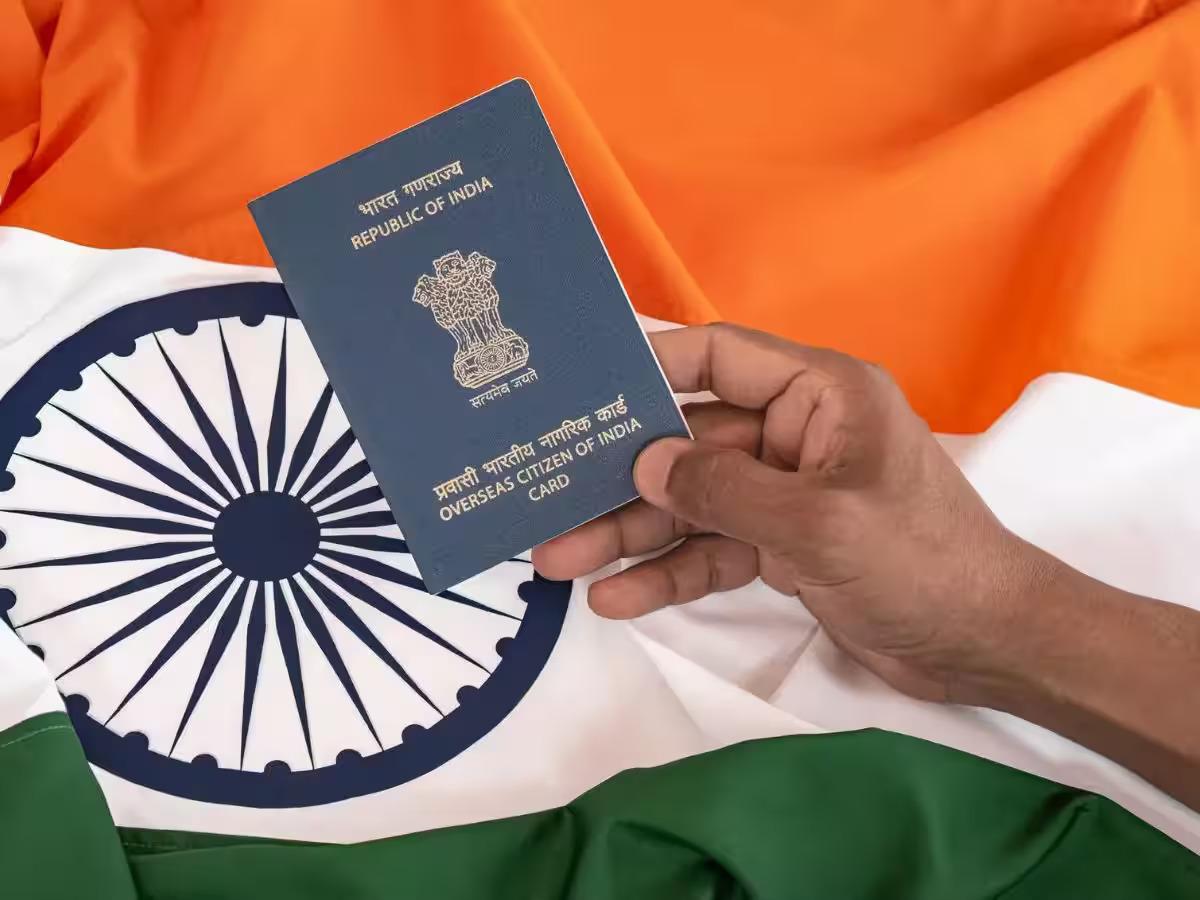
The Overseas Citizenship of India (OCI) scheme enables eligible foreign nationals of Indian origin to obtain an OCI card and access certain immigration, travel and other facilities in India. However, an OCI card does not amount to dual citizenship. The holder continues to be a foreign national and does not become an Indian citizen.
The scheme was introduced in August 2005 through an amendment to the Citizenship Act, 1955, following demands from people of Indian origin, particularly those living in North America and other developed countries. It was formally launched at the Pravasi Bharatiya Divas convention in Hyderabad in January 2006.
What is an OCI card?
Issued under Section 7A of the Citizenship Act, 1955, an OCI card is available to eligible foreign nationals of Indian origin. It provides specified immigration and travel-related benefits in India, subject to the applicable laws and rules.
OCI cardholders do not receive all the rights granted to Indian citizens. In particular, they cannot vote in Indian elections or claim constitutional rights reserved exclusively for citizens.
Who can apply for an OCI card?
Section 7A of the Citizenship Act, 1955, allows the following categories of foreign nationals to seek registration as OCI cardholders:
- A person who was an Indian citizen on or after January 26, 1950.
- A person who was eligible to become an Indian citizen on January 26, 1950.
- A person who belonged to a territory that became part of India after August 15, 1947.
- A child, grandchild or great-grandchild of a person covered by any of the above categories.
- A minor child of a person who meets the eligibility conditions.
- A minor child whose parents are both Indian citizens or whose parent is an Indian citizen.
- A foreign-origin spouse of an Indian citizen or an OCI cardholder, provided the marriage has been registered and has continued for at least two years immediately before the application.
Applications under the spouse category require security clearance from the competent authority.
A person cannot register as an OCI if they, or any of their parents, grandparents or great-grandparents, are or were citizens of Pakistan, Bangladesh or another country designated by the Central Government through an official notification.
How to apply for an OCI card
OCI registration applications have to be filed online through the official OCI Services portal. Applicants are required to complete the online form and upload the prescribed documents, photograph and signature. Where a minor is unable to sign, a left-hand thumb impression may be submitted, wherever applicable.
The documentation varies according to the applicant’s circumstances and the place from which the application is made. It may include:
- Proof of current citizenship.
- Proof of address in the country or location where the application is submitted.
- Additional documents establishing eligibility and supporting verification of the application.
Foreign nationals applying from within India must comply with the relevant visa and residence-document requirements. Those holding tourist, missionary or mountaineering visas cannot apply for OCI registration from within India.
Applicants should check the official portal for the latest instructions, document list, fees and submission process before filing an application.
Benefits available to OCI cardholders
Travel and stay facilities
- Lifelong multiple-entry visa: OCI cardholders are generally granted a multiple-entry, lifelong visa to visit India for any purpose.
- Exemption from registration: They are generally exempt from registration with the Foreigners Regional Registration Officer (FRRO) or Foreigners Registration Officer (FRO), irrespective of the duration of their stay, subject to applicable conditions.
Special permission is required for activities such as research, missionary or Tabligh work, mountaineering, journalism, internships with foreign diplomatic missions or foreign government organisations in India, employment with foreign diplomatic missions in India, and visits to protected, restricted or prohibited areas.
OCI cardholders who normally reside in India must also follow the applicable rules for reporting changes in their permanent residential address and occupation.
Parity with Indian nationals
OCI cardholders receive treatment on par with Indian nationals in certain matters, including:
- Domestic airfares in India.
- Entry fees for national parks, wildlife sanctuaries, national monuments, historical sites and museums.
Parity with Non-Resident Indians
In specified areas, OCI cardholders enjoy parity with Non-Resident Indians (NRIs). These provisions include:
- Inter-country adoption of Indian children, subject to the applicable procedures.
- Appearing for specified entrance examinations, including the National Eligibility cum Entrance Test (NEET), Joint Entrance Examination (JEE) Main and JEE Advanced, subject to admission rules.
- Buying and selling immovable property, other than agricultural land, farmhouses and plantation properties.
- Practising certain professions, including medicine, dentistry, nursing, pharmacy, law, architecture and chartered accountancy, subject to the relevant laws and professional requirements.
Although OCI cardholders may take specified entrance examinations, they cannot secure admission against seats reserved exclusively for Indian citizens. They may be admitted only against eligible NRI or supernumerary seats, wherever applicable.
OCI cardholders can also be appointed as teaching faculty at specified institutions. These include Indian Institutes of Technology (IITs), National Institutes of Technology (NITs), Indian Institutes of Management (IIMs), Indian Institutes of Science Education and Research (IISERs), the Indian Institute of Science (IISc), central universities and certain All India Institutes of Medical Sciences (AIIMS).
Rights not available to OCI cardholders
An OCI card does not grant Indian citizenship or the political rights linked to citizenship. OCI cardholders cannot:
- Vote in Indian elections.
- Become members of Parliament, state legislative assemblies or state legislative councils.
- Hold constitutional offices reserved for Indian citizens, including the offices of President or Vice-President of India.
- Claim equality of opportunity in public employment under Article 16 of the Constitution in the same manner as Indian citizens.
- Acquire agricultural land, farmhouses or plantation properties in India.
Before applying for admission, purchasing property, undertaking restricted activities or claiming a particular facility, OCI cardholders should verify the latest government notifications and the laws applicable to their circumstances.