
Trending:
When ambulances couldn’t reach, Bike Ambulance Dada did
After losing his mother to lack of transport, Karimul Haque turned grief into purpose, creating a free bike ambulance service that has saved thousands of lives Follow us
News Arena Network - Chandigarh - UPDATED: April 1, 2026, 06:11 PM - 2 min read
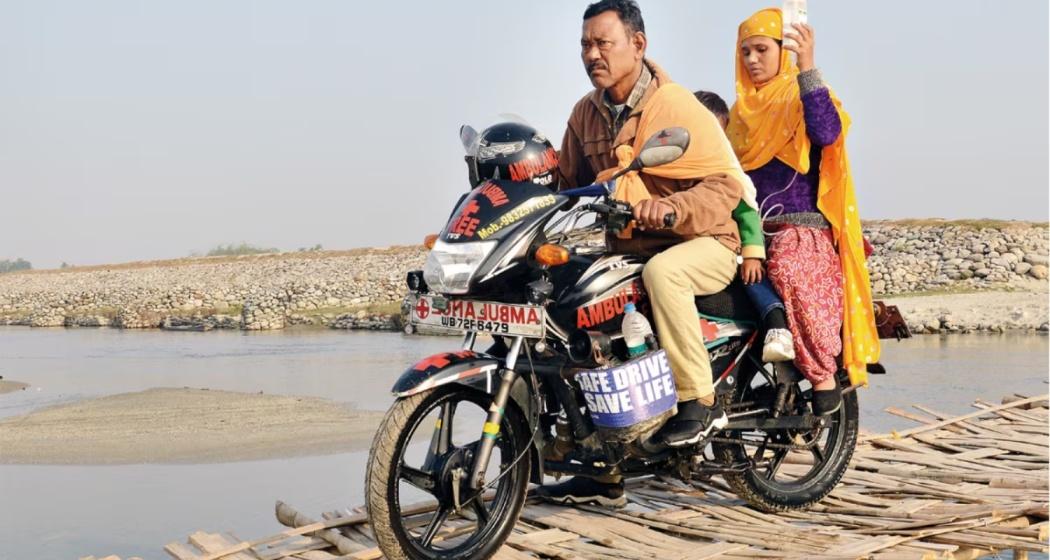
Karimul Haque transports a woman and her children to a nearby hospital, carefully riding across a fragile, makeshift bridge stitched together with bamboo in a remote area in West Bengal's Dooars region. (Photo: Special arrangment)
It was a pitch-black midnight in the Dooars region of northern West Bengal. Fireflies flickered like tiny stars around the modest mud house in Dhalabari village, while the rest of the community slept soundly under the quiet night sky. But for Karimul Haque, then in his late 40s, that night became the most heartbreaking of his life.
His mother lay on a simple cot, struggling to breathe, her condition worsening with every passing minute. The nearest hospital was miles away over rough, unpaved tracks, and no ambulance service existed in this remote corner where tea gardens stretch endlessly and rivers often flood the paths. Karimul rushed from door to door in the darkness, knocking desperately, begging neighbours for any help, a cart, a vehicle, anything, to carry her to safety. Yet every plea met silence.
“We had no money to arrange an ambulance. My brother and I went from house to house, begging people to help us take my mother to the hospital. That night, every door remained shut,” he recalls, his voice still thick with the pain of that memory even after so many years.
Around 2:45 am, his mother passed away quietly in their humble home. The loss cut deep, not just as a son grieving his mother, but as a man haunted by the sheer helplessness of watching someone he loved slip away because help could not reach in time. That single, devastating night planted a seed of unbreakable resolve in Karimul’s heart. He made a silent vow under that same dark sky: no one else in his village or the surrounding areas would ever have to endure such agony due to the lack of transport.
In a recent video conference call with News Arena India from his simple village home, Karimul shared these memories with quiet dignity, his face softly illuminated by the screen, eyes reflecting both sorrow and quiet strength as he spoke about how one tragedy reshaped his entire life.
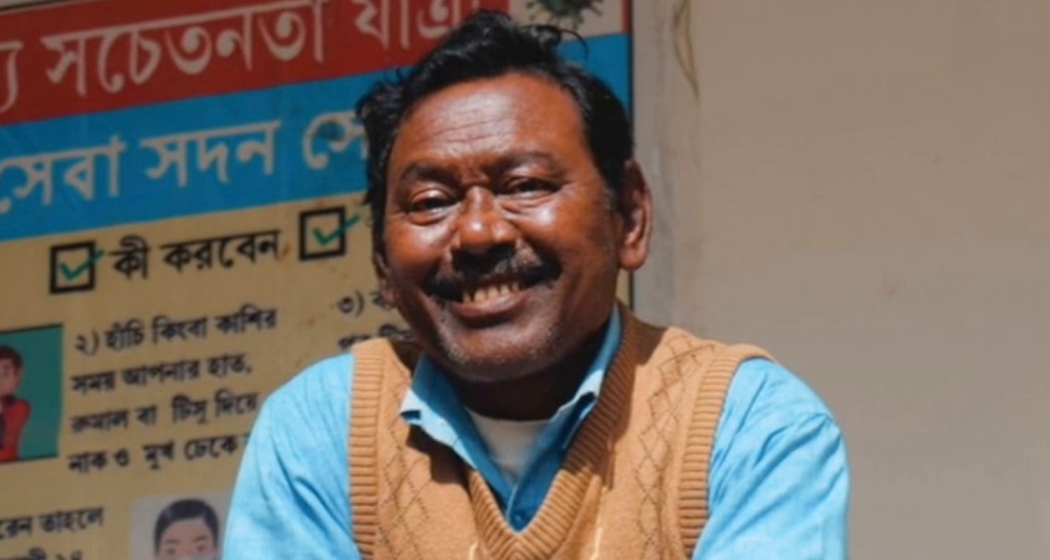
A tragic vow: Turning unbearable grief into a lifelong purpose
Karimul Haque grew up amid the lush, rolling tea estates of Jalpaiguri district, where emerald-green plantations meet thick forests and meandering rivers. Life here has always been hard for daily-wage tea garden workers like Karimul, paltry earnings, limited access to basics like roads, electricity, or timely medical care. In 1995, the year his mother died, the nearest proper hospital often lay 45-70 km away, and during monsoons the paths turned into impassable mud. The grief lingered like a shadow, a constant reminder of what he could not change that night.
“I lost my mother because help could not reach us in time. That night, I made a promise to myself that no one else around me would ever suffer the same way,” he says.
Years passed, but the ache never fully faded. Then came a turning point. One day at the tea garden, a fellow worker suddenly collapsed from illness. Without hesitation, Karimul lifted the man onto his motorbike, secured him as best he could, and rode through rough terrain for over 50 km to the nearest hospital.
The man survived.
“That moment showed me what my bike could do. It made things very clear in my mind, I decided I would use it to carry anyone who needed urgent help,” Karimul told us during our call, his tone steady yet filled with the quiet pride of someone who found purpose in pain.
From that moment, grief transformed into determination. In 1998, using his savings and a small loan, he bought a motorcycle and boldly painted “Ambulance, Day and Night Free Service” on its sides. He offered rides to anyone in medical distress, charging nothing, not a single rupee, because he believed no one should pay with their life for lack of transport.
Villagers at first laughed or shook their heads, calling it impractical. But Karimul pressed on, undeterred.
“In the beginning, many people laughed and said it would never work. But slowly, as they saw people returning alive from hospitals, their attitude began to change,” he says, a gentle smile breaking through as he remembers how doubt slowly turned to trust and affection.
Soon, the villagers began calling him “Bike Ambulance Dada”, a term of endearment that captured both his role as a brotherly figure and the humble two-wheeler that became his tool of compassion.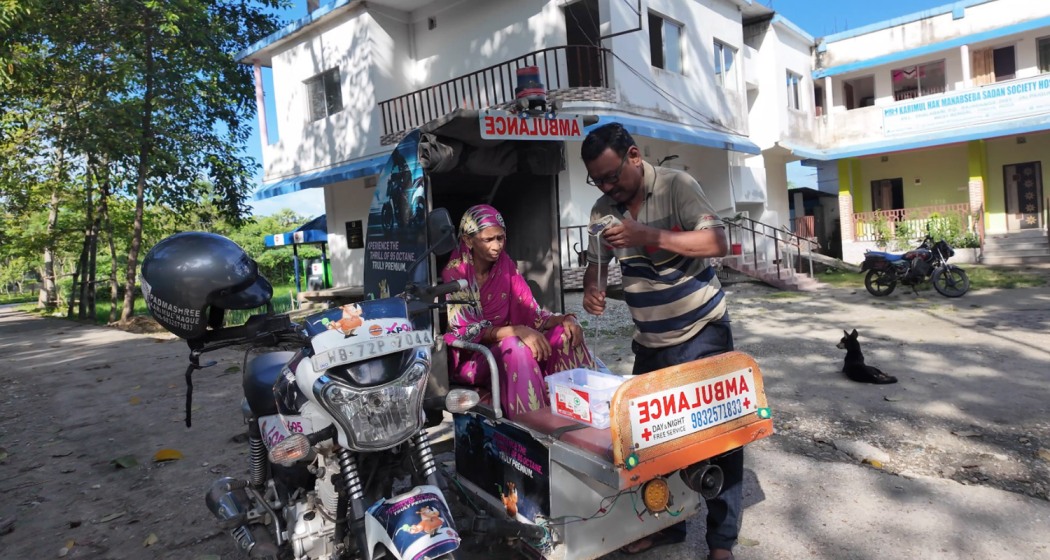
The birth of the Bike Ambulance
The Dooars terrain is unforgiving: narrow jungle paths, sudden river crossings, thick fog in winter, and heavy monsoon rains that turn everything into slush. Traditional ambulances or vans often get stuck or take too long. Karimul quickly realised his motorbike was ideal, light, manoeuvrable, and able to navigate where larger vehicles could not.
“I soon understood that in this region, a motorbike is far more practical than a van or a full ambulance. The roads are narrow, rivers overflow, and only a bike can move quickly through such conditions,” he explains.
He modified the bike over time, adding a side attachment or stretcher-like support, using cloths and straps to secure patients safely. His phone became the village’s emergency line, ringing at all hours with calls about labour pains, accidents, fevers, or sudden collapses. Karimul would drop whatever he was doing, often riding through pitch darkness or pouring rain, with a family member sometimes perched behind to help steady the patient.
His wife, Anjuya Begum, and sons, Raju and Rajesh, joined the effort fully, learning basic first aid from local doctors, tying patients securely, administering saline drips when needed, and even organising community support. Over more than 25 years, Karimul has ferried well over 7,000 patients (with some reports citing figures between 5,000 and 7,000+) across more than 20 villages, always free of charge. He covers fuel and maintenance from his own modest tea-garden earnings of around ₹5,000 a month.
The service expanded beyond transport: he now runs regular health camps to catch small issues early, arranges video consultations with doctors, checks blood pressure and sugar levels on the spot, and distributes rice to families too poor for even one daily meal.
“While taking patients to hospitals, we also realised that many families were struggling even for food. That is when we decided to start distributing rice so that no one slept hungry,” he shared.
During the COVID lockdowns, he added food distribution to his risks, delivering rations while others stayed home. Villagers speak of him with deep reverence, as an angel, a true brother, a lifeline.
Yet Karimul remains humble.
“Some people call me a god, but I always stop them. I tell them I am just a normal man doing what any human being should do,” he says, his smile warm and unassuming, rooted in decades of selfless giving.
Riding through rivers and monsoon, the man they call ‘Dada’
Every ride tells a story of endurance. Imagine midnight calls pulling him from sleep, the bike’s engine roaring to life as he races through fog-shrouded forests or swollen rivers. He has carried pregnant women in labour, elderly patients gasping for air, children with high fevers, and accident victims clinging to life.
Each journey demands physical strength, mental focus, and pure heart, balancing speed with care so the patient arrives safely.
His family’s involvement makes the work sustainable. Anjuya and the sons handle logistics, first aid, and emotional support for frightened families. The health camps bring doctors to the villages, addressing preventable issues before they become emergencies. These efforts have changed the region: fewer mothers die in childbirth, fewer children lose parents to delayed care, and hope has taken root where despair once ruled.
Karimul’s impact is profound yet quiet, no flashy announcements, just consistent service to the ones in need.
In our conversation, he spoke of his dream to build a small care centre near his home so patients need not travel far. “I want to continue this work for as long as I can. After me, I hope my sons will carry this responsibility forward and serve people in the same spirit,” he said.
Padma Shri and beyond: Fame that changed nothing
In 2017, the Government of India recognised Karimul’s tireless service with the Padma Shri, one of the nation’s highest civilian honours. The news reached newspapers, TV screens, and social media, surprising even him.
“I never imagined that someone living in such a remote village would receive an honour like this. It made me feel that even the smallest work can be recognised,” he said then. The award brought attention but changed nothing in his daily rhythm. He continued riding, serving, and living simply. “Age is only a number for me. Even now, I feel strong in my mind and body, and I believe it is my responsibility to serve people as long as I am able,” he declared.
In January 2026, at nearly 60, Karimul faced a health scare requiring a pacemaker implant. After successful surgery in Kolkata on January 12, he returned home to rest, but even from his hospital bed, his thoughts were on the bike and waiting patients.
When Bengali actor Dev visited to discuss portraying him in the upcoming biopic BAD – Bike Ambulance Dada (Dev’s 50th film, directed by Vinay Mudgil, set to begin filming soon and release on August 14, 2026), Karimul joked lightly about needing to recover quickly.
On the film, he said, “I do not know how to tell my own story. If he is telling it through this film, I hope it encourages young people to help others and respect their parents.”
Karimul Haque’s story transcends a motorcycle or a title. It is about turning profound personal loss into endless compassion, about one ordinary man refusing to accept that remoteness must mean suffering. He builds no empires, seeks no wealth, only his reliable bike, his devoted family, and an unyielding promise that no life should end because help arrives too late.
“Serving people in need is my responsibility. I will continue doing it for as long as my body allows me.” That indomitable spirit ensures his legacy will endure even long after the engine quiets, riding on in the hearts of those he has touched.
By Deepan Chattopadhyay
