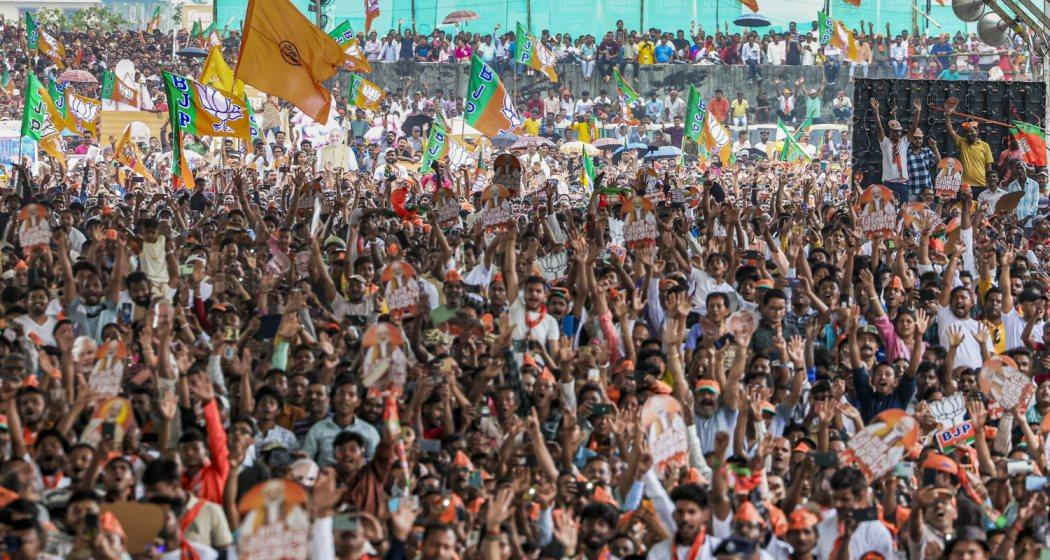
West Bengal’s 2026 Assembly election may ultimately hinge not on the broader arithmetic of 294 seats, but on a cluster of around 65–70 constituencies where razor-thin victory margins and large-scale deletions under the Special Intensive Revision (SIR) of electoral rolls have reshaped the contest.
These seats, spread across 11 districts, include politically sensitive regions from Nandigram and Bhabanipur to the Matua-dominated belt of North 24 Parganas and minority-heavy districts such as Murshidabad and Malda. In many of these constituencies, the lead margins in the 2024 Lok Sabha segments ranged between 8,000 and 15,000 votes, while several 2021 Assembly contests were decided by as little as 1,000 to 8,000 votes.
The scale of electoral churn has been amplified by the deletion of over 90.83 lakh names from voter rolls across the state till April 7, accounting for nearly 11.85 per cent of the electorate identified last October. Of these, 27.16 lakh names were removed from the “under adjudication” category alone.
The impact is particularly stark in close contests. In Kulti, won by the BJP in 2021 by just 679 votes, around 38,000 names have been deleted — more than 50 times the victory margin. Nandigram, where Suvendu Adhikari defeated Chief Minister Mamata Banerjee by 1,956 votes, has seen over 14,000 deletions.
In the politically crucial North 24 Parganas and Nadia districts, where the BJP has sought to consolidate support among Matua voters, deletions have also exceeded past margins. Seats such as Bongaon South and Kalyani, each won by margins of about 2,000 votes, have recorded deletions of 7,000 and 9,000 voters respectively.
Murshidabad, a TMC stronghold, has seen the highest number of deletions under adjudication at 4.55 lakh, taking the total loss of voters to nearly 7.5 lakh. North 24 Parganas alone has lost over 12.6 lakh names, while South 24 Parganas and Kolkata have seen deletions of over 10.9 lakh and 6.9 lakh respectively.
Also read: PM attacks TMC on North Bengal neglect, ‘tukde-tukde’ gang
Of the 57 seats decided by 8,000 votes or less in 2021, the TMC won 29 and the BJP 28, underlining the finely balanced nature of the contest. In constituencies with margins below 3,000 votes, the BJP held an edge, winning 12 of 19 seats.
The SIR process has further intensified the stakes. In at least 44 Assembly constituencies, the number of deleted voters exceeds the margin of victory in 2021. These include 24 seats held by the TMC and 20 by the BJP, indicating that neither side is insulated from its impact.
Before adjudication, there were around 111 Assembly segments where voters under scrutiny exceeded the 2024 Lok Sabha victory margins. Even after the process, deleted voters outnumber the Lok Sabha margin in at least 120 seats.
Analysts suggest that even a marginal shift in vote share could significantly alter outcomes. Based on past turnout patterns, a one per cent swing could flip around 15 seats, while a two per cent shift could change results in over 20 constituencies.
The political narrative around the revision remains sharply contested. The TMC has alleged that the exercise is aimed at voter suppression, while the BJP maintains that it has helped eliminate bogus entries and illegal voters.
As campaigning intensifies, the focus on booth-level management, voter mobilisation and micro-targeting in these 65-odd constituencies is expected to define the battle for power in West Bengal.
SIR row: Joka tribunal to hear appeals after 91 lakh voter deletions
Kolkata: The West Bengal SIR Tribunal is set to begin operations within the next few days at the Dr Syama Prasad Mookerjee National Institute of Water and Sanitation in Joka, South 24 Parganas, to hear appeals from voters whose names were deleted during the recent Special Intensive Revision (SIR) of electoral rolls.
Sources said the tribunal’s constitution is in its final stages, with full-fledged functioning likely within three to four days. Judges have already inspected the premises, indicating readiness to commence proceedings. The tribunal will comprise 19 judicial officers, assisted by three Additional District Magistrate-rank officials, with infrastructure in place for immediate operations.
The tribunal assumes significance after the SIR exercise led to the deletion of over 91 lakh names from the electoral rolls. With both draft and final rolls now “frozen” under Election Commission norms, administrative corrections are no longer possible, making the tribunal the only avenue for redress.
A key issue, however, remains unresolved, whether individuals whose names are restored by the tribunal will be eligible to vote in the upcoming West Bengal Assembly elections 2026.
The matter is currently before the Supreme Court, where a Bench headed by Justice Surya Kant is expected to deliver a ruling on Monday. During the hearing, the court observed that the right to vote is of paramount importance, and its verdict is likely to clarify the legal position on restored voters’ participation.
Election Commission data underscores the scale of the revision exercise. The electorate stood at over 7.66 crore at the start of the SIR process. The draft roll saw the deletion of more than 58 lakh names, followed by a further 5.46 lakh removals in the final list published on February 28.
The most contentious category involved over 60 lakh voters marked as “under consideration”. Of these, more than 27 lakh names were eventually struck off. In total, 90,83,345 names were removed during the revision, raising concerns over potential voter disenfranchisement.
With tribunal proceedings set to begin shortly, attention is now focused on the Supreme Court’s impending ruling, which is expected to determine whether millions of affected individuals regain their voting rights ahead of the elections.

 Follow us