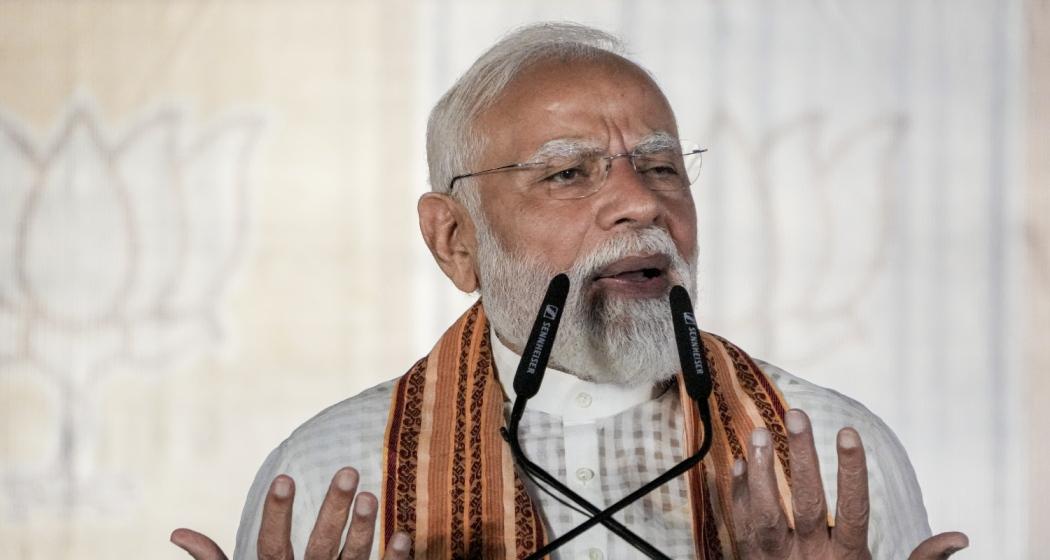
Prime Minister Narendra Modi on Monday called for an end to political violence in West Bengal, urging a shift from “badla” (revenge) to “badlav” (change) after the BJP’s historic electoral performance in the state.
Addressing party workers at the BJP headquarters in New Delhi, Modi struck a conciliatory yet assertive tone, framing the verdict as a turning point in Bengal’s political journey.
“There should be a change in the political habits of the state. Today, when the BJP has won, not badla but badlav should be talked about. Not bhay, but bhavishya should be spoken of. Let us end this endless cycle of violence,” he said.
Describing the outcome as a “new sunrise” on the “sacred land of Bengal”, Modi said the results signalled a decisive shift towards a “bhaymukt” (fear-free) political environment and “poriborton” (change).
Also read: Ruling NDA set for third straight term in Assam, leads in 99 seat
He thanked voters across West Bengal, Assam, Puducherry, Tamil Nadu and Kerala for what he described as a strong endorsement of the BJP and its allies. “I respectfully bow to the people… Every BJP worker, big or small, has once again performed wonders,” he said.
Calling the West Bengal verdict “historic”, the Prime Minister said the BJP’s footprint now spans the Ganga belt. “With Bengal’s victory, the lotus has bloomed from Gangotri to Gangasagar, Uttarakhand, Uttar Pradesh, Bihar, and now West Bengal,” he said.
Modi also framed the outcome in broader democratic terms, calling it a “victory of democracy and the Constitution”. “Win and loss are part of the game, but the people have shown why India is the mother of democracy,” he added.
Union Home Minister Amit Shah echoed the sentiment, saying the people of Bengal had delivered a strong message against “appeasement politics” and
those supporting infiltration. He said the BJP would work to restore the state’s “lost glory”.
The BJP’s sweeping performance in West Bengal marks a significant political breakthrough for the party in a state long dominated by regional forces, and is expected to have wider implications for national politics.

 Follow us