
Trending:
Bisleri Carcinogen Scare: Is Your Bottled Water Safe to Drink?
Bisleri faces FSSAI prosecution after a water sample showed bromate and PAHs. Know the health risks, cancer concerns and how to check bottled water safety. Follow us
News Arena India - New Delhi - UPDATED: November 23, 2026, 12:41 PM - 2 min read
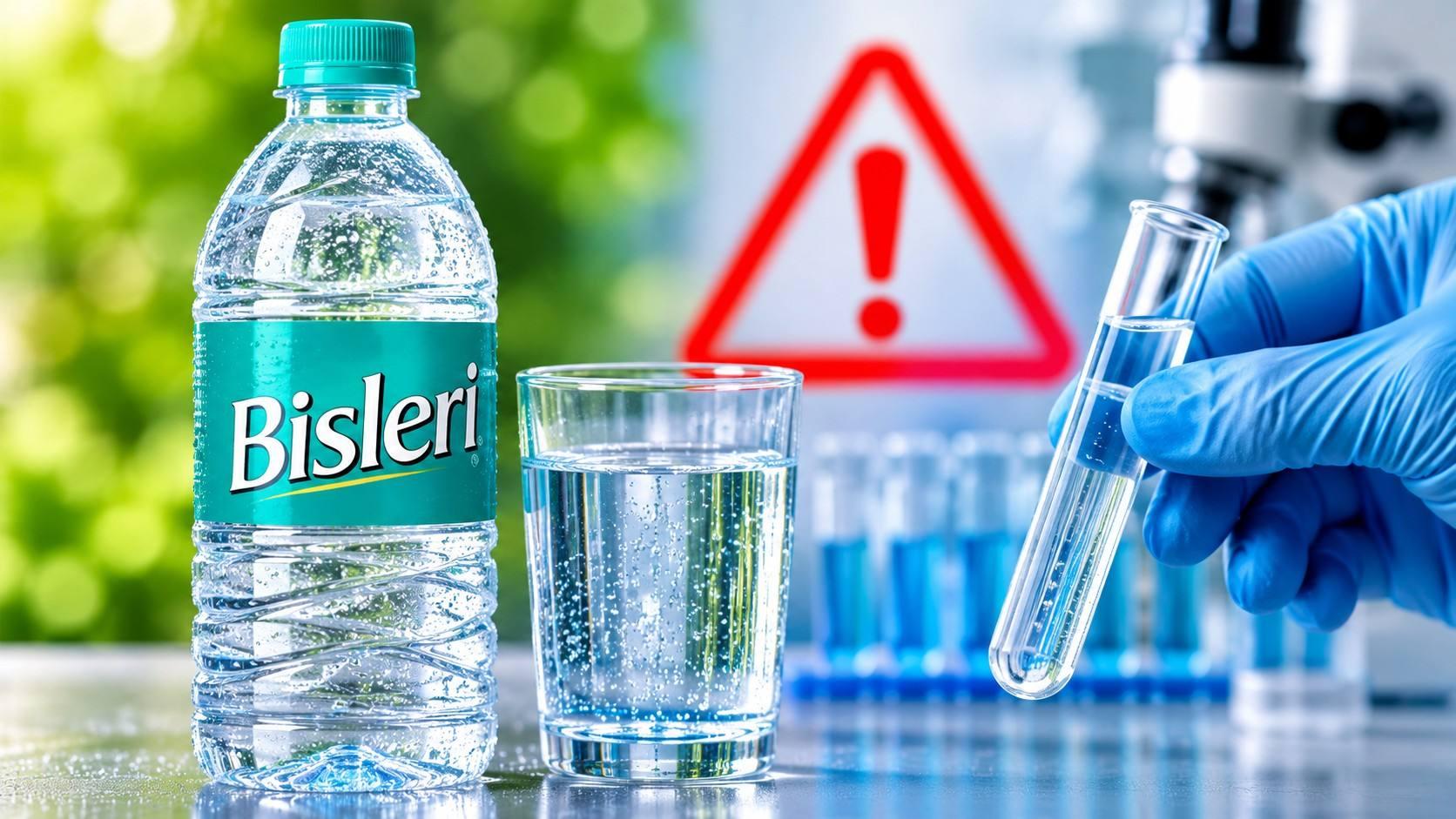
Bromate and PAHs Found in Water Sample: Should You Be Worried?
The Food Safety and Standards Authority of India (FSSAI) has sanctioned prosecution proceedings against Bisleri International after laboratory tests found a sample of its packaged drinking water unsafe. The initial analysis detected bromate above the prescribed limit, while a referral laboratory later found polynuclear aromatic hydrocarbons (PAHs) in the sample.
The findings have raised concerns about possible chemical contamination in drinking water and the health risks linked to prolonged exposure. However, the regulatory action concerns a specific sample collected from Bisleri’s premises and does not establish that every bottle or batch sold by the company is contaminated.
What happened in the Bisleri water case?
The regulatory sample was collected from Bisleri International Pvt Ltd and identified as packaged drinking water other than mineral water. During the first laboratory examination, it was found to be non-compliant with the prescribed bromate limits and was declared unsafe under the Food Safety and Standards Act, 2006.
After the food business operator appealed, the sample was sent to a referral food laboratory. The second examination also classified it as unsafe after detecting PAHs. On the basis of the two findings, the FSSAI sanctioned prosecution under the Food Safety and Standards Act, 2006.
Bisleri has disputed aspects of the findings and said the matter relates to a sample taken from its Goa facility in September 2025. The company stated that testing conducted at its independent laboratory found bromate levels within permissible limits and that it would cooperate with the regulatory process.
The proceedings relate to the laboratory results for that particular sample. They should not be treated as proof that all packaged drinking water products sold by Bisleri are unsafe.
What are bromate and PAHs?
Bromate and PAHs are chemical contaminants that may become a concern when they are present in drinking water above prescribed safety limits. Dr Malay Nandy, Senior Director and Head, Medical Oncology, ShardaCare - Healthcity, said the findings draw attention to the possibility of chemical contamination and the risks associated with long-term exposure.
Bromate can form during certain water treatment processes, particularly when ozone is used to disinfect water containing bromide. Potassium bromate is classified by the International Agency for Research on Cancer as possibly carcinogenic to humans, which is why bromate levels in drinking water are subject to strict regulation. Bromate, however, should not be described as a confirmed human carcinogen.
PAHs are a group of chemicals produced by the incomplete burning of materials such as coal, oil, petrol, wood and tobacco. Some PAHs, including benzoapyrene, are established human carcinogens. Their potential impact depends on the specific compound, its concentration and the length of exposure. Certain PAHs can cause DNA damage, oxidative stress and cellular mutations, mechanisms associated with the development of cancer. Not all chemicals in the PAH group have the same carcinogenic classification.
Can a single exposure cause cancer?
The presence of a carcinogenic or potentially carcinogenic substance does not mean that a person will develop cancer after drinking contaminated water once or twice. Dr Nandy said the risk is influenced by the chemical’s concentration, the frequency and duration of exposure, individual susceptibility and exposure to other environmental factors.
The greater concern is repeated contact with potentially harmful contaminants over several years. Depending on the chemical and the level of exposure, prolonged exposure may increase the risk of cellular damage and other health complications. Dr Nandy said reducing such risks requires stronger quality monitoring, transparent disclosure of test results and regular testing by manufacturers.
How is mineral water different from packaged drinking water?
Natural mineral water and packaged drinking water are separate categories under India’s food safety regulations, even though both are sold in sealed bottles. Natural mineral water comes directly from protected underground sources and has a characteristic mineral composition containing naturally occurring mineral salts and trace elements. Its essential mineral profile is expected to remain relatively stable, and only limited treatment is permitted.
Packaged drinking water may be sourced from surface water, underground water or civic water supplies. It can undergo filtration, reverse osmosis, demineralisation and remineralisation before disinfection and packaging.
Dr Manjusha Agarwal, Senior Consultant, Internal Medicine, Gleneagles Hospital, Parel, Mumbai, said natural mineral water contains naturally occurring minerals such as calcium, magnesium, potassium and sodium. In packaged drinking water, the mineral profile depends on the source and the treatment process. Reverse osmosis can remove both unwanted impurities and naturally occurring minerals, after which some manufacturers may add minerals back through remineralisation.
As a result, a bottle labelled packaged drinking water does not necessarily contain the same mineral composition as natural mineral water.
How much mineral content does bottled water provide?
Drinking water can contribute small quantities of minerals to the diet, but it should not be considered the main source of essential nutrients. Calcium and magnesium are also available through a balanced diet containing dairy products, nuts, seeds, fruits and vegetables.
Consumers who are specifically buying water for its mineral content should check the composition printed on the label rather than relying only on marketing claims. Key parameters include:
- Calcium: Supports bone health, muscle function and nerve signalling.
- Magnesium: Helps regulate muscle and nerve function and supports several metabolic processes.
- Sodium: Helps maintain fluid balance and supports normal nerve and muscle function, although excessive intake may be a concern, particularly for people with high blood pressure.
- Total Dissolved Solids (TDS): Indicates the combined concentration of dissolved substances, including minerals and salts. It reflects overall mineral content but does not by itself prove that water is safe to drink.
Dr Agarwal said mineral content is only one part of water quality. Compliance with prescribed safety and quality standards should remain the primary consideration.
Five checks before buying packaged drinking water
- Read the label: Check the product category, manufacturer’s details, batch number, manufacturing date and FSSAI licence information. A product marketed as mineral water is not necessarily natural mineral water.
- Inspect the seal: Ensure that the cap and seal are intact. Avoid bottles that appear tampered with, damaged or improperly sealed.
- Check storage conditions: Do not buy bottles that have been kept in direct sunlight or excessive heat for long periods. Follow the storage instructions provided by the manufacturer.
- Review mineral details: If mineral content is important, examine the calcium, magnesium, sodium and TDS values on the label instead of relying only on terms such as mineral-enriched or mineral-balanced.
- Buy from reliable outlets: Choose authorised retailers and established distribution channels, and remain attentive to food safety advisories and product recall announcements.
Does clear or branded bottled water guarantee safety?
A clear appearance, a familiar brand name or premium packaging cannot independently confirm that water is free from harmful contaminants. The Bisleri case has highlighted the need for continuous quality monitoring and regulatory oversight of packaged drinking water.
Dr Nandy said safe drinking water is a basic public health requirement and that preventing long-term exposure to harmful chemicals depends on effective regulation, transparent testing and manufacturer accountability. Dr Agarwal said mineral content should not be the sole basis for choosing drinking water.
Whether water comes from a protected underground source or is purified and remineralised, its most important quality is compliance with applicable food safety standards and suitability for consumption. Mineral-rich water is not automatically safer water.
